
新型脂肪酸结合蛋白5抑制剂ART26.12在多种临床前神经病变模型中显示出疗效。
ART26.12, a novel fatty acid-binding protein 5 inhibitor, shows efficacy in multiple preclinical neuropathy models.
作者信息
Warren W G, Osborn M, David-Pereira A, Tsantoulas C, Xue Wenwen, Yates A, OSullivan S E
机构信息
Artelo Biosciences Ltd., Alderley Park, Alderley Edge, Cheshire, UK.
Transpharmation Ltd., The London Bioscience Innovation Centre, London, UK.
出版信息
Eur J Pain. 2025 Feb;29(2):e4718. doi: 10.1002/ejp.4718. Epub 2024 Aug 26.
BACKGROUND
Painful neuropathy is a pathological condition caused by numerous factors including diabetes, chemotherapy or cancer. ART26.12 is a novel fatty acid-binding protein 5 inhibitor, which our group showed could prevent and treat persistent pain in a preclinical model of oxaliplatin-induced peripheral neuropathy.
METHODS
In the current study, the efficacy of orally dosed ART26.12 was tested in multiple neuropathy models of different aetiology. Paw withdrawal threshold to von Frey monofilaments and latency to escape a cold plate were used as measurements of mechanical and cold sensitivity.
RESULTS
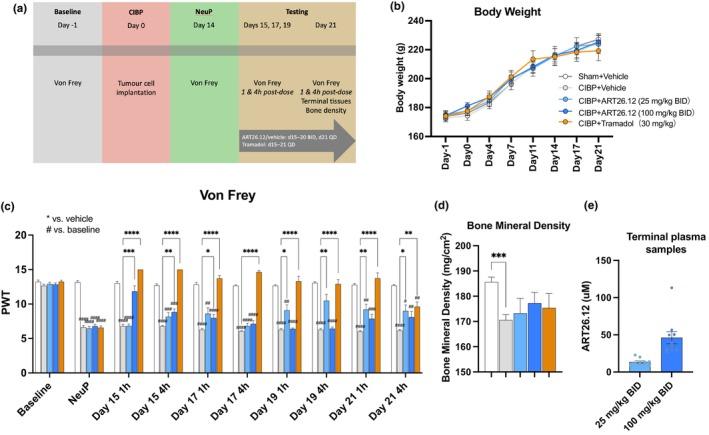
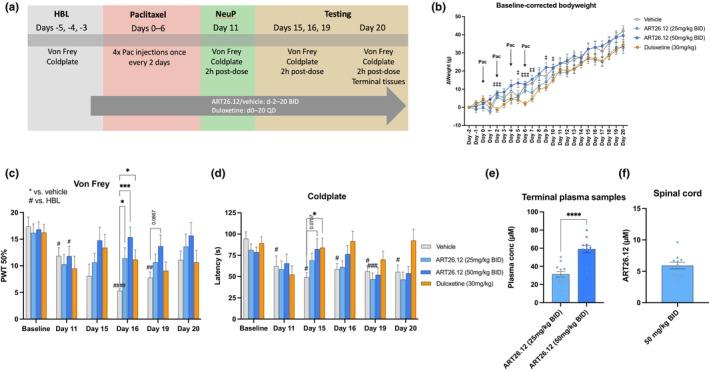
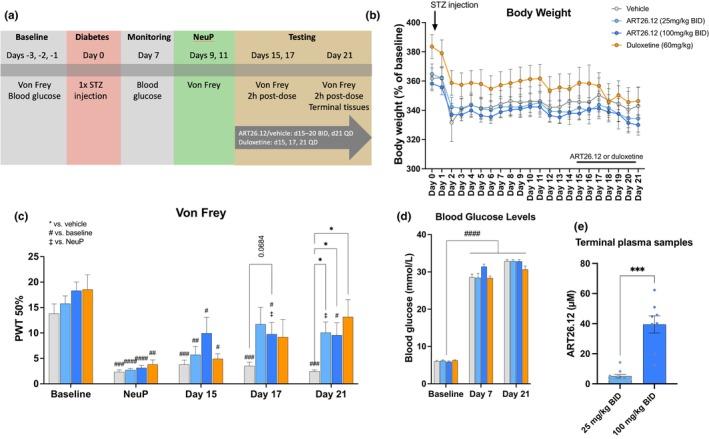
ART26.12 (25 and 50 mg/kg BID), dosed prior to the induction of paclitaxel-induced peripheral neuropathy (PIPN), reversed mechanical allodynia induced by paclitaxel in both male and female rats, and ART26.12 (50 mg/kg BID) prevented the induction of PIPN in female rats. ART26.12 (50 mg/kg BID) also had a protective effect on body weight in the PIPN model. ART26.12 (25 and 100 mg/kg BID) reversed mechanical allodynia when treating established streptozotocin-induced diabetic neuropathy in male rats. In a model of breast cancer-induced bone pain in female rats, ART26.12 (100 mg/kg BID) reversed mechanical allodynia within 1 h of dosing. In the same model, ART26.12 (25 mg/kg BID) reversed mechanical allodynia from day 4 of treatment.
CONCLUSION
Overall, these preclinical data suggest that ART26.12 is a safe and efficacious therapeutic drug for continued development towards the prevention and treatment of peripheral neuropathy.
SIGNIFICANCE STATEMENT
This work now shows that ART26.12, a novel and selective inhibitor of FABP5, can prevent and treat multiple preclinical models of peripheral neuropathy. Given its excellent safety profile, further work is warranted to develop ART26.12 as a potential therapeutic tool for pain management.
背景
疼痛性神经病变是一种由多种因素引起的病理状态,这些因素包括糖尿病、化疗或癌症。ART26.12是一种新型脂肪酸结合蛋白5抑制剂,我们团队的研究表明,它在奥沙利铂诱导的周围神经病变临床前模型中能够预防和治疗持续性疼痛。
方法
在本研究中,通过口服给药ART26.12,在多种不同病因的神经病变模型中测试其疗效。使用对von Frey细丝的爪部撤离阈值和逃离冷板的潜伏期作为机械敏感性和冷敏感性的测量指标。
结果
在紫杉醇诱导的周围神经病变(PIPN)诱导前给药ART26.12(25和50mg/kg,每日两次),可逆转紫杉醇诱导的雄性和雌性大鼠的机械性异常性疼痛,并且ART26.12(50mg/kg,每日两次)可预防雌性大鼠发生PIPN。在PIPN模型中,ART26.12(50mg/kg,每日两次)对体重也有保护作用。在治疗已确诊的链脲佐菌素诱导的雄性大鼠糖尿病性神经病变时,ART26.12(25和100mg/kg,每日两次)可逆转机械性异常性疼痛。在雌性大鼠乳腺癌诱导的骨痛模型中,ART26.12(100mg/kg,每日两次)在给药后1小时内可逆转机械性异常性疼痛。在同一模型中,ART26.12(25mg/kg,每日两次)从治疗第4天起可逆转机械性异常性疼痛。
结论
总体而言,这些临床前数据表明,ART26.12是一种安全有效的治疗药物,有继续开发用于预防和治疗周围神经病变的潜力。
意义声明
本研究表明,新型选择性脂肪酸结合蛋白5抑制剂ART26.12能够预防和治疗多种周围神经病变的临床前模型。鉴于其良好的安全性,有必要进一步开展研究,将ART26.12开发成为一种潜在的疼痛管理治疗工具。

 Zotero 插件