
伤口愈合的免疫调节导致吞噬作用。
Immunomodulation of wound healing leading to efferocytosis.
作者信息
Zhao Yun, Li Minxiong, Mao Jiayi, Su Yinghong, Huang Xin, Xia Wenzheng, Leng Xiangfeng, Zan Tao
机构信息
Department of Plastic and Reconstructive Surgery Shanghai Ninth People's Hospital Shanghai Jiao Tong University School of Medicine Shanghai China.
Department of Cosmetic and Plastic Surgery Affiliated Hospital of Qingdao University Qingdao China.
出版信息
Smart Med. 2024 Jan 31;3(1):e20230036. doi: 10.1002/SMMD.20230036. eCollection 2024 Feb.
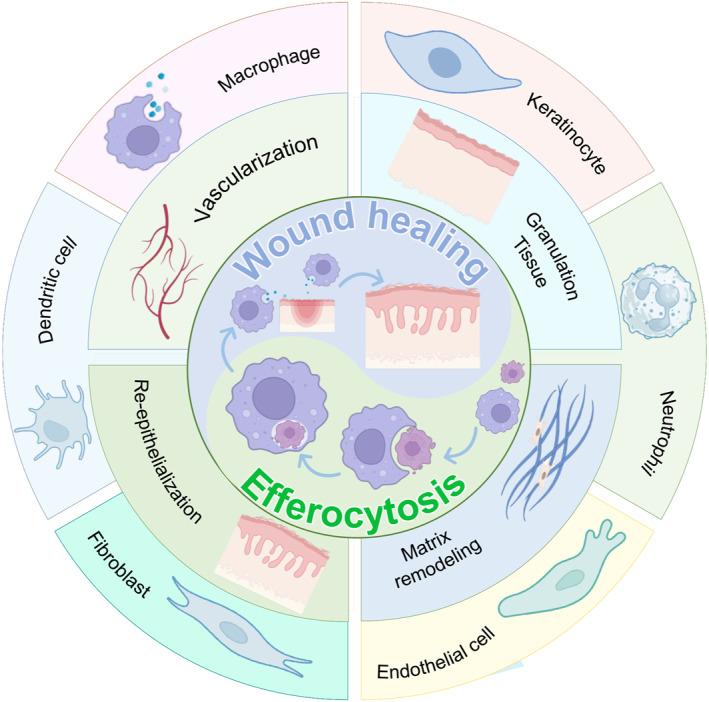
Effectively eliminating apoptotic cells is precisely controlled by a variety of signaling molecules and a phagocytic effect known as efferocytosis. Abnormalities in efferocytosis may bring about the development of chronic conditions, including angiocardiopathy, chronic inflammatory diseases and autoimmune diseases. During wound healing, failure of efferocytosis leads to the collection of apoptosis, the release of necrotic material and chronic wounds that are difficult to heal. In addition to the traditional phagocytes-macrophages, other important cell species including dendritic cells, neutrophils, vascular endothelial cells, fibroblasts and keratinocytes contribute to wounding healing. This review summarizes how efferocytosis-mediated immunomodulation plays a repair-promoting role in wound healing, providing new insights for patients suffering from various cutaneous wounds.
多种信号分子和一种名为胞葬作用的吞噬效应精确控制着凋亡细胞的有效清除。胞葬作用异常可能导致包括心血管疾病、慢性炎症性疾病和自身免疫性疾病在内的慢性疾病的发展。在伤口愈合过程中,胞葬作用失败会导致凋亡细胞聚集、坏死物质释放以及难以愈合的慢性伤口。除了传统的吞噬细胞——巨噬细胞外,包括树突状细胞、中性粒细胞、血管内皮细胞、成纤维细胞和角质形成细胞在内的其他重要细胞种类也有助于伤口愈合。本综述总结了胞葬作用介导的免疫调节如何在伤口愈合中发挥促进修复的作用,为患有各种皮肤伤口的患者提供了新的见解。
 Zotero 插件