
埃塞俄比亚 24 月龄以下儿童母亲纯母乳喂养实践的空间分布及其决定因素:空间和多层次分析。
Spatial distribution and determinants of exclusive breastfeeding practice among mothers of children under 24 months of age in Ethiopia: spatial and multilevel analysis.
机构信息
Department of Health Informatics, School of Public Health, College of Medicine and Health Sciences, Arba Minch University, Arba Minch, Ethiopia.
出版信息
BMC Pregnancy Childbirth. 2024 Aug 27;24(1):554. doi: 10.1186/s12884-024-06755-x.
BACKGROUND
Breast milk is the first, highly valuable, and solely natural food recommended for infants in their first six months of life, which is critical for children's overall growth and development. Evidence suggests that exclusive breastfeeding differs by geographic area in Ethiopia. However, little is known regarding the geographic distribution of exclusive breastfeeding practice. Hence, this study aimed to assess exclusive breastfeeding practice, its geographic variation and associated factors among Ethiopian mothers.
METHOD
The study used the 2019 Ethiopian mini demographic and health survey data. All living children born 0-23 months before the survey were included. Global Moran's I statistics on Arc-GIS and Getis Ord Gi* statistics was used to visualize the spatial pattern and hotspot and cold spot areas, respectively. Kulldorff SaTScan was used to show purely significant spatial clusters. The associated factors were identified using a multilevel mixed-effects logistic regression model. Statistically significant factors were reported using the AOR with a 95% CI and a p-value of < 5%.
RESULT
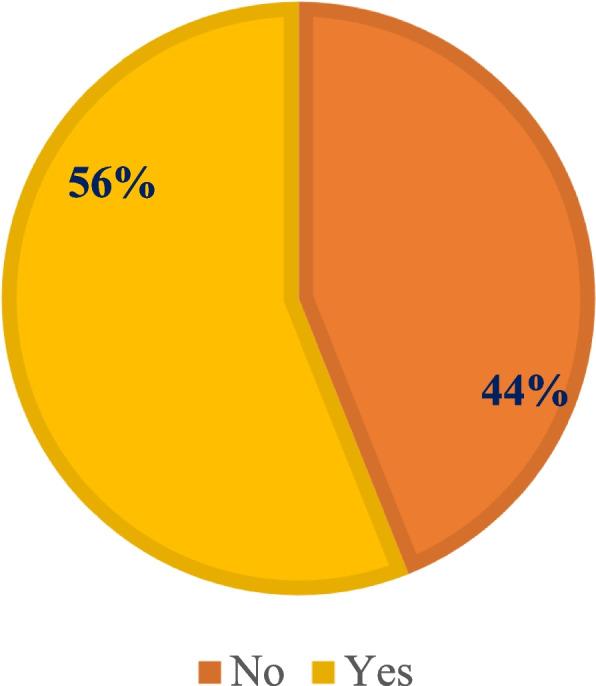
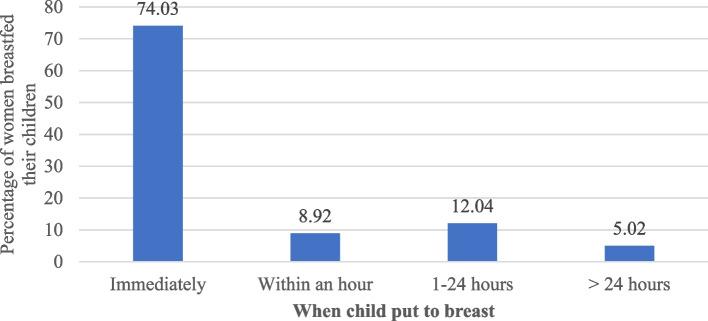
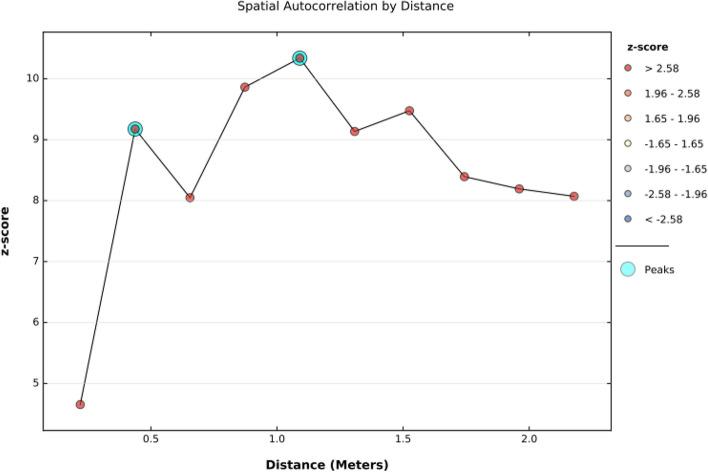
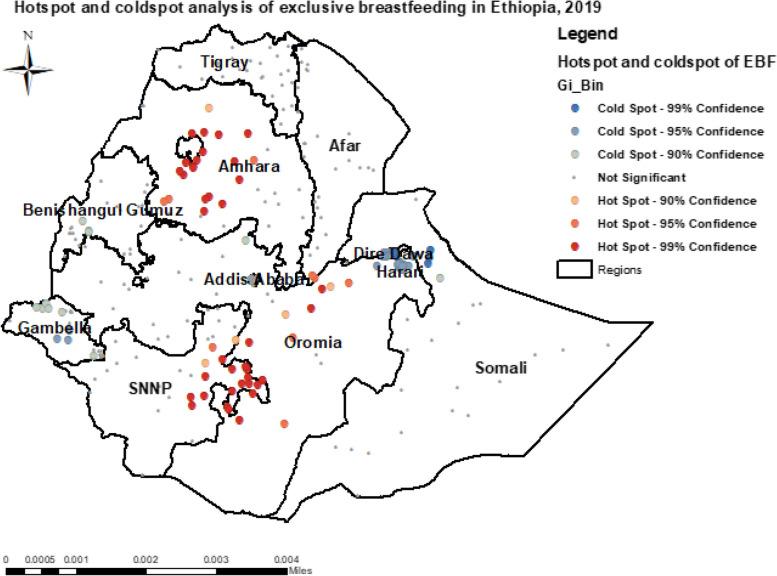
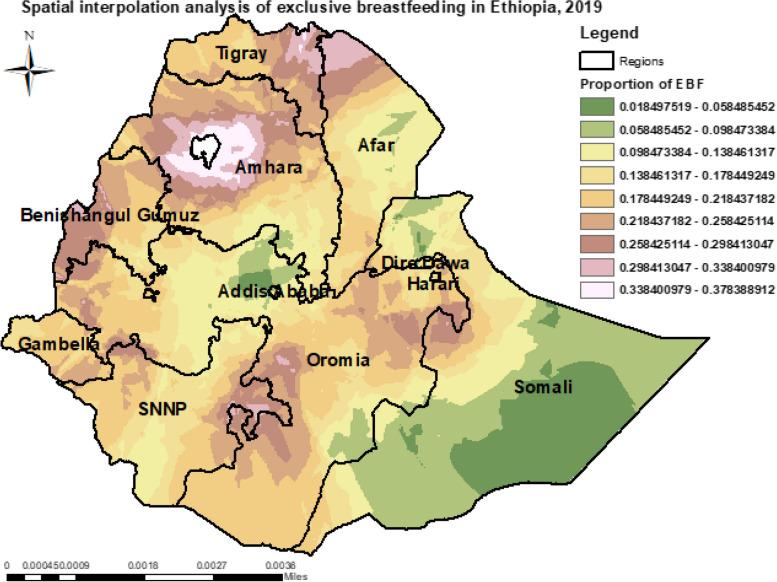
The coverage of exclusive breastfeeding practice in Ethiopia was 56.05% (95% CI: 53.95%, 58.10%). The spatial pattern was non-random across the country's regions. Somalia, Gambela, Benshangul Gumuz, Dire Dawa, and Harari regions had low clustering of exclusive breastfeeding practices, whereas Amhara, Eastern SNNPR, and Central and Northern Oromia regions had high clustering. Children born through caesarean delivery [AOR = 0.36; 95% CI: 0.21, 0.63], initiated breastfeeding within the first 1 h [AOR = 0.55; 95% CI: 0.34, 0.90], after 1-24 h of delivery [AOR = 0.36; 95% CI: 0.24, 0.54], after a day [AOR = 0.04; 95% CI: 0.02, 0.08], and women residing in the pastoralist region [AOR = 0.22; 95% CI: 0.12, 0.39] or city administrations [AOR = 0.49; 95% CI: 0.27, 0.89] had lower odds of exclusive breastfeeding practice.
CONCLUSION
Exclusive breastfeeding practice in Ethiopia remained low. The practice had a spatial variation across the country. Caesarean section delivery, late breastfeeding initiation, and region were statistically significant variables. Therefore, promoting timely initiation of breastfeeding and improving the utilization of maternal health services and designing special intervention strategy for women residing in city administrations and pastoralist regions of the country may increase the coverage of exclusive breastfeeding practice.
背景
母乳是婴儿在生命的头六个月中推荐的第一、极具价值且唯一的天然食物,这对儿童的整体生长和发育至关重要。有证据表明,埃塞俄比亚各地的纯母乳喂养情况存在差异。然而,对于纯母乳喂养的实践在地理上的分布情况知之甚少。因此,本研究旨在评估埃塞俄比亚母亲的纯母乳喂养实践情况、其地理差异及其相关因素。
方法
本研究使用了 2019 年埃塞俄比亚微型人口和健康调查数据。所有在调查前 0-23 个月出生的活产儿童均被纳入研究。在 Arc-GIS 上使用全局 Moran's I 统计量和 Getis Ord Gi* 统计量来可视化空间模式和热点及冷点区域。Kulldorff SaTScan 用于显示纯显著空间聚类。使用多水平混合效应逻辑回归模型确定相关因素。使用 95%CI 和 p 值<0.05 的比值比(AOR)报告有统计学意义的因素。
结果
埃塞俄比亚纯母乳喂养实践的覆盖率为 56.05%(95%CI:53.95%,58.10%)。该地区的空间模式呈非随机分布。索马里、甘贝拉、本尚古勒-古姆兹、德雷达瓦和哈拉里地区的纯母乳喂养实践聚类程度较低,而阿姆哈拉、东塞俄比亚、中奥罗米亚和北奥罗米亚地区的聚类程度较高。通过剖宫产分娩的儿童(AOR=0.36;95%CI:0.21,0.63)、在分娩后 1 小时内开始母乳喂养(AOR=0.55;95%CI:0.34,0.90)、在分娩后 1-24 小时内开始母乳喂养(AOR=0.36;95%CI:0.24,0.54)、在分娩后 1 天内开始母乳喂养(AOR=0.04;95%CI:0.02,0.08)和居住在牧民地区(AOR=0.22;95%CI:0.12,0.39)或城市行政区的妇女(AOR=0.49;95%CI:0.27,0.89)母乳喂养的可能性较低。
结论
埃塞俄比亚的纯母乳喂养实践仍然很低。该实践在全国范围内存在空间差异。剖宫产分娩、母乳喂养开始较晚以及地区是具有统计学意义的变量。因此,促进母乳喂养的及时开始,并改善孕产妇保健服务的利用情况,为居住在该国城市行政区和牧民地区的妇女制定特殊的干预策略,可能会提高纯母乳喂养的覆盖率。



 Zotero 插件