
类风湿性关节炎与神经退行性疾病之间的因果关系:一项两样本单变量和多变量孟德尔随机化研究
Causal relationships between rheumatoid arthritis and neurodegenerative diseases: a two-sample univariable and multivariable Mendelian randomization study.
作者信息
Chen Xingyu, Cai Li, Fan Weibing, Yang Qian, Mao Xinfa, Yao Liping
机构信息
Department of Neurology, Hunan Provincial People's Hospital, The First Affiliated Hospital of Hunan Normal University, Changsha, China.
Department of Neurology, The Third Hospital of Changsha, Changsha, China.
出版信息
Front Med (Lausanne). 2024 Aug 13;11:1439344. doi: 10.3389/fmed.2024.1439344. eCollection 2024.
BACKGROUND
Observational research has highlighted a potential relationship between rheumatoid arthritis (RA) and neurodegenerative diseases (NDs). However, the confirmation of a causal connection is impeded by the inherent limitations of such studies, including vulnerability to confounding factors and the possibility of reverse causality. This study employs a two-sample Mendelian randomization (MR) approach to assess the causal impact of RA on three NDs, including Alzheimer's disease (AD), Parkinson's disease (PD), and amyotrophic lateral sclerosis (ALS).
METHODS
We aggregated data from genome-wide association studies (GWASs) targeting RA or NDs within populations of European descent. Single nucleotide polymorphisms (SNPs) with robust associations to RA were identified as instrumental variables (IVs). To estimate the association between RA and AD, PD, and ALS, we utilized the inverse variance weighted (IVW) method in our univariable MR (UVMR) analysis. Validation of the IVW results ensued through supplementary analyses using MR-Egger and weighted median methods. The multivariable MR (MVMR) analysis was conducted, adjusting for body mass index (BMI), alcohol drinking, and type 2 diabetes mellitus (T2DM).
RESULTS
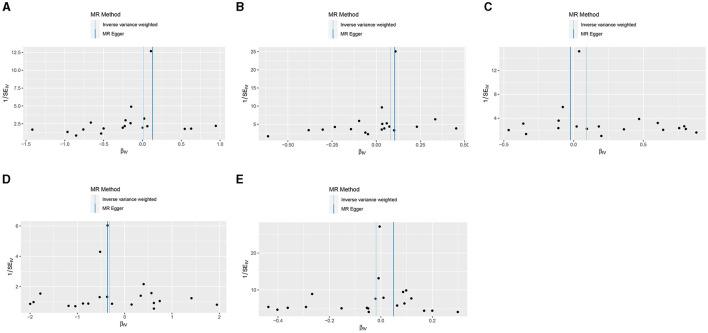
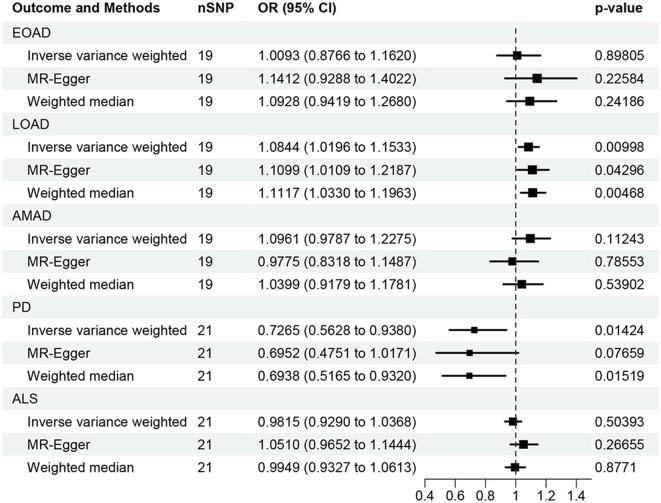
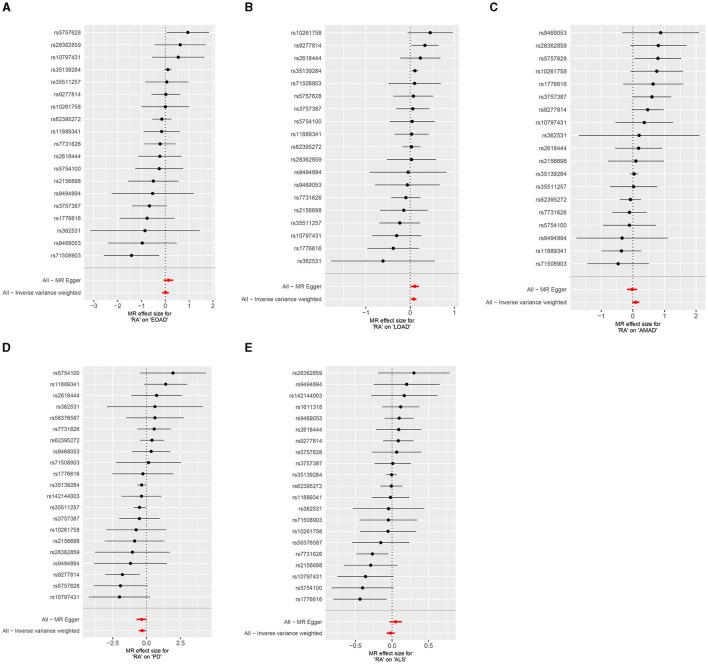
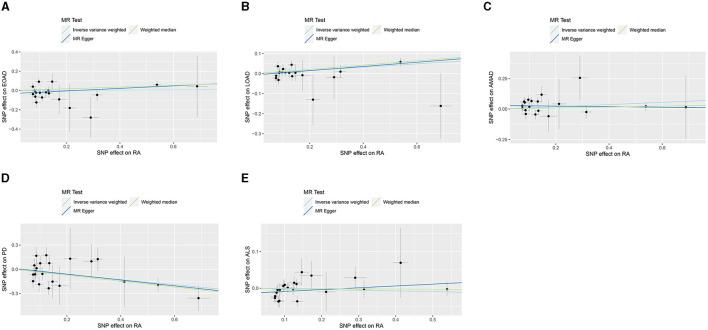
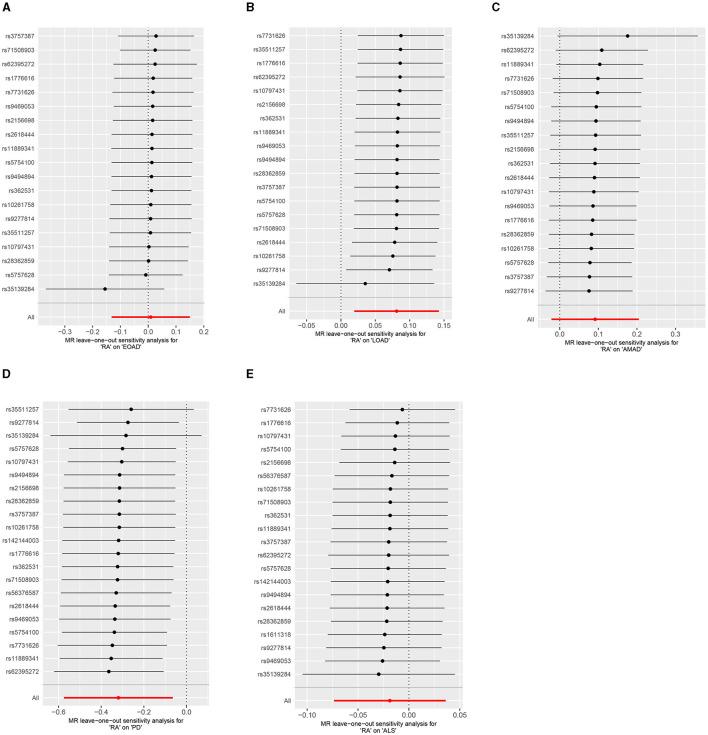
The UVMR analysis, based on the IVW method, revealed a significantly positive causal association between RA and late-onset (LO) AD (OR [95% CI] = 1.084 [1.020-1.153]; = 9.980 × 10), while suggesting a possible inverse relationship with PD (OR [95% CI] = 0.727 [0.563-0.938]; = 0.014). Our study did not detect any causal connections between RA and early-onset (EO) AD, atypical or mixed (AM) AD, and ALS (all > 0.05). The MVMR analysis results indicated that after adjusting for alcohol drinking, RA remains a risk factor for LOAD (OR [95% CI] = 1.094 [1.024-1.169]; = 0.008). However, MVMR analysis revealed no causal connections between RA and PD after adjustments for BMI, alcohol drinking, or T2DM (all > 0.05). Sensitivity analyses showed no evidence of heterogeneity and horizontal pleiotropy.
CONCLUSIONS
This research provides genetic evidence indicating that RA potentially causes an increased risk of developing LOAD and PD. Such a revelation underscores the importance for individuals suffering from RA to be vigilant about the potential emergence of LOAD and PD. Ongoing monitoring and prompt detection are essential for successfully managing and intervening in this possible risk.
背景
观察性研究突出了类风湿关节炎(RA)与神经退行性疾病(NDs)之间的潜在关系。然而,此类研究的固有局限性阻碍了因果关系的确证,包括易受混杂因素影响以及存在反向因果关系的可能性。本研究采用两样本孟德尔随机化(MR)方法,以评估RA对三种神经退行性疾病的因果影响,这三种疾病包括阿尔茨海默病(AD)、帕金森病(PD)和肌萎缩侧索硬化症(ALS)。
方法
我们汇总了针对欧洲裔人群中RA或NDs的全基因组关联研究(GWASs)的数据。与RA有强关联的单核苷酸多态性(SNPs)被确定为工具变量(IVs)。为了估计RA与AD、PD和ALS之间的关联,我们在单变量MR(UVMR)分析中使用了逆方差加权(IVW)方法。通过使用MR-Egger和加权中位数方法的补充分析对IVW结果进行验证。进行了多变量MR(MVMR)分析,对体重指数(BMI)、饮酒和2型糖尿病(T2DM)进行了调整。
结果
基于IVW方法的UVMR分析显示,RA与晚发型(LO)AD之间存在显著的正向因果关联(OR [95% CI] = 1.084 [1.020 - 1.153];P = 9.980 × 10⁻³),同时提示与PD可能存在负相关(OR [95% CI] = 0.727 [0.563 - 0.938];P = 0.014)。我们的研究未发现RA与早发型(EO)AD、非典型或混合型(AM)AD以及ALS之间存在任何因果联系(所有P > 0.05)。MVMR分析结果表明,在调整饮酒因素后,RA仍然是LOAD的危险因素(OR [95% CI] = 1.094 [1.024 - 1.169];P = 0.008)。然而,在对BMI、饮酒或T2DM进行调整后,MVMR分析显示RA与PD之间不存在因果联系(所有P > 0.05)。敏感性分析未发现异质性和水平多效性的证据。
结论
本研究提供了遗传证据,表明RA可能会增加患LOAD和PD的风险。这一发现强调了RA患者警惕LOAD和PD潜在出现的重要性。持续监测和及时发现对于成功管理和干预这种可能的风险至关重要。

 Zotero 插件