
采样技术在采集入侵性淡水水螅虫息肉阶段样本中的有效性
Effectiveness of Sampling Techniques in Collecting the Polyp Stage of the Invasive Freshwater Hydrozoan .
作者信息
Zhu Jonathan A, Folino-Rorem Nadine C
机构信息
Department of Biological and Health Sciences, Wheaton College, Wheaton, IL 60187, USA.
出版信息
Biology (Basel). 2024 Aug 22;13(8):645. doi: 10.3390/biology13080645.
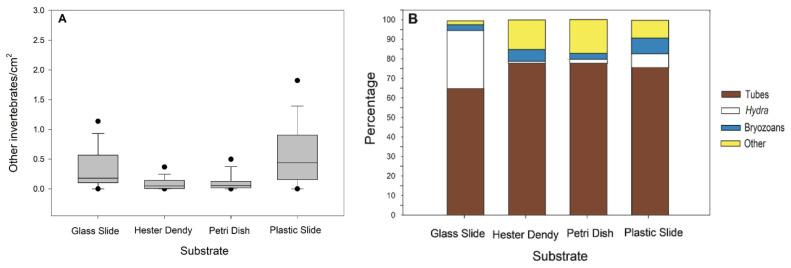
Current sampling methods for detecting the presence of the invasive freshwater hydrozoan rely mainly on visual confirmation of the medusa stage. Confirming the presence of the polyp stage is equally important for observing medusae since typical late summer/early fall occurrences or observations of medusae are sporadic though are becoming more frequent. The polyp stage is important as it is the organism's primary stage and is present throughout the year depending on water temperatures. Therefore, sampling methods for the polyp stage are, commonly, the collection of substrates such as rocks, plants, or pieces of wood in a given body of water, and these can be cumbersome to examine. Polyps are also small, transparent, and difficult to see on natural substrates. Based on a preliminary culturing of the polyp stage on glass and plastic microscope slides in the laboratory, we designed a sampling methodology based on submerging four substrate types (glass and plastic microscope slides, Hester-Dendy discs, and small glass Petri dishes) to confirm the presence of polyps in the field. We tested this method in three lakes in the Illinois-Indiana region (USA). Two of the lakes have recorded sightings of medusae but the third has no record of polyps or medusae. The sampling method we designed was effective in that polyps were found on both plastic and glass slides. While this method can be sufficient for detection of the polyp stage, it also shows potential for improvement; we highlight abiotic and biotic ecological parameters as significant factors influencing the collection of polyps to be considered for future methodologies.
目前用于检测入侵性淡水水螅虫存在的采样方法主要依赖于对水母体阶段的目视确认。确认水螅体阶段的存在对于观察水母体同样重要,因为典型的夏末/秋初出现或水母体的观察虽然越来越频繁,但仍然是零星的。水螅体阶段很重要,因为它是该生物体的主要阶段,并且根据水温全年都存在。因此,用于水螅体阶段的采样方法通常是在给定水体中采集诸如岩石、植物或木块等基质,而这些基质检查起来可能很麻烦。水螅体也很小、透明,在天然基质上很难看到。基于在实验室中在玻璃和塑料显微镜载玻片上对水螅体阶段进行的初步培养,我们设计了一种采样方法,该方法基于将四种基质类型(玻璃和塑料显微镜载玻片、赫斯特-丹迪圆盘和小玻璃培养皿)浸入水中以在野外确认水螅体的存在。我们在美国伊利诺伊州-印第安纳州地区的三个湖泊中测试了这种方法。其中两个湖泊有过水母体目击记录,但第三个湖泊没有水螅体或水母体的记录。我们设计的采样方法是有效的,因为在塑料和玻璃载玻片上都发现了水螅体。虽然这种方法足以检测水螅体阶段,但它也显示出改进的潜力;我们强调非生物和生物生态参数是影响水螅体采集的重要因素,未来的方法应予以考虑。


 Zotero 插件