
玉米籽粒中真菌内生菌缓解镉胁迫的机制
The Mechanisms of Cadmium Stress Mitigation by Fungal Endophytes from Maize Grains.
作者信息
Awais Muhammad, Xiang Yingying, Yang Dian, Lai Yibin, Cai Fenglian, Shah Naila, Khan Majid, Li Haiyan
机构信息
Faculty of Environmental Science and Engineering, Medical School, Kunming University of Science and Technology, Kunming 650500, China.
The Affiliated Yanan Hospital of Kunming Medical University, Kunming 650051, China.
出版信息
J Fungi (Basel). 2024 Aug 16;10(8):581. doi: 10.3390/jof10080581.
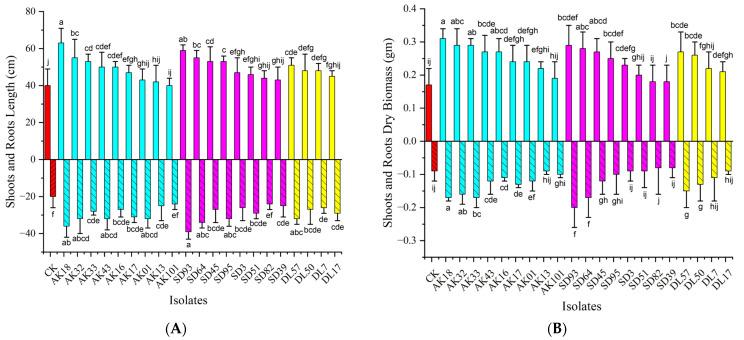
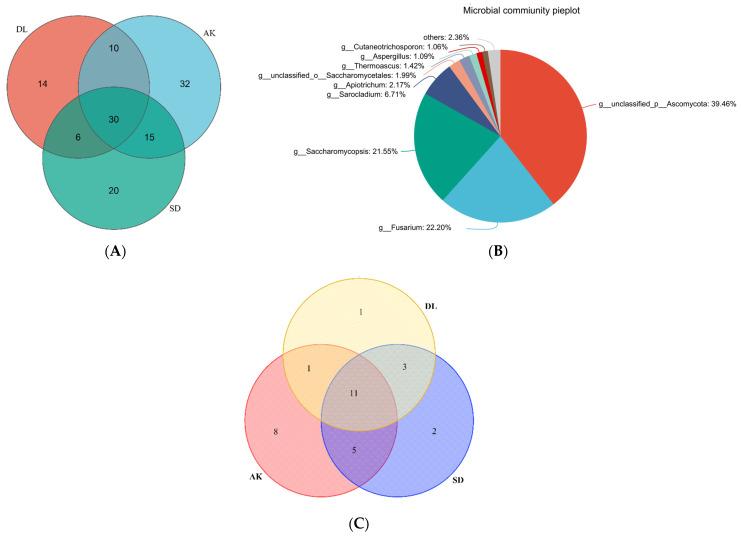
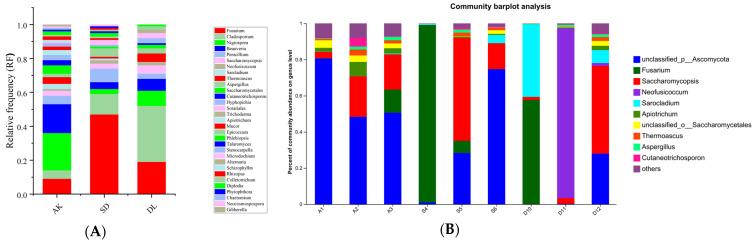
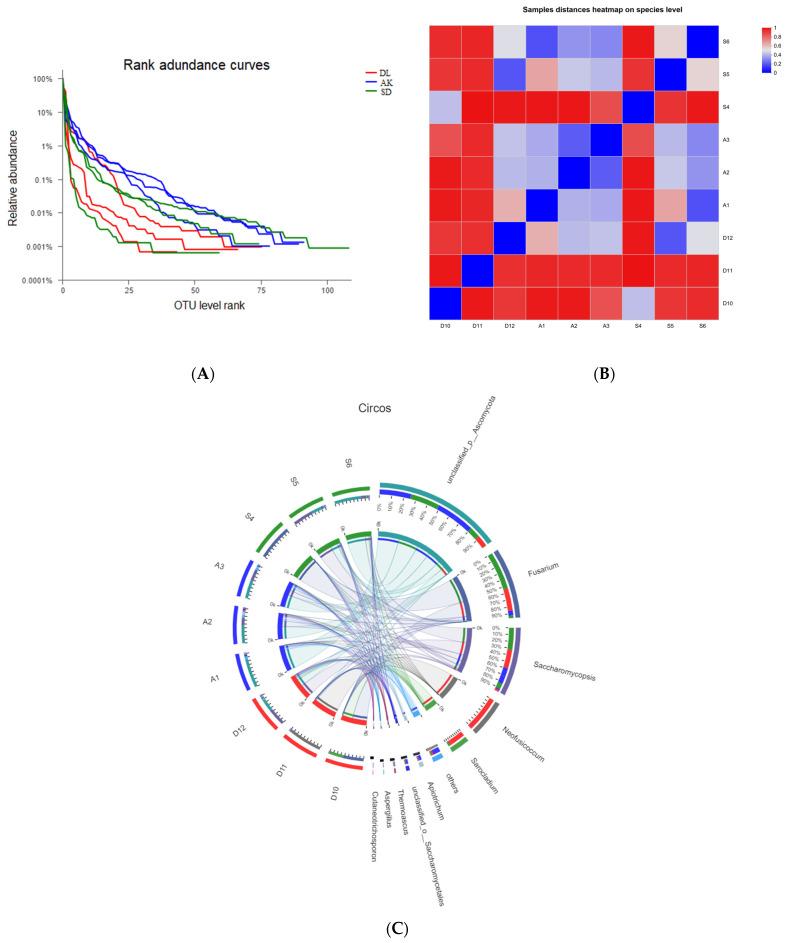
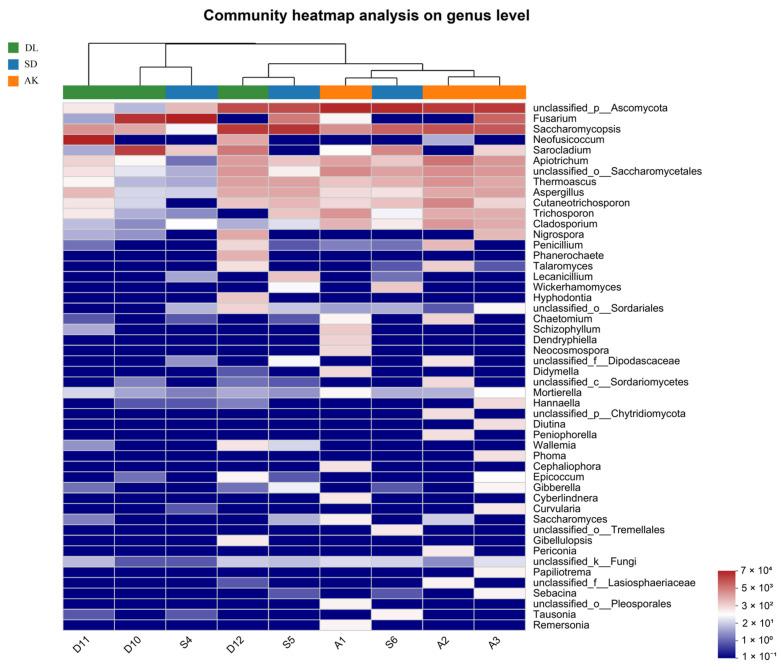
Maize is a crucial staple crop that ensures global food security by supplying essential nutrients. However, heavy metal (HM) contamination inhibits maize growth, reduces output, and affects food security. Some endophytic fungi (EFs) in maize seeds have the potential to enhance growth and increase dry biomass, offering a solution to mitigate the negative effect of HM contamination. Using these functional EFs could help maintain crop production and ensure food safety in HM-contaminated areas. In the present study, the diversity of EFs in corn grains from various HM-contaminated areas in China was studied through culture-dependent and culture-independent methods. We tested the plant growth-promoting (PGP) traits of several dominant culturable isolates and evaluated the growth-promoting effects of these twenty-one isolates through pot experiments. Both studies showed that HM contamination increased the diversity and richness of corn grain EFs and affected the most dominant endophytes. and were the most prevalent culturable endophytes in HM-contaminated areas. Conversely, spp. were the most isolated endophytes in non-contaminated areas. Different from this, and were the dominant EFs in HM-contaminated sites, while and were dominant in non-contaminated sites, according to a culture-independent analysis. PGP trait tests indicated that 70% of the tested isolates (forty-two) exhibited phosphorus solubilization, IAA production, or siderophore production activity. Specifically, 90% of the tested isolates from HM-contaminated sites showed better PGP results than 45% of the isolates from non-contaminated sites. The benefit of the twenty-one isolates on host plant growth was further studied through pot experiments, which showed that all the isolates could improve host plant growth. Among them, strains derived from HM-contaminated sites, including AK18 (), AK32 (), SD93 (), and SD64 (), had notable effects on enhancing the dry biomass of shoots and roots of maize under Cd stress. We speculate that the higher ratio of PGP EFs in corn grains from HM-contaminated areas may explain their competitiveness in such extreme environments. and isolates show high PGP properties, but they can also be phytopathogenic. Therefore, it is essential to evaluate their pathogenic properties and safety for crops before considering their practical use in agriculture.
玉米是一种重要的主食作物,通过提供必需营养物质来确保全球粮食安全。然而,重金属(HM)污染会抑制玉米生长、降低产量并影响粮食安全。玉米种子中的一些内生真菌(EFs)具有促进生长和增加干生物量的潜力,为减轻HM污染的负面影响提供了一种解决方案。利用这些功能性EFs有助于维持作物产量,并确保重金属污染地区的食品安全。在本研究中,通过依赖培养和不依赖培养的方法,对中国不同重金属污染地区玉米籽粒中的EFs多样性进行了研究。我们测试了几种优势可培养分离株的植物生长促进(PGP)特性,并通过盆栽试验评估了这21种分离株的促生长效果。两项研究均表明,HM污染增加了玉米籽粒EFs的多样性和丰富度,并影响了最主要的内生真菌。[具体真菌名称1]和[具体真菌名称2]是重金属污染地区最普遍的可培养内生真菌。相反,[具体真菌名称3]属是未污染地区分离最多的内生真菌。与此不同的是,根据不依赖培养的分析,[具体真菌名称4]和[具体真菌名称5]是重金属污染位点的优势EFs,而[具体真菌名称6]和[具体真菌名称7]在未污染位点占主导地位。PGP特性测试表明,70%的测试分离株(42株)表现出解磷、产吲哚乙酸(IAA)或产铁载体活性。具体而言,来自重金属污染位点的90%测试分离株的PGP结果优于来自未污染位点的45%分离株。通过盆栽试验进一步研究了这21种分离株对寄主植物生长的益处,结果表明所有分离株都能促进寄主植物生长。其中,来自重金属污染位点的菌株,包括AK18([具体真菌名称8])、AK32([具体真菌名称9])、SD93([具体真菌名称10])和SD64([具体真菌名称11]),在镉胁迫下对提高玉米地上部和根部的干生物量有显著作用。我们推测,重金属污染地区玉米籽粒中较高比例的PGP EFs可能解释了它们在这种极端环境中的竞争力。[具体真菌名称12]和[具体真菌名称13]分离株具有较高的PGP特性,但它们也可能是植物病原菌。因此,在考虑将它们实际应用于农业之前,评估它们对作物的致病特性和安全性至关重要。

 Zotero 插件