
哺乳动物冠状病毒的近期进化起源和局部多样性热点。
Recent evolutionary origin and localized diversity hotspots of mammalian coronaviruses.
机构信息
Institut de Biologie de l'École Normale Supérieure (IBENS), École Normale Supérieure, CNRS, INSERM, Université PSL, Paris, France.
Departamento de Ecologia, Instituto de Biociências, Universidade Federal do Rio Grande do Sul, Porto Alegre, Brazil.
出版信息
Elife. 2024 Aug 28;13:RP91745. doi: 10.7554/eLife.91745.
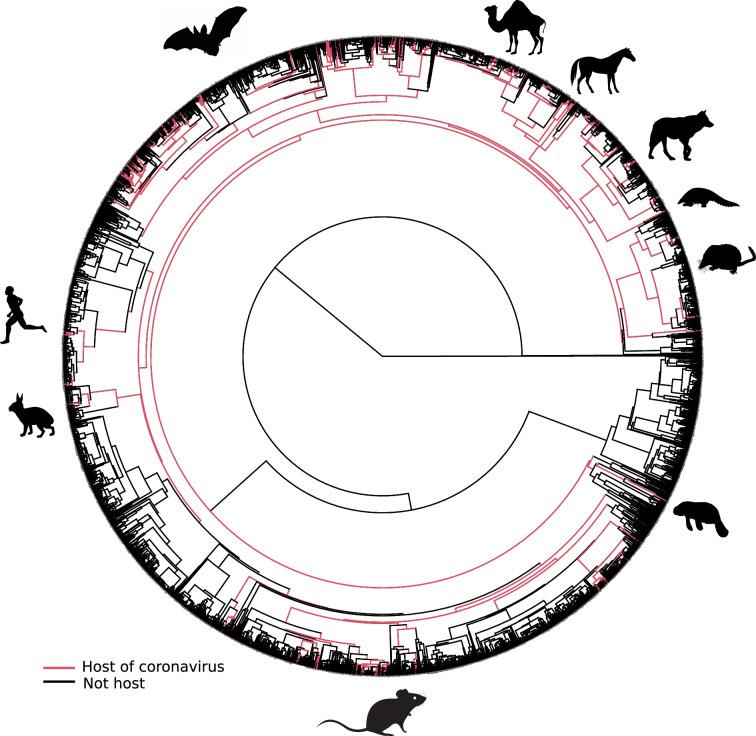
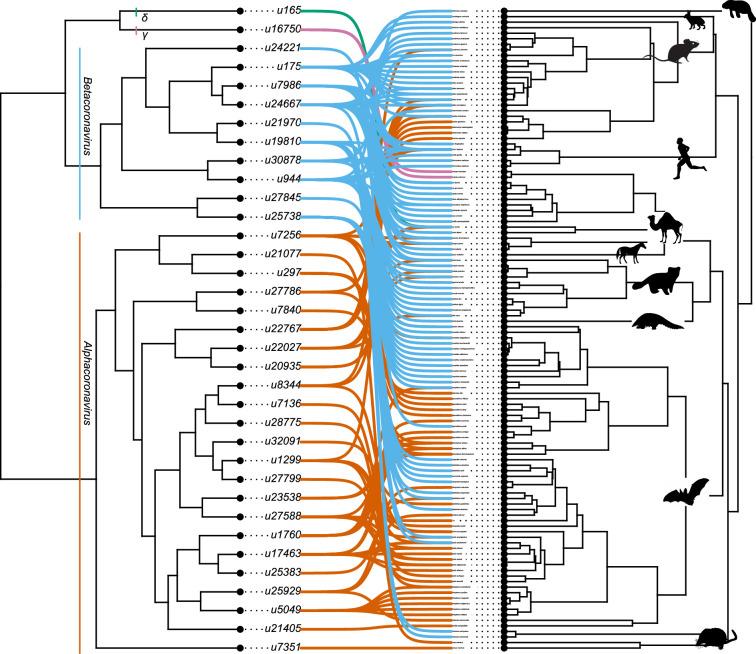
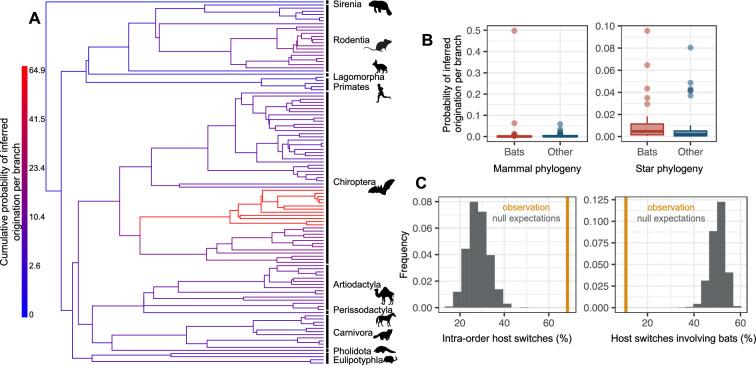
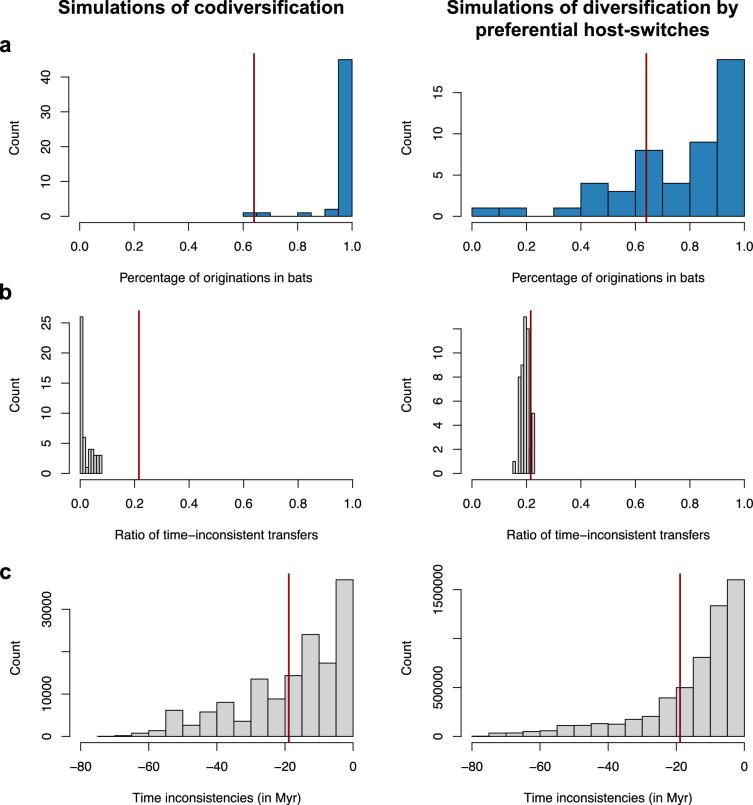
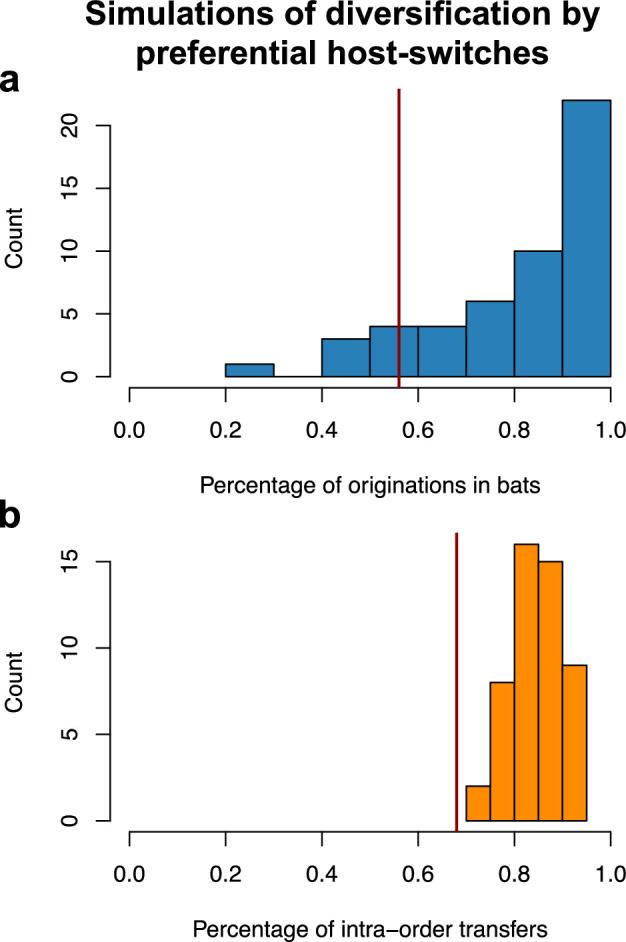
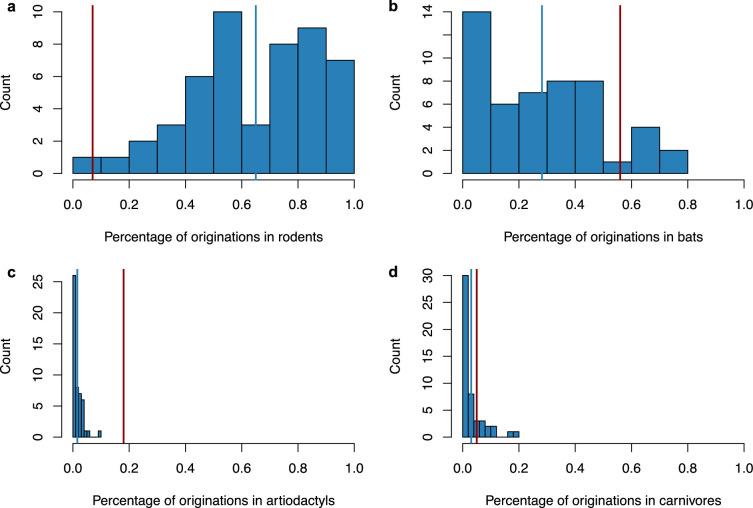
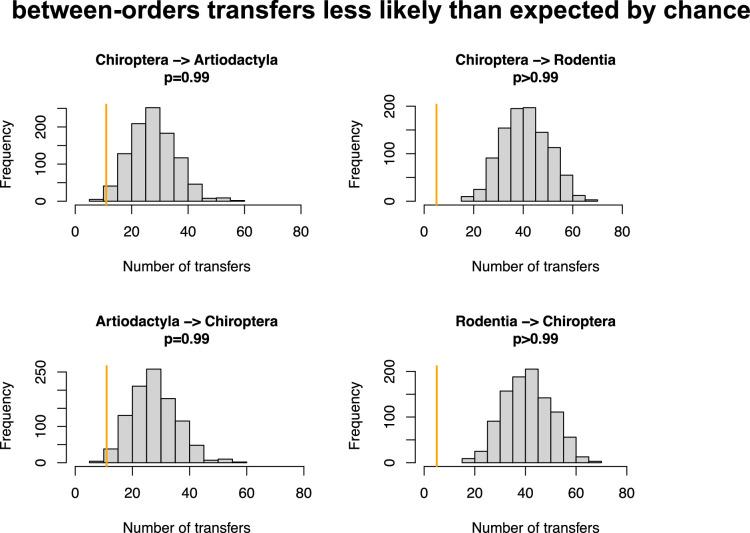
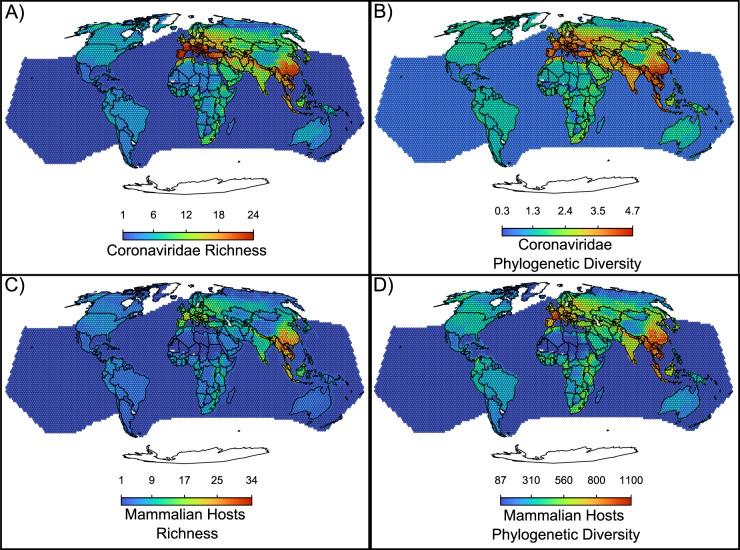
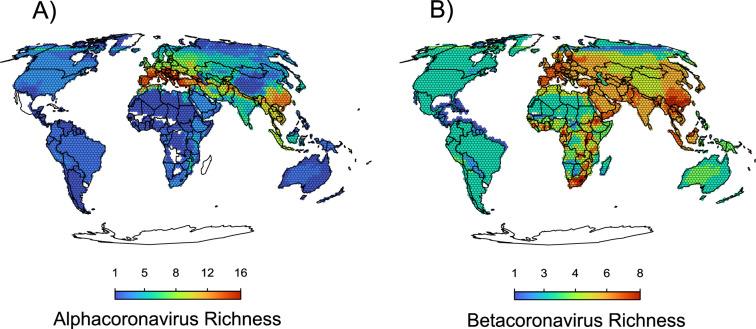
Several coronaviruses infect humans, with three, including the SARS-CoV2, causing diseases. While coronaviruses are especially prone to induce pandemics, we know little about their evolutionary history, host-to-host transmissions, and biogeography. One of the difficulties lies in dating the origination of the family, a particularly challenging task for RNA viruses in general. Previous cophylogenetic tests of virus-host associations, including in the Coronaviridae family, have suggested a virus-host codiversification history stretching many millions of years. Here, we establish a framework for robustly testing scenarios of ancient origination and codiversification recent origination and diversification by host switches. Applied to coronaviruses and their mammalian hosts, our results support a scenario of recent origination of coronaviruses in bats and diversification by host switches, with preferential host switches within mammalian orders. Hotspots of coronavirus diversity, concentrated in East Asia and Europe, are consistent with this scenario of relatively recent origination and localized host switches. Spillovers from bats to other species are rare, but have the highest probability to be towards humans than to any other mammal species, implicating humans as the evolutionary intermediate host. The high host-switching rates within orders, as well as between humans, domesticated mammals, and non-flying wild mammals, indicates the potential for rapid additional spreading of coronaviruses across the world. Our results suggest that the evolutionary history of extant mammalian coronaviruses is recent, and that cases of long-term virus-host codiversification have been largely over-estimated.
几种冠状病毒感染人类,其中三种包括 SARS-CoV2,会导致疾病。虽然冠状病毒特别容易引发大流行,但我们对它们的进化史、宿主间传播和生物地理学知之甚少。其中一个困难在于确定该家族的起源日期,这对于一般的 RNA 病毒来说是一项特别具有挑战性的任务。先前对病毒-宿主关联的共进化测试,包括在冠状病毒科中,表明病毒-宿主共同进化的历史可以追溯到数百万年前。在这里,我们建立了一个稳健测试古老起源和共同进化以及最近起源和宿主转换多样化的情景的框架。应用于冠状病毒及其哺乳动物宿主,我们的结果支持冠状病毒最近在蝙蝠中起源和通过宿主转换多样化的情景,并且在哺乳动物目中存在优先的宿主转换。冠状病毒多样性的热点集中在东亚和欧洲,这与相对较近的起源和局部宿主转换的情景一致。蝙蝠向其他物种的溢出很少见,但向人类的溢出概率最高,而不是向任何其他哺乳动物物种的溢出概率最高,这表明人类是进化中间宿主。目内以及人类、驯化哺乳动物和非飞行野生哺乳动物之间的高宿主转换率表明,冠状病毒在全球范围内迅速传播的潜力。我们的结果表明,现生哺乳动物冠状病毒的进化历史是近代的,并且长期以来病毒-宿主共同进化的情况被大大高估了。







 Zotero 插件