
多糖肽通过减轻氧化应激和细胞凋亡来缓解环磷酰胺诱导的雄性生殖损伤。
Polysaccharide Peptide Alleviates Cyclophosphamide-Induced Male Reproductive Injury by Reducing Oxidative Stress and Apoptosis.
作者信息
Zhang Hang, Li Nannan, Zhang Yukun, Xu Yue, Lu Feng, Lin Dongmei, Lin Shuqian, Li Min, Yang Baoxue
机构信息
State Key Laboratory of Vascular Homeostasis and Remodeling, Department of Pharmacology, School of Basic Medical Sciences, Peking University, Beijing 100191, China.
Chongqing Key Laboratory of Development and Utilization of Genuine Medicinal Materials in Three Gorges Reservoir Area, Chongqing 404120, China.
出版信息
Biomedicines. 2024 Jul 23;12(8):1632. doi: 10.3390/biomedicines12081632.
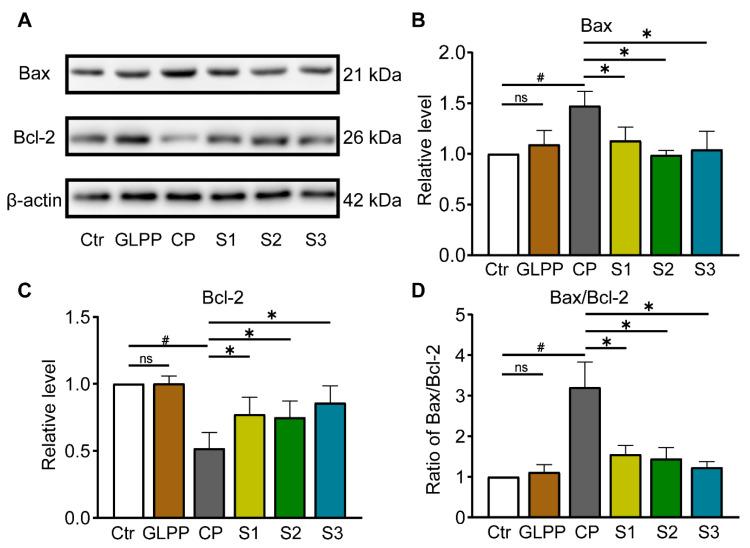
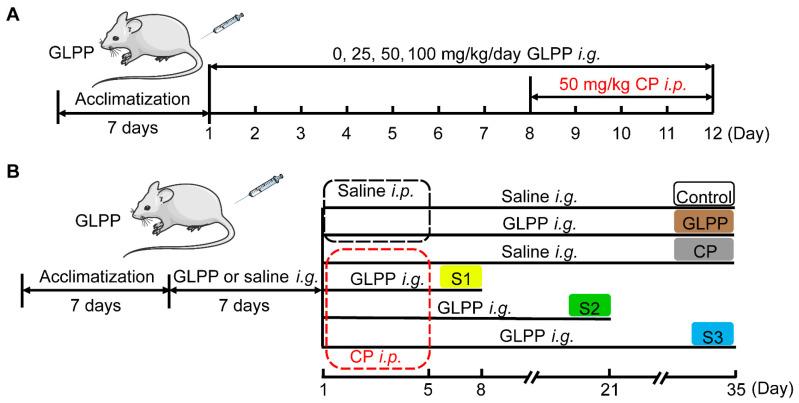
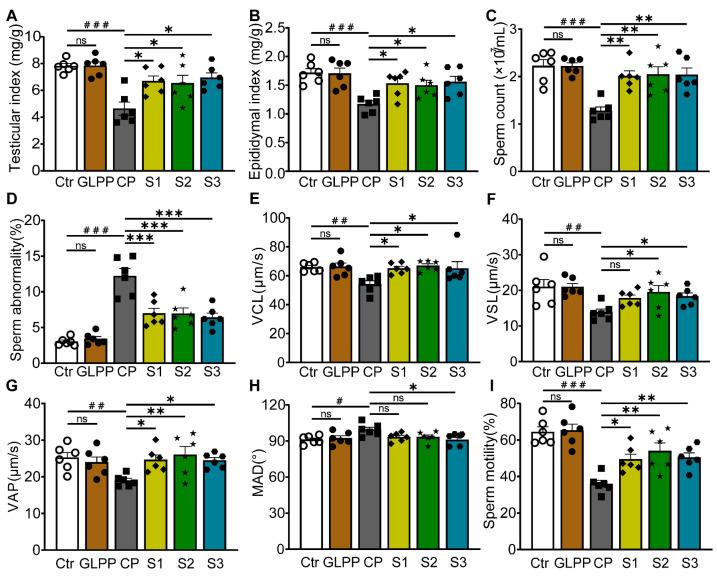
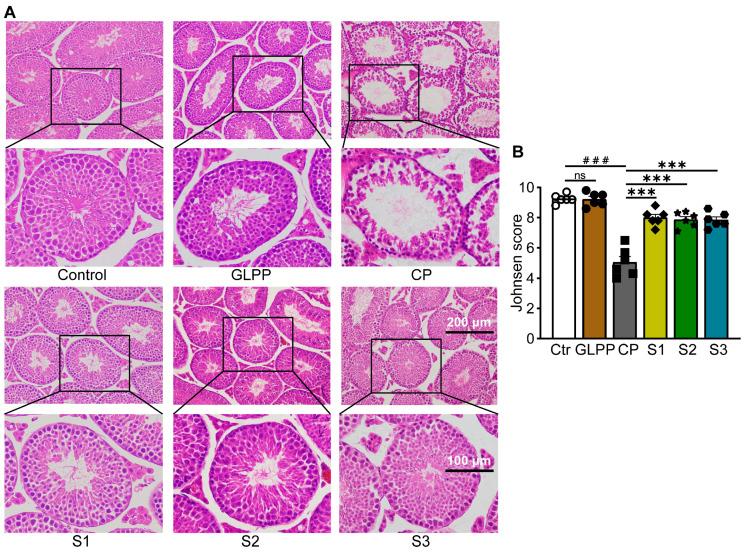
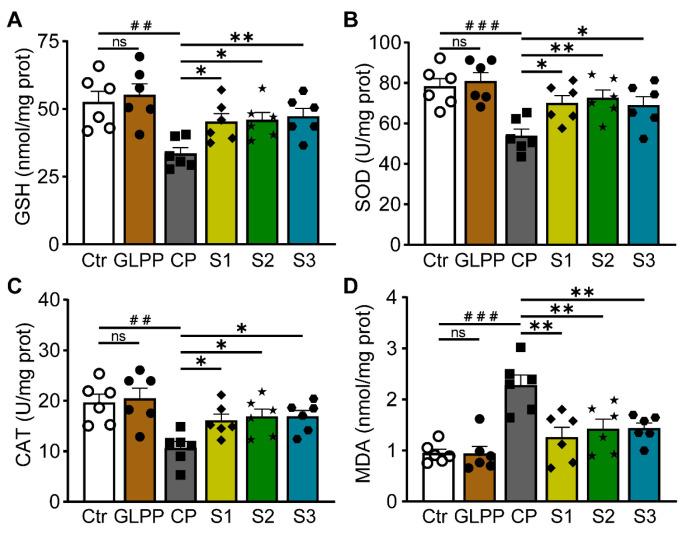
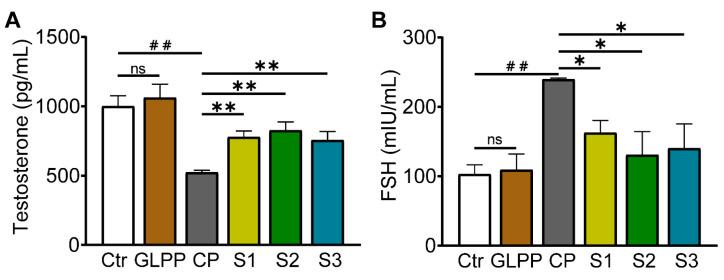
Chemotherapy is an important factor leading to male infertility. It is crucial to discover safe and effective treatments to prevent male reproductive injury caused by chemotherapy. The polysaccharide peptide (GLPP) has multiple pharmacological activities. The purpose of this study was to determine whether GLPP could protect the male sperm production from chemotherapeutic injury using a mouse model, with testicular damage induced by cyclophosphamide (CP). CP (50 mg/kg/day) was injected intraperitoneally into male ICR mice gavaged with different doses of GLPP at certain spermatogenic stages. The experimental results showed that GLPP alleviated the CP-induced reduction in reproductive organ coefficients and sperm parameters and reduced the morphological damage of testicular tissues in a dose-dependent manner. GLPP significantly improved the reproductive index, sperm-related parameters, sex hormone levels, and histological testis architecture at different spermatogenic stages. Furthermore, GLPP significantly increased superoxide dismutase (SOD), glutathione (GSH), catalase (CAT), Nrf2, and HO-1, and decreased malondialdehyde (MDA) and Keap-1 in the testicular tissue, indicating reduced oxidative stress. In addition, GLPP limited CP-induced apoptosis via a reduction in Bax expression and increase in Bcl-2 expression. This study suggests that GLPP plays a protective role in spermatogenesis by reducing chemotherapeutic injury and might be developed into drug for male patients receiving chemotherapy.
化疗是导致男性不育的一个重要因素。发现安全有效的治疗方法以预防化疗引起的男性生殖损伤至关重要。多糖肽(GLPP)具有多种药理活性。本研究的目的是使用环磷酰胺(CP)诱导睾丸损伤的小鼠模型,确定GLPP是否能保护雄性小鼠精子生成免受化疗损伤。在特定生精阶段,将不同剂量的GLPP灌胃给予雄性ICR小鼠后,腹腔注射CP(50 mg/kg/天)。实验结果表明,GLPP以剂量依赖的方式减轻了CP诱导的生殖器官系数和精子参数的降低,并减少了睾丸组织的形态损伤。GLPP显著改善了不同生精阶段的生殖指数、精子相关参数、性激素水平和睾丸组织学结构。此外,GLPP显著增加了睾丸组织中的超氧化物歧化酶(SOD)、谷胱甘肽(GSH)、过氧化氢酶(CAT)、Nrf2和HO-1,并降低了丙二醛(MDA)和Keap-1,表明氧化应激降低。此外,GLPP通过降低Bax表达和增加Bcl-2表达来限制CP诱导的细胞凋亡。本研究表明,GLPP通过减少化疗损伤在精子发生中发挥保护作用,可能开发成为接受化疗的男性患者的药物。



 Zotero 插件