
鉴定和描述新型致病变异体在:在保加利亚精细研究腓骨肌萎缩症 4D 的遗传图谱。
Identification and Characterization of Novel Founder Mutations in : Refining the Genetic Landscape of Charcot-Marie-Tooth Disease Type 4D in Bulgaria.
机构信息
Molecular Neurogenomics Group, VIB Center for Molecular Neurology, VIB, 2610 Antwerp, Belgium.
Department of Biomedical Sciences, University of Antwerp, 2610 Antwerp, Belgium.
出版信息
Int J Mol Sci. 2024 Aug 21;25(16):9047. doi: 10.3390/ijms25169047.
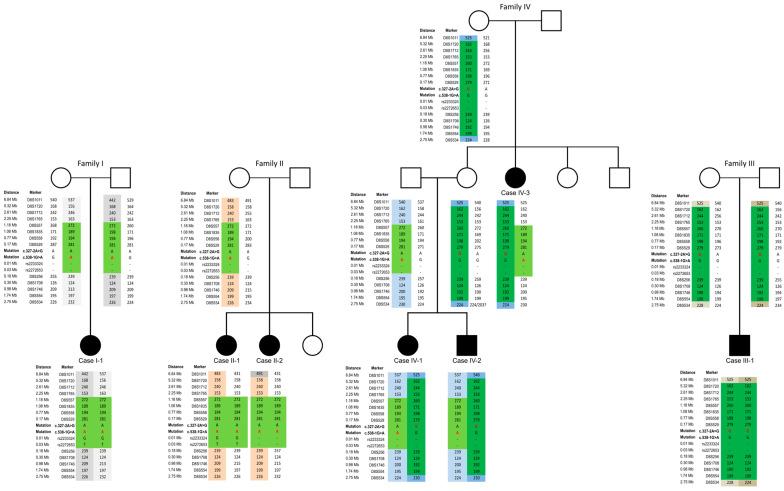
Charcot-Marie-Tooth neuropathy type 4D (CMT4D) is a rare genetic disorder of the peripheral nervous system caused by biallelic mutations in the N-Myc Downstream Regulated 1 gene (). Patients present with an early onset demyelinating peripheral neuropathy causing severe distal muscle weakness and sensory loss, leading to loss of ambulation and progressive sensorineural hearing loss. The disorder was initially described in the Roma community due to a common founder mutation, and only a handful of disease-causing variants have been described in this gene so far. Here, we present genetic and clinical findings from a large Bulgarian cohort of demyelinating CMT patients harboring recurrent and novel variants in the gene. Notably, two splice-site variants are exclusive to Bulgarian Muslims and reside in ancestral haplotypes, suggesting a founder effect. Functional characterization of these novel variants implicates a loss-of-function mechanism due to shorter gene products. Our findings contribute to a deeper understanding of the genetic and clinical heterogeneity of CMT4D and highlight novel founder mutations in the ethnic minority of Bulgarian Muslims.
腓骨肌萎缩症 4D 型(CMT4D)是一种罕见的周围神经系统遗传性疾病,由 N-Myc 下游调节因子 1 基因()的双等位基因突变引起。患者表现为早期脱髓鞘周围神经病,导致严重的远端肌肉无力和感觉丧失,导致行走能力丧失和进行性感觉神经性听力损失。该疾病最初在罗姆人群体中由于一个常见的创始人突变而被描述,迄今为止,该基因中仅描述了少数几种致病变异体。在这里,我们介绍了一个大型保加利亚脱髓鞘 CMT 患者队列的遗传和临床发现,这些患者携带 基因中的反复出现和新的变异体。值得注意的是,两个剪接位点变异体仅存在于保加利亚穆斯林中,并且位于祖源单倍型中,提示存在一个创始人效应。这些新变异体的功能特征表明存在由于较短的基因产物而导致的功能丧失机制。我们的研究结果有助于更深入地了解 CMT4D 的遗传和临床异质性,并强调了保加利亚穆斯林少数民族中的新的创始人突变。

 Zotero 插件