
开发优化的辣椒再生和转化方案。
Developing an Optimized Protocol for Regeneration and Transformation in Pepper.
机构信息
State Key Laboratory of Vegetable Biobreeding, Institute of Vegetables & Flowers, Chinese Academy of Agricultural Sciences, Beijing 100081, China.
Sanya National Nanfan Research Institute of the Chinese Academy of Agricultural Sciences, Hainan Yazhou Bay Seed Lab, Sanya 572024, China.
出版信息
Genes (Basel). 2024 Aug 2;15(8):1018. doi: 10.3390/genes15081018.
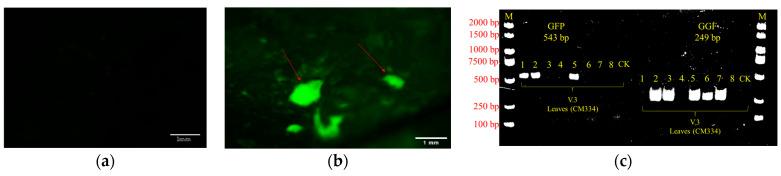
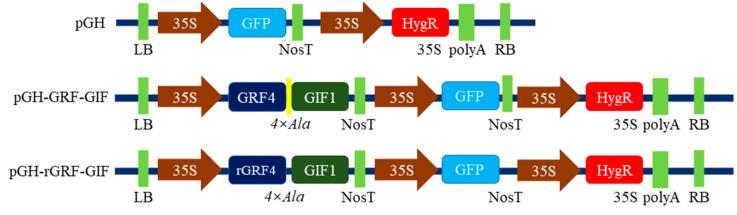
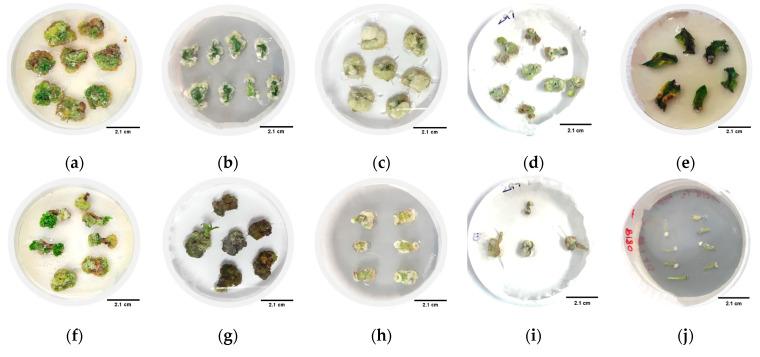
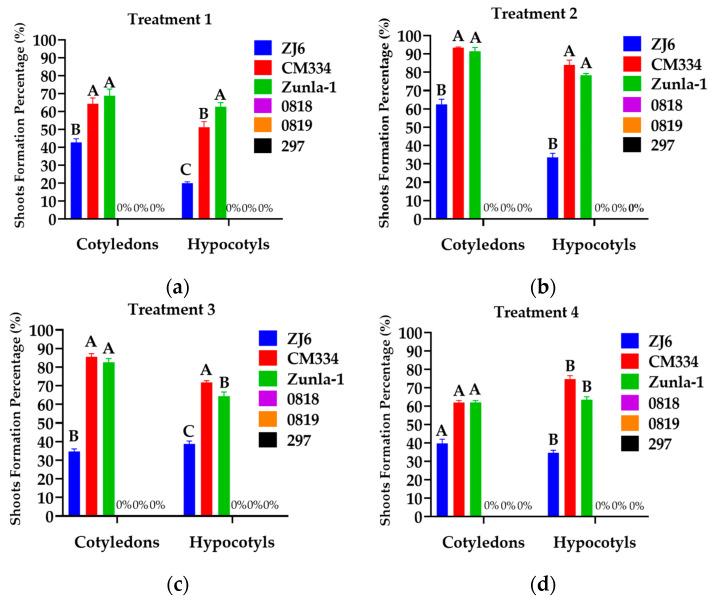
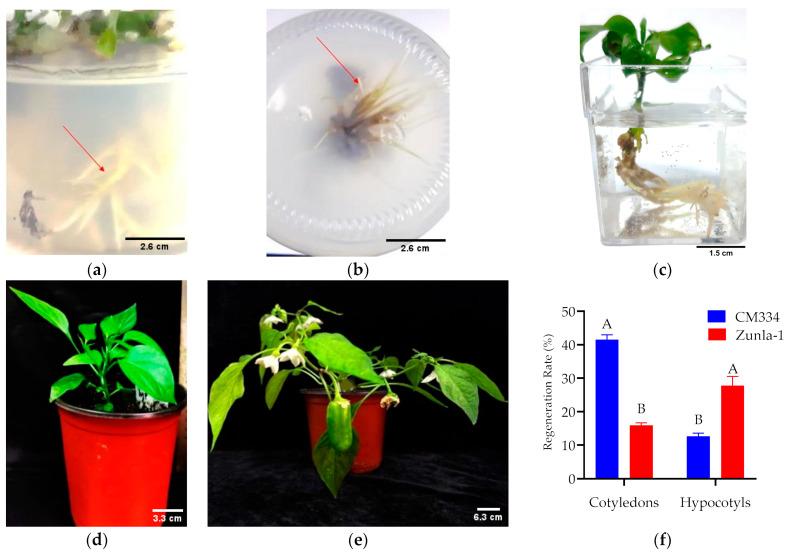
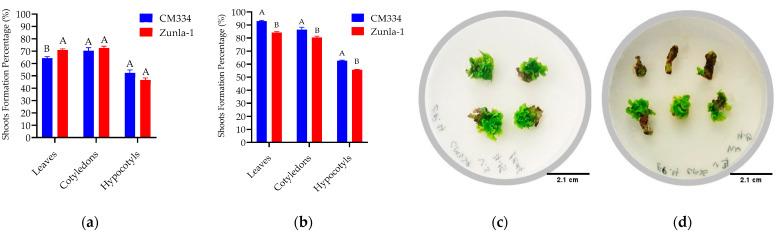
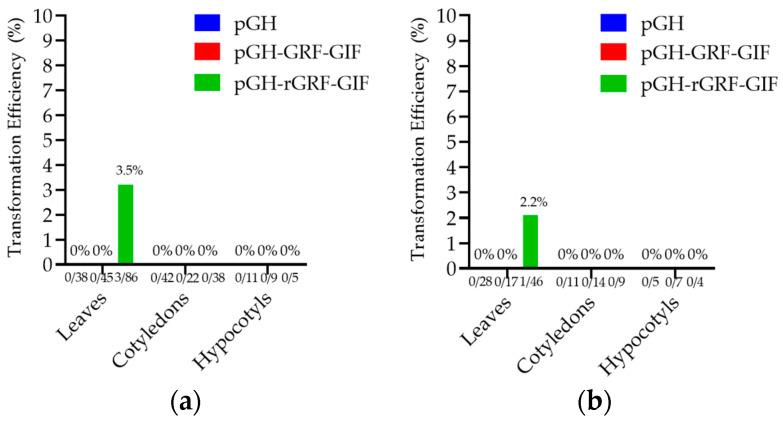
L. is extensively cultivated in subtropical and temperate regions globally, respectively, when grown in a medium with 8 holding significant economic importance. Despite the availability of genome sequences and editing tools, gene editing in peppers is limited by the lack of a stable regeneration and transformation method. This study assessed regeneration and transformation protocols in seven chili pepper varieties, including CM334, Zunla-1, Zhongjiao6 (ZJ6), 0818, 0819, 297, and 348, in order to enhance genetic improvement efforts. Several explants, media compositions, and hormonal combinations were systematically evaluated to optimize the regeneration process across different chili pepper varieties. The optimal concentrations for shoot formation, shoot elongation, and rooting in regeneration experiments were determined as 5 mg/L of 6-Benzylaminopurine (BAP) with 5 mg/L of silver nitrate (AgNO), 0.5 mg/L of Gibberellic acid (GA), and 1 mg/L of Indole-3-butyric acid (IBA), respectively. The highest regeneration rate of 41% was observed from CM334 cotyledon explants. Transformation optimization established 300 mg/L of cefotaxime for bacterial control, with a 72-h co-cultivation period at OD = 0.1. This study optimizes the protocols for chili pepper regeneration and transformation, thereby contributing to genetic improvement efforts.
辣椒在全球的亚热带和温带地区广泛种植,在含有 8 的培养基中培养时具有重要的经济意义。尽管有基因组序列和编辑工具可用,但由于缺乏稳定的再生和转化方法,辣椒的基因编辑受到限制。本研究评估了七种辣椒品种(CM334、Zunla-1、Zhongjiao6(ZJ6)、0818、0819、297 和 348)的再生和转化方案,以增强遗传改良工作。为了优化不同辣椒品种的再生过程,系统评估了几种外植体、培养基组成和激素组合。确定了再生实验中芽形成、芽伸长和生根的最佳浓度分别为 5mg/L 的 6-苄基氨基嘌呤(BAP)和 5mg/L 的硝酸银(AgNO)、0.5mg/L 的赤霉素(GA)和 1mg/L 的吲哚-3-丁酸(IBA)。从 CM334 子叶外植体观察到最高的再生率为 41%。转化优化确定了 300mg/L 的头孢噻肟用于细菌控制,OD=0.1 时共培养 72h。本研究优化了辣椒再生和转化的方案,为遗传改良工作做出了贡献。

 Zotero 插件