
东地中海区域四个国家在奥密克戎时期针对有症状和严重后果的新冠病毒疫苗有效性研究
COVID-19 Vaccine Effectiveness Studies against Symptomatic and Severe Outcomes during the Omicron Period in Four Countries in the Eastern Mediterranean Region.
作者信息
Runge Manuela, Karimian Zahra, Kheirandish Mehrnaz, Borghi Giulio, Wodniak Natalie, Fahmy Kamal, Mantel Carsten, Cherian Thomas, Nabil Ahmed Said Zeinab, Najafi Farid, Thneibat Fatima, Ul-Haq Zia, Fazid Sheraz, Ibrahim Salama Iman, Khosravi Shadmani Fatemeh, Alrawashdeh Ahmad, Sirous Shadrokh, Bellizzi Saverio, Ahmed Amira, Lukwiya Michael, Rashidian Arash
机构信息
MMGH Consulting, 8049 Zurich, Switzerland.
Division of Science, Information and Dissemination, WHO Regional Office for the Eastern Mediterranean, Cairo 11371, Egypt.
出版信息
Vaccines (Basel). 2024 Aug 10;12(8):906. doi: 10.3390/vaccines12080906.
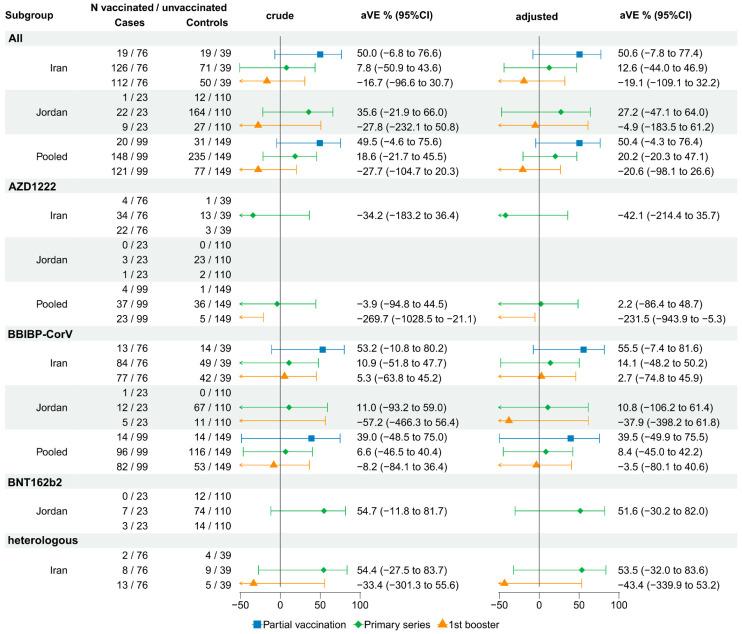
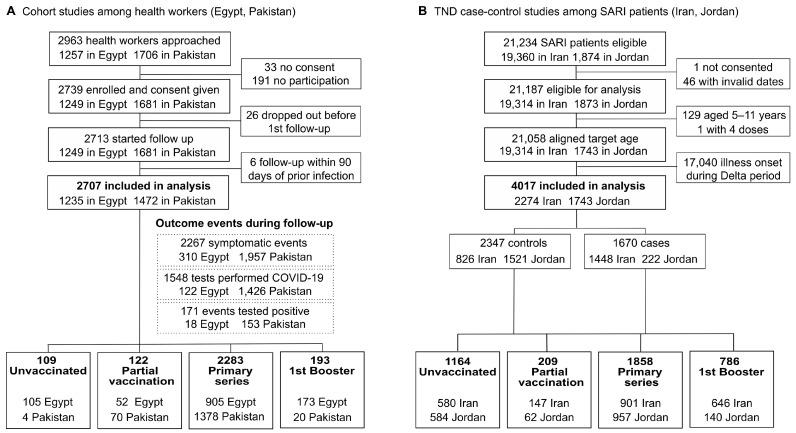
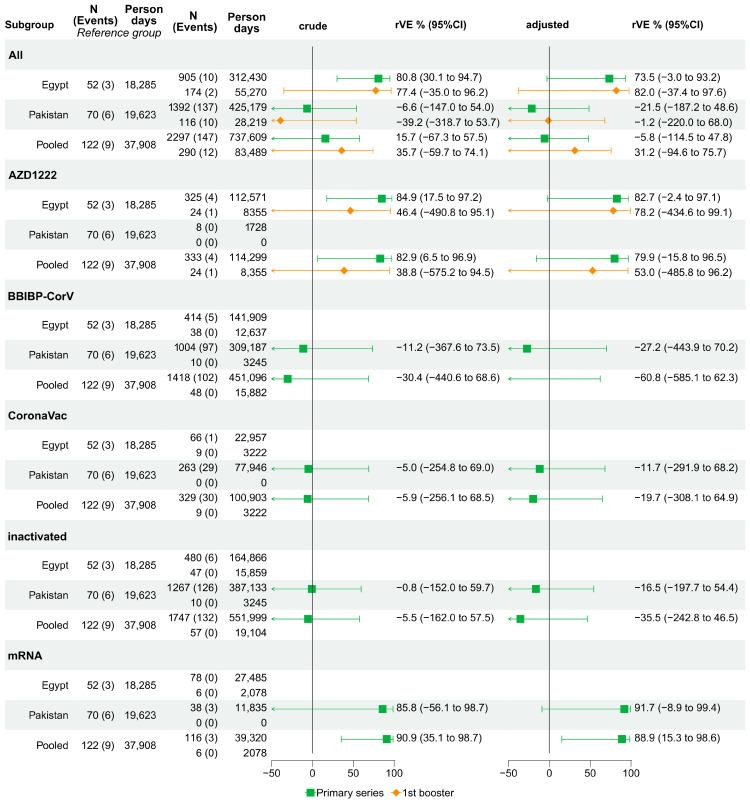
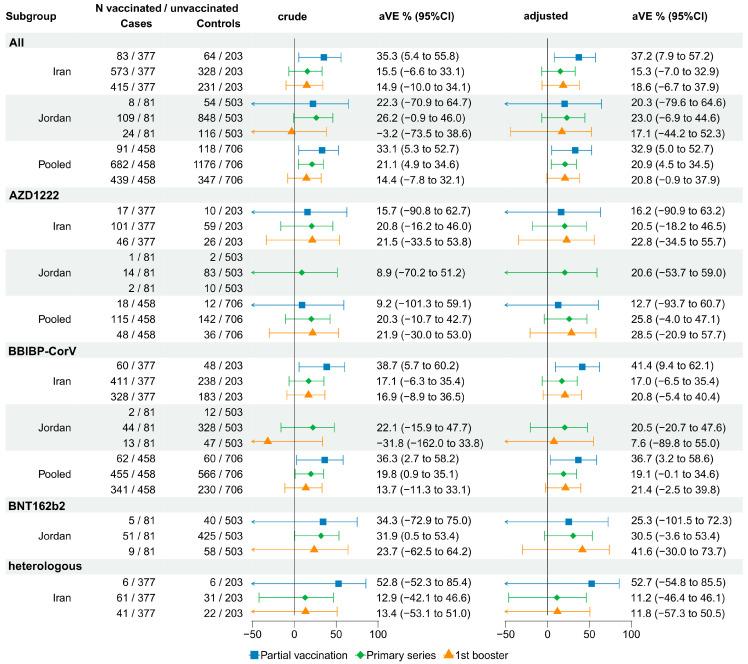
Vaccine effectiveness (VE) studies provide real-world evidence to monitor vaccine performance and inform policy. The WHO Regional Office for the Eastern Mediterranean supported a regional study to assess the VE of COVID-19 vaccines against different clinical outcomes in four countries between June 2021 and August 2023. Health worker cohort studies were conducted in 2707 health workers in Egypt and Pakistan, of whom 171 experienced symptomatic laboratory-confirmed SARS-CoV-2 infection. Test-negative design case-control studies were conducted in Iran and Jordan in 4017 severe acute respiratory infection (SARI) patients (2347 controls and 1670 cases) during the Omicron variant dominant period. VE estimates were calculated for each study and pooled by study design for several vaccine types (BBIBP-CorV, AZD1222, BNT162b2, and mRNA-1273, among others). Among health workers, VE against symptomatic infection of a complete primary series could only be computed compared to partial vaccination, suggesting a benefit of providing an additional dose of mRNA vaccines (VE: 88.9%, 95%CI: 15.3-98.6%), while results were inconclusive for other vaccine products. Among SARI patients, VE against hospitalization of a complete primary series with any vaccine compared to non-vaccinated was 20.9% (95%CI: 4.5-34.5%). Effectiveness estimates for individual vaccines, booster doses, and secondary outcomes (intensive care unit admission and death) were inconclusive. Future VE studies will need to address challenges in both design and analysis when conducted late during a pandemic and will be able to utilize the strengthened capacities in countries.
疫苗效力(VE)研究提供了监测疫苗性能并为政策提供依据的真实世界证据。世界卫生组织东地中海区域办事处支持了一项区域研究,以评估2021年6月至2023年8月期间四个国家新冠疫苗针对不同临床结局的效力。在埃及和巴基斯坦的2707名卫生工作者中开展了队列研究,其中171人经实验室确诊感染了有症状的新冠病毒。在伊朗和约旦,于奥密克戎变异株占主导期间对4017例严重急性呼吸道感染(SARI)患者(2347例对照和1670例病例)开展了检测阴性设计的病例对照研究。针对每项研究计算了效力估计值,并按研究设计对几种疫苗类型(如BBIBP-CorV、AZD1222、BNT162b2和mRNA-1273等)进行了汇总。在卫生工作者中,仅能计算出完整基础免疫系列针对有症状感染的效力,并与部分接种疫苗的情况进行比较,这表明额外接种一剂mRNA疫苗有好处(效力:88.9%,95%置信区间:15.3-98.6%),而其他疫苗产品的结果尚无定论。在SARI患者中,与未接种疫苗相比,任何疫苗完整基础免疫系列针对住院治疗的效力为20.9%(95%置信区间:4.5-34.5%)。针对个别疫苗、加强针以及次要结局(重症监护病房收治和死亡)的效力估计尚无定论。未来的疫苗效力研究在大流行后期开展时将需要应对设计和分析方面的挑战,并且将能够利用各国增强的能力。

 Zotero 插件