
利用智能手表上实现的峰度实时感测上肢运动多样性。
Real-Time Sensing of Upper Extremity Movement Diversity Using Kurtosis Implemented on a Smartwatch.
机构信息
Department of Mechanical and Aerospace Engineering, University of California Irvine, Irvine, CA 92697, USA.
Max Näder Center for Rehabilitation Technologies and Outcomes Research, Center for Bionic Medicine, Shirley Ryan AbilityLab, Chicago, IL 60611, USA.
出版信息
Sensors (Basel). 2024 Aug 14;24(16):5266. doi: 10.3390/s24165266.
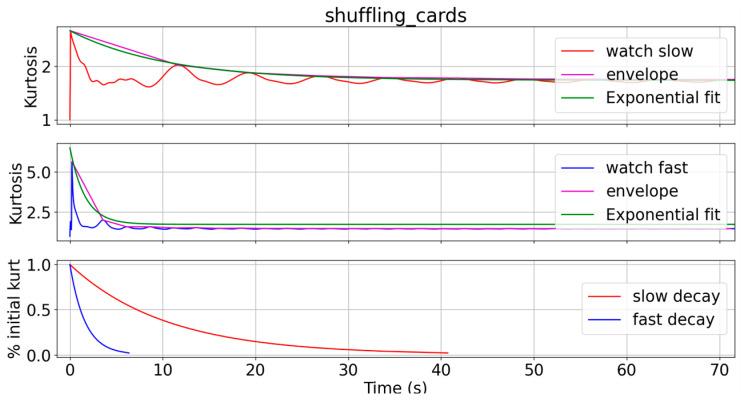
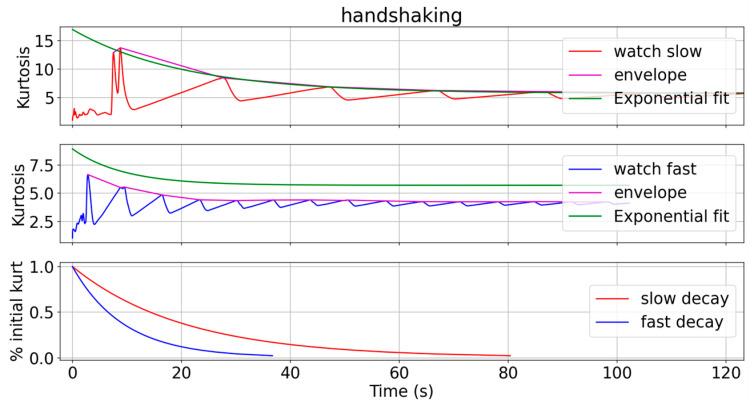
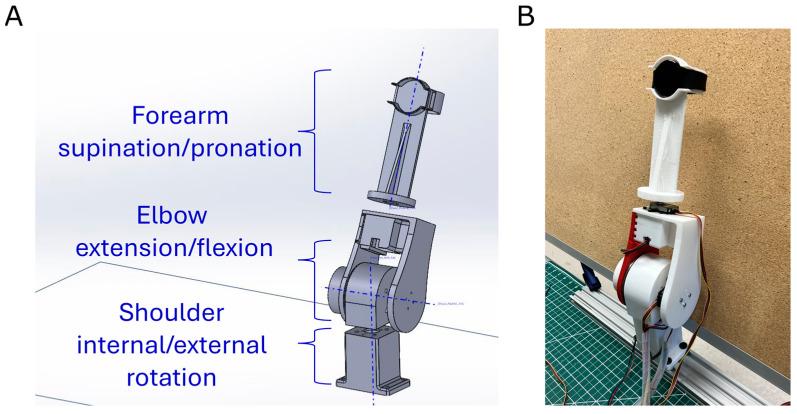
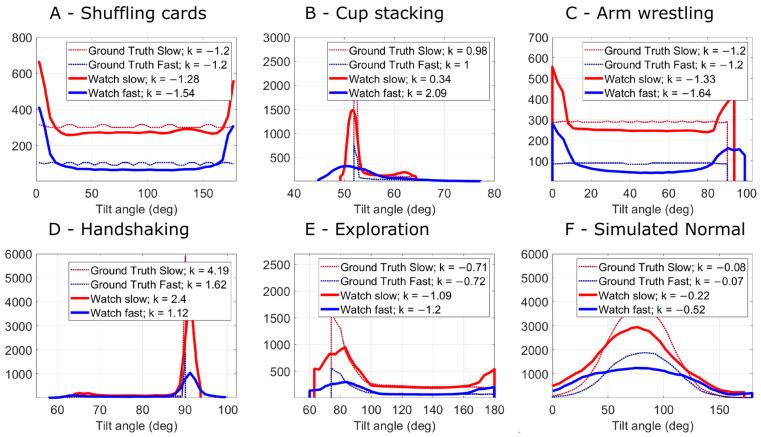
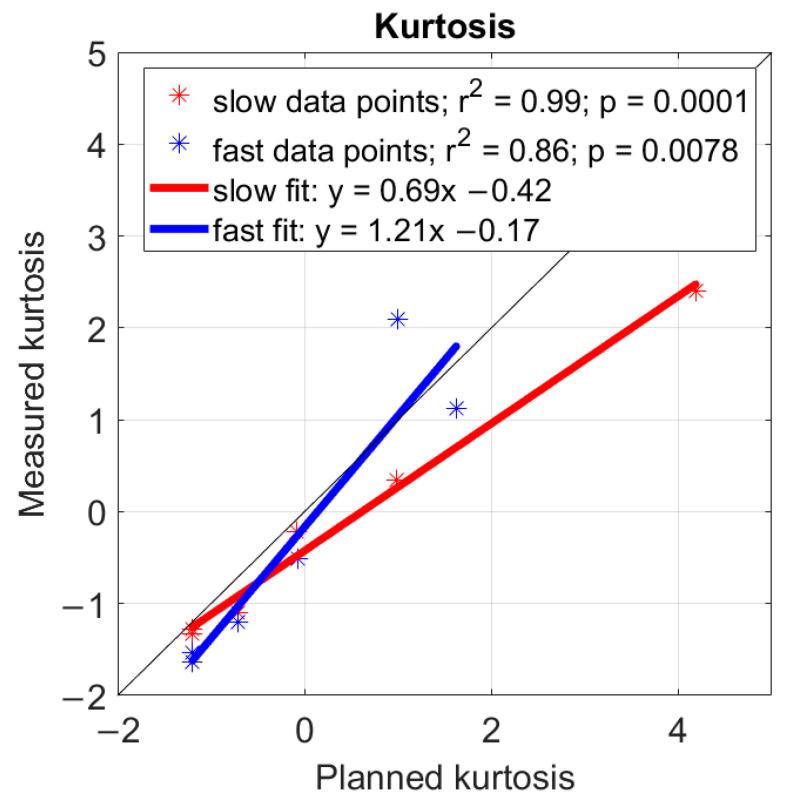
Wearable activity sensors typically count movement quantity, such as the number of steps taken or the number of upper extremity (UE) counts achieved. However, for some applications, such as neurologic rehabilitation, it may be of interest to quantify the quality of the movement experience (QOME), defined, for example, as how diverse or how complex movement epochs are. We previously found that individuals with UE impairment after stroke exhibited differences in their distributions of forearm postures across the day and that these differences could be quantified with kurtosis-an established statistical measure of the peakedness of distributions. In this paper, we describe further progress toward the goal of providing real-time feedback to try to help people learn to modulate their movement diversity. We first asked the following: to what extent do different movement activities induce different values of kurtosis? We recruited seven unimpaired individuals and evaluated a set of 12 therapeutic activities for their forearm postural diversity using kurtosis. We found that the different activities produced a wide range of kurtosis values, with conventional rehabilitation therapy exercises creating the most spread-out distribution and cup stacking the most peaked. Thus, asking people to attempt different activities can vary movement diversity, as measured with kurtosis. Next, since kurtosis is a computationally expensive calculation, we derived a novel recursive algorithm that enables the real-time calculation of kurtosis. We show that the algorithm reduces computation time by a factor of 200 compared to an optimized kurtosis calculation available in SciPy, across window sizes. Finally, we embedded the kurtosis algorithm on a commercial smartwatch and validated its accuracy using a robotic simulator that "wore" the smartwatch, emulating movement activities with known kurtosis. This work verifies that different movement tasks produce different values of kurtosis and provides a validated algorithm for the real-time calculation of kurtosis on a smartwatch. These are needed steps toward testing QOME-focused, wearable rehabilitation.
可穿戴活动传感器通常会计算运动数量,例如所走的步数或完成的上肢 (UE) 计数。然而,对于某些应用,例如神经康复,量化运动体验质量 (QOME) 可能很重要,例如定义运动时段的多样性或复杂性。我们之前发现,中风后 UE 受损的个体在一天中前臂姿势的分布存在差异,并且可以使用峰度来量化这些差异,峰度是一种已建立的分布尖锐度的统计度量。在本文中,我们进一步介绍了朝着提供实时反馈以帮助人们学习调节运动多样性的目标所取得的进展。我们首先提出以下问题:不同的运动活动在多大程度上会导致不同的峰度值?我们招募了七名未受损的个体,并使用峰度评估了一组 12 种治疗活动的前臂姿势多样性。我们发现,不同的活动产生了广泛的峰度值范围,常规康复治疗运动产生的分布最分散,而堆叠杯子的分布最尖锐。因此,让人们尝试不同的活动可以根据峰度来改变运动多样性。其次,由于峰度是一个计算成本很高的计算,我们推导出了一种新的递归算法,可以实时计算峰度。我们表明,与 SciPy 中可用的优化峰度计算相比,该算法在各种窗口大小下将计算时间减少了 200 倍。最后,我们将峰度算法嵌入到一款商用智能手表中,并使用一个机器人模拟器对其准确性进行了验证,该模拟器“佩戴”智能手表,模拟具有已知峰度的运动活动。这项工作验证了不同的运动任务会产生不同的峰度值,并提供了在智能手表上实时计算峰度的经过验证的算法。这些都是朝着进行基于 QOME 的可穿戴康复测试所需的步骤。







 Zotero 插件