
通过串联酯交换反应对塑料废物和生物废物进行协同升级再造。
Co-upcycling of Plastic Waste and Biowaste via Tandem Transesterification Reactions.
作者信息
Li Jiaquan, Zhang Xingmo, Liu Xingxu, Liao Xiuping, Huang Jun, Jiang Yijiao
机构信息
School of Chemical and Biomolecular Engineering, Sydney Nano Institute, The University of Sydney, Sydney, New South Wales 2037, Australia.
School of Engineering, Macquarie University, Sydney, New South Wales 2109, Australia.
出版信息
JACS Au. 2024 Jul 30;4(8):3135-3145. doi: 10.1021/jacsau.4c00459. eCollection 2024 Aug 26.
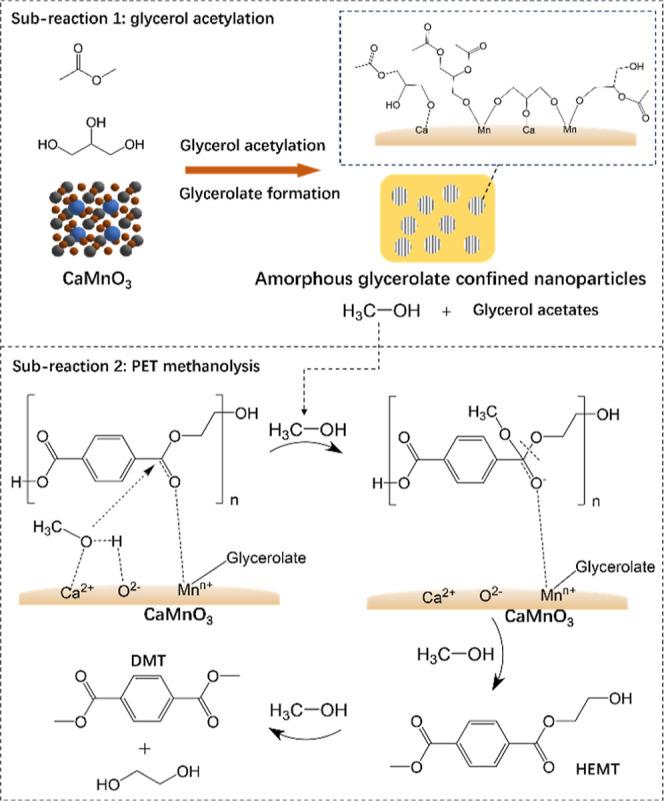
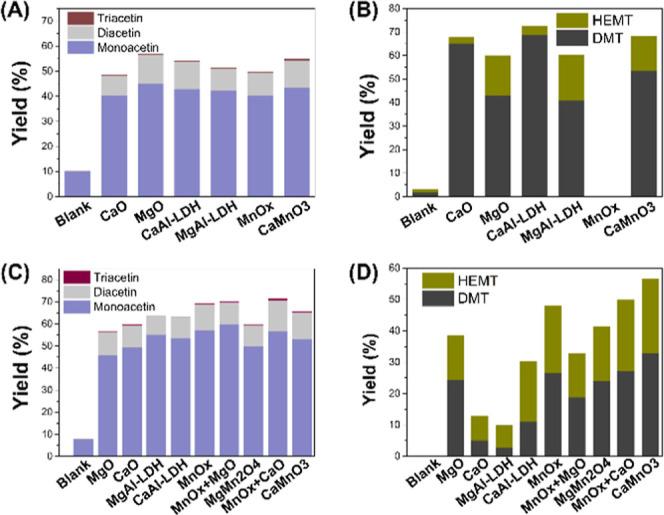
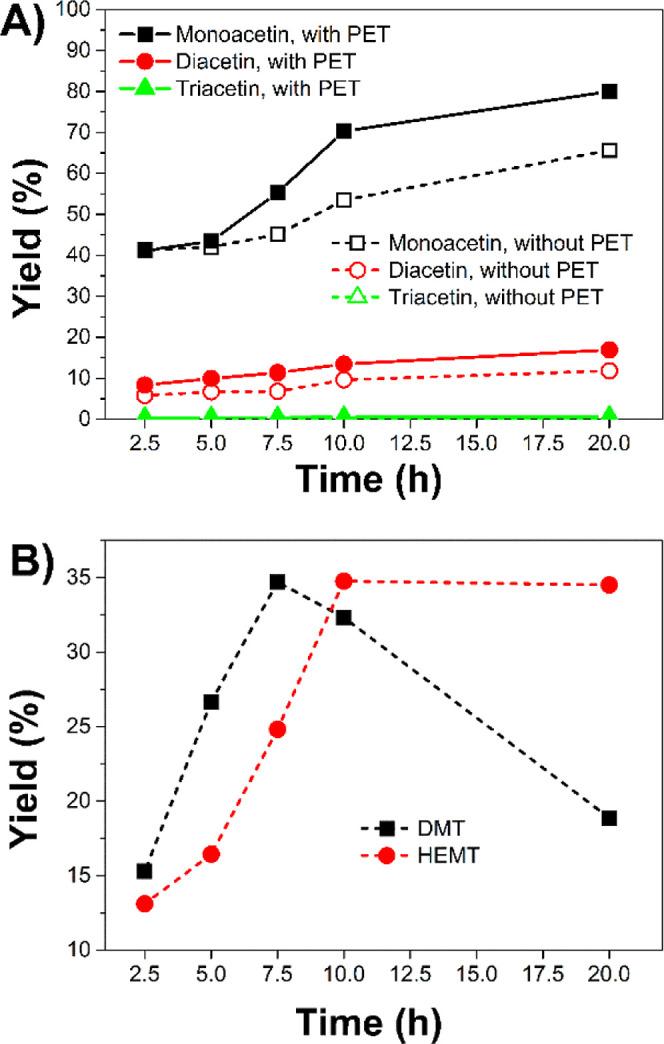
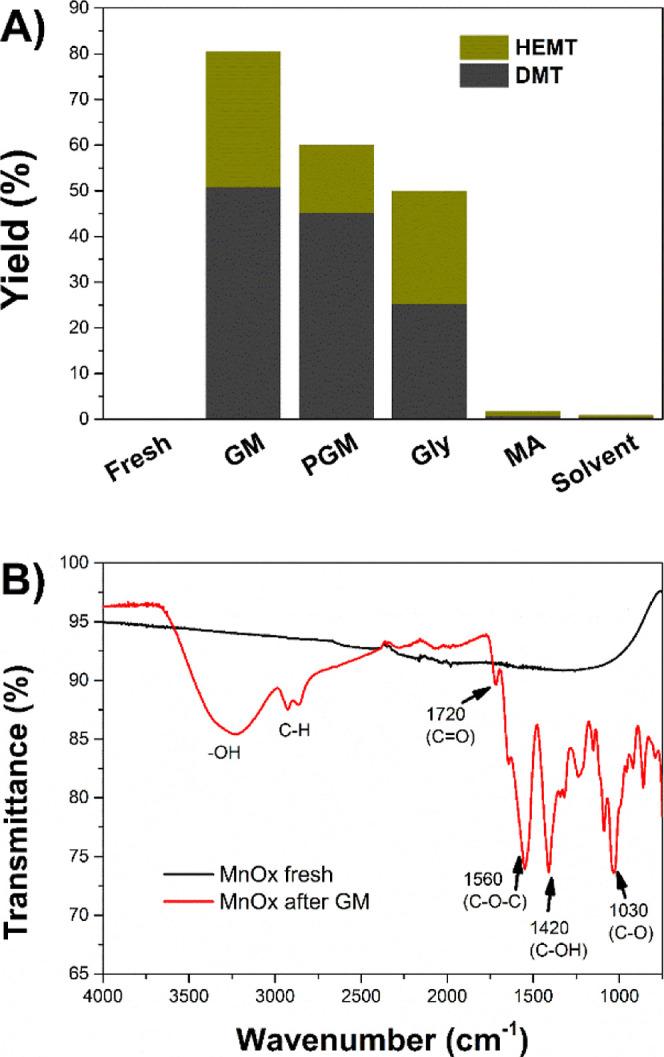
Polyethylene terephthalate (PET) and glycerol are prevalent forms of plastic and biowaste, necessitating facile and effective strategies for their upcycling treatment. Herein, we present an innovative one-pot reaction system for the concurrent depolymerization of PET plastics and the transesterification of glycerol into dimethyl terephthalate (DMT), a valuable feedstock in polymer manufacturing. This process occurs in the presence of methyl acetate (MA), a byproduct of the industrial production of acetic acid. The upcycling of biowaste glycerol into glycerol acetates renders them valuable additives for application in both the biofuel and chemical industries. This integrated reaction system enhances the conversion of glycerol to acetins compared with the singular transesterification of glycerol. In this approach, cost-effective catalysts, based on perovskite-structured CaMnO, were employed. The catalyst undergoes in situ reconstruction in the tandem PET/glycerol/MA system due to glycerolation between the metal oxides and glycerol/acetins. This process results in the formation of small metal oxide nanoparticles confined in amorphous metal glycerolates, thereby enhancing the PET depolymerization efficiency. The optimized coupled reaction system can achieve a product yield exceeding 70% for glycerol acetates and 68% for PET monomers. This research introduces a tandem pathway for the simultaneous upcycling of PET plastic waste and biowaste glycerol with minimal feedstock input and maximal reactant utilization efficiency, promising both economic advantages and positive environmental impacts.
聚对苯二甲酸乙二酯(PET)和甘油是常见的塑料和生物废料形式,因此需要简便有效的策略对其进行升级循环处理。在此,我们提出了一种创新的一锅反应体系,用于同时将PET塑料解聚并将甘油酯交换为对苯二甲酸二甲酯(DMT),这是聚合物制造中有价值的原料。该过程在乙酸工业生产的副产物乙酸甲酯(MA)存在下发生。将生物废料甘油升级循环为甘油醋酸酯使其成为生物燃料和化学工业中应用的有价值添加剂。与甘油的单一酯交换反应相比,这种集成反应体系提高了甘油向甘油醋酸酯的转化率。在这种方法中,使用了基于钙钛矿结构的CaMnO的经济高效催化剂。由于金属氧化物与甘油/甘油醋酸酯之间的甘油化反应,催化剂在串联的PET/甘油/MA体系中进行原位重构。这一过程导致形成了限制在无定形金属甘油酸盐中的小金属氧化物纳米颗粒,从而提高了PET解聚效率。优化后的耦合反应体系对甘油醋酸酯的产物产率可超过70%,对PET单体的产率可超过68%。本研究引入了一种串联途径,以最少的原料投入和最大的反应物利用效率同时对PET塑料废料和生物废料甘油进行升级循环,具有经济优势和积极的环境影响。



 Zotero 插件