
穿心莲内酯通过促进凋亡(程序性细胞死亡过程)在口腔癌中表现出抗增殖活性。
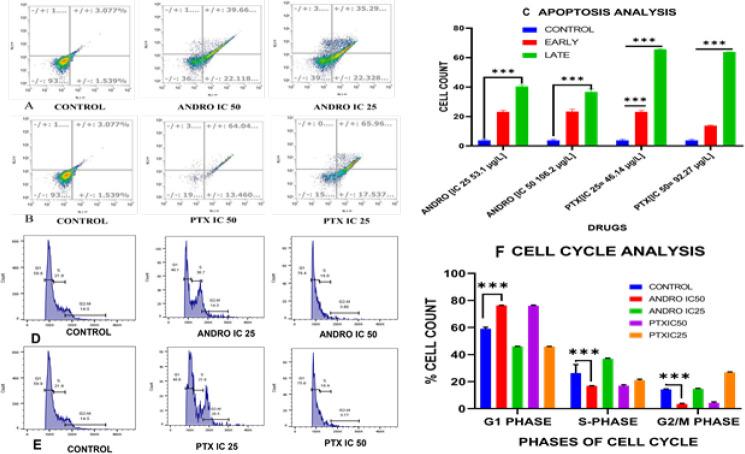
Andrographolide demonstrates anti-proliferative activity in oral cancer by promoting apoptosis, the programmed cell death process.
作者信息
Kumbhar Gauri Mansinh, Jadhav Amol Dilip, Kheur Supriya, Vaibhav Sunil Ladke
机构信息
Dr. D. Y. Patil Dental College & Hospital Dr. D. Y. Patil Vidyapeeth, Sant Tukaram Nagar, Pimpri, Pune. Maharashtra. India Pune: 411018.
Institute of Applied Biological Research and Development, a Division of Nirav BioSolutions Pvt Ltd, Aundh, Pune, India.
出版信息
Iran J Basic Med Sci. 2024;27(10):1300-1308. doi: 10.22038/ijbms.2024.76691.16599.
OBJECTIVES
Andrographolide has been studied on different types of human cancer cells, but very few studies have been conducted on oral cancer. The study aimed to evaluate the anticancer potential of Andrographolide on an oral cancer cell line (KB) through network analysis and assays.
MATERIALS AND METHODS
The analysis involved the determination of drug-likeness prediction, prediction of common targets between oral cancer and andrographolide, Protein-Protein Interactions (PPI), hub genes, top 10 associated pathways by Kyoto Encyclopaedia of Genes and Genomes (KEGG) pathway, gene ontology (GO), and molecular docking experiments. assays comprised MTT assay, apoptosis assay, cell cycle analysis, intracellular reactive oxygen species (ROS) measurement, mitochondrial membrane potential (MMP), anti-migration activity, and gene expressions using polymerase chain reaction (PCR).
RESULTS
Fifteen common genes were obtained and were seen to be involved in cellular proliferation, regulation of apoptosis, migration of cells, regulation of MAPK cascade, and regulation of cell cycle. The most common genes involved in the top 10 pathways were MAPK1, MAPK8, MAPK14, and IL6 which were seen to be associated with the MAPK signaling pathway which may be the key pathway through which andrographolide may aid in treating oral cancer. assays showed anti-proliferative properties, late apoptosis, and anti-migratory properties.
CONCLUSION
According to the results obtained, andrographolide has shown anticancer properties and has the potential to be used as a chemotherapeutic drug. The approach used in the present study can aid as a model for future research in developing efficient cancer treatments.
目的
穿心莲内酯已在不同类型的人类癌细胞上进行了研究,但针对口腔癌的研究却很少。本研究旨在通过网络分析和实验评估穿心莲内酯对口腔癌细胞系(KB)的抗癌潜力。
材料与方法
网络分析包括药物相似性预测、口腔癌与穿心莲内酯共同靶点的预测、蛋白质-蛋白质相互作用(PPI)、枢纽基因、京都基因与基因组百科全书(KEGG)通路的前10条相关通路、基因本体论(GO)以及分子对接实验。实验包括MTT实验、凋亡实验、细胞周期分析、细胞内活性氧(ROS)测量、线粒体膜电位(MMP)、抗迁移活性以及使用聚合酶链反应(PCR)进行基因表达分析。
结果
获得了15个共同基因,这些基因参与细胞增殖、凋亡调控、细胞迁移、MAPK级联反应调控以及细胞周期调控。前10条通路中最常见的基因是MAPK1、MAPK8、MAPK14和IL6,它们与MAPK信号通路相关,这可能是穿心莲内酯辅助治疗口腔癌的关键通路。实验显示出抗增殖特性、晚期凋亡和抗迁移特性。
结论
根据所得结果,穿心莲内酯已显示出抗癌特性,并有潜力用作化疗药物。本研究中使用的网络方法可为未来开发高效癌症治疗方法提供研究模型。



 Zotero 插件