
运用递增心肺运动试验识别运动的局限性:范围综述。
Identifying limitations to exercise with incremental cardiopulmonary exercise testing: a scoping review.
机构信息
Laboratory of Respiratory Diseases and Thoracic Surgery, Department of Chronic Diseases, Metabolism and Ageing, KU Leuven, Leuven, Belgium.
Clinical Department of Respiratory Diseases, University Hospitals Leuven, Leuven, Belgium.
出版信息
Eur Respir Rev. 2024 Sep 4;33(173). doi: 10.1183/16000617.0010-2024. Print 2024 Jul.
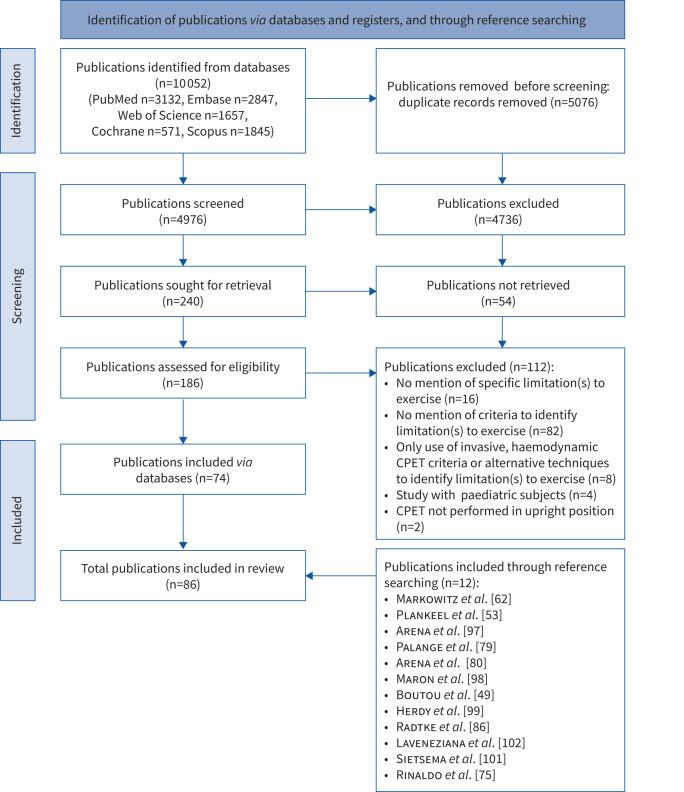
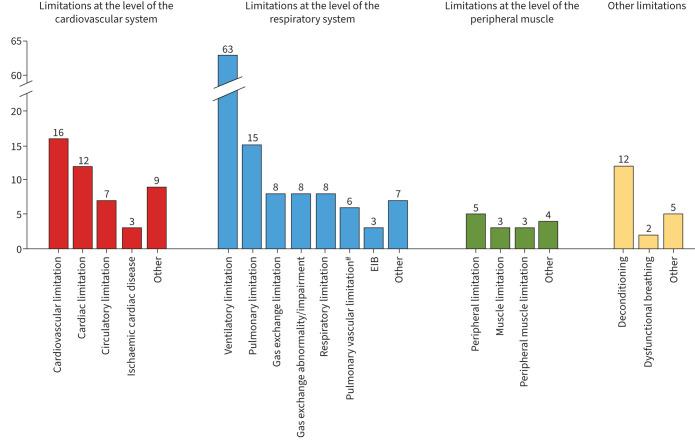
Cardiopulmonary exercise testing (CPET) is a comprehensive and invaluable assessment used to identify the mechanisms that limit exercise capacity. However, its interpretation remains poorly standardised. This scoping review aims to investigate which limitations to exercise are differentiated by the use of incremental CPET in literature and which criteria are used to identify them. We performed a systematic, electronic literature search of PubMed, Embase, Cochrane CENTRAL, Web of Science and Scopus. All types of publications that reported identification criteria for at least one limitation to exercise based on clinical parameters and CPET variables were eligible for inclusion. 86 publications were included, of which 57 were primary literature and 29 were secondary literature. In general, at the level of the cardiovascular system, a distinction was often made between a normal physiological limitation and a pathological one. Within the respiratory system, ventilatory limitation, commonly identified by a low breathing reserve, and gas exchange limitation, mostly identified by a high minute ventilation/carbon dioxide production slope and/or oxygen desaturation, were often described. Multiple terms were used to describe a limitation in the peripheral muscle, but all variables used to identify this limitation lacked specificity. Deconditioning was a frequently mentioned exercise limiting factor, but there was no consensus on how to identify it through CPET. There is large heterogeneity in the terminology, the classification and the identification criteria of limitations to exercise that are distinguished using incremental CPET. Standardising the interpretation of CPET is essential to establish an objective and consistent framework.
心肺运动测试 (CPET) 是一种全面且极具价值的评估方法,用于确定限制运动能力的机制。然而,其解释仍然缺乏标准化。本范围综述旨在调查文献中使用递增 CPET 区分哪些运动受限,以及使用哪些标准来识别这些受限。我们对 PubMed、Embase、Cochrane CENTRAL、Web of Science 和 Scopus 进行了系统的电子文献检索。所有报告基于临床参数和 CPET 变量识别至少一种运动受限标准的出版物均符合纳入标准。共纳入 86 篇出版物,其中 57 篇为原始文献,29 篇为二次文献。通常,在心血管系统层面,通常区分正常生理限制和病理限制。在呼吸系统中,通气限制(通常通过低呼吸储备来识别)和气体交换限制(主要通过高分钟通气/二氧化碳产生斜率和/或氧饱和度降低来识别)经常被描述。有多种术语用于描述外周肌肉的限制,但所有用于识别这种限制的变量都缺乏特异性。去适应是一个经常被提到的运动限制因素,但如何通过 CPET 识别它还没有共识。使用递增 CPET 区分运动受限的术语、分类和识别标准存在很大的异质性。标准化 CPET 的解释对于建立客观一致的框架至关重要。
 Zotero 插件