
新型干粉式人工合成肺表面活性剂产品治疗新生儿呼吸窘迫综合征(RDS)的研发 - 第二部分:在兔肺表面活性剂洗脱模型中的体内药效学测试。
Development of a New Dry Powder Aerosol Synthetic Lung Surfactant Product for Neonatal Respiratory Distress Syndrome (RDS) - Part II: In vivo Efficacy Testing in a Rabbit Surfactant Washout Model.
机构信息
Center for Respiratory Biology and Therapeutics, Seattle Children's Research Institute, 1900 Ninth Ave, Seattle, WA, 98101, USA.
Department of Mechanical and Nuclear Engineering, Virginia Commonwealth University, Richmond, VA, USA.
出版信息
Pharm Res. 2024 Sep;41(9):1827-1842. doi: 10.1007/s11095-024-03754-7. Epub 2024 Sep 5.
PURPOSE
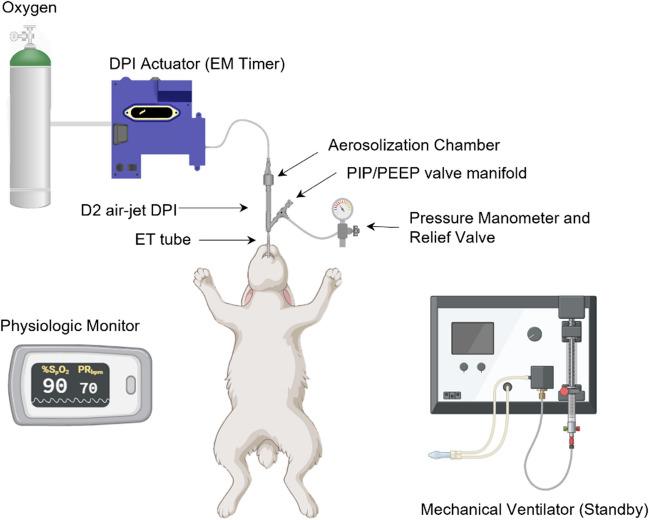
Surfactant therapy incorporates liquid bolus instillation via endotracheal tube catheter and a mechanical ventilator in preterm neonates with respiratory distress syndrome (RDS). Aerosolized surfactants have generated interest and conflicting data on the efficacy of phospholipid (PL) dose requirements. We developed and characterized a synthetic lung surfactant excipient enhanced growth (SLS-EEG) dry powder aerosol product. In this study, we compare the in vivo performance of the new aerosol product with standard-of-care liquid instillation.
METHODS
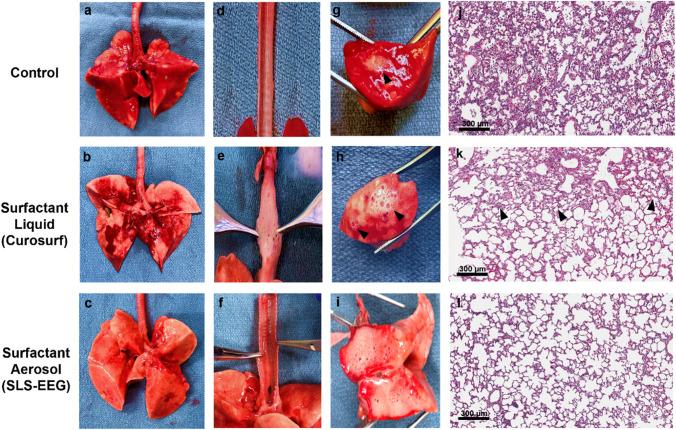
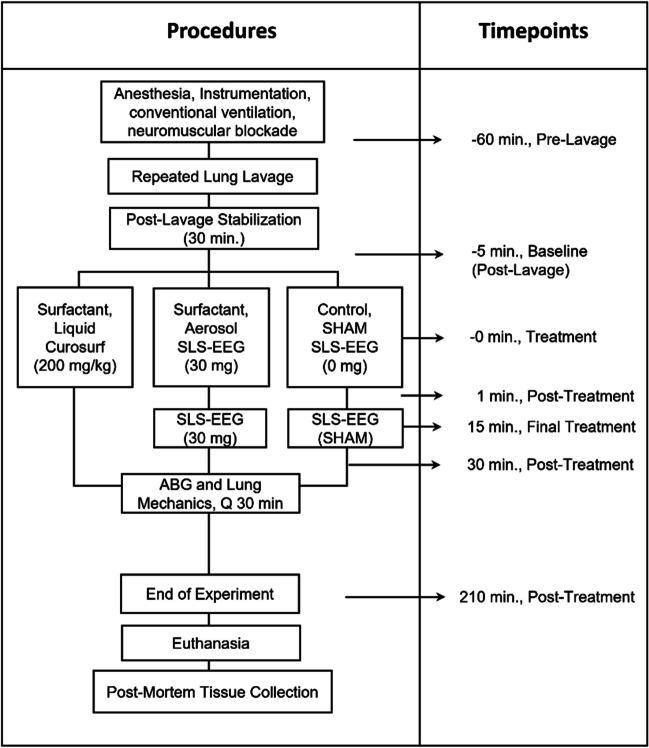
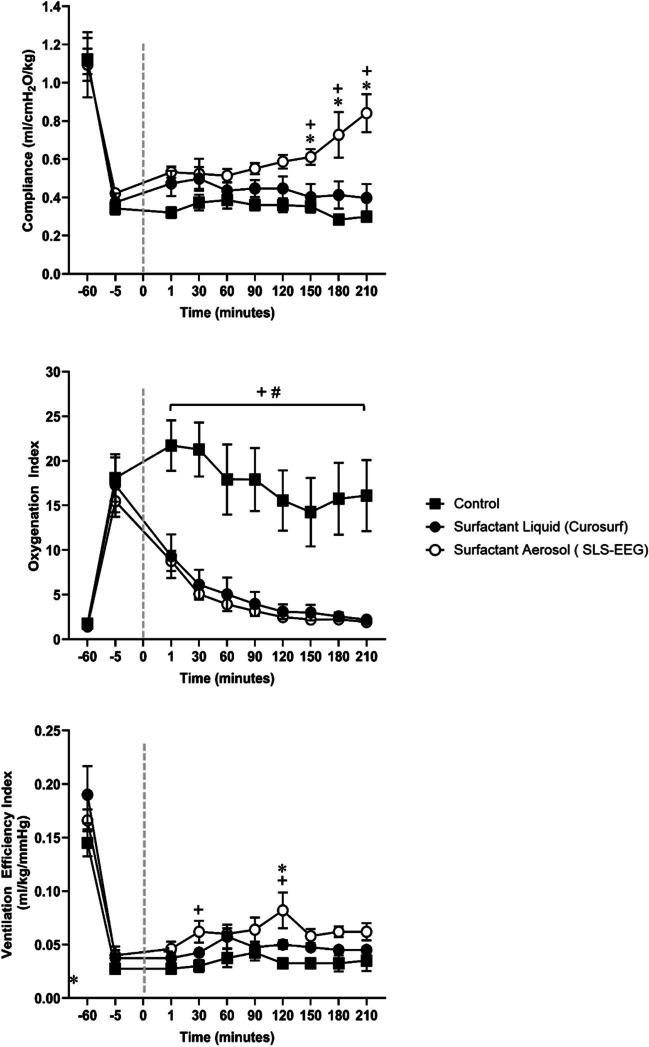
Juvenile rabbits were sedated, anesthetized, intubated, and ventilated. Endogenous surfactant was depleted via whole lung lavage. Animals received either a standard dose of liquid Curosurf (200 mg PL/kg) instilled via a tracheal catheter, SLS-EEG powder aerosol (60 mg device loaded dose; equivalent to 24 mg PL/kg), or sham control. Gas exchange, lung compliance, and indices of disease severity were recorded every 30 min for 3.5 h and macro- and microscopy images were acquired at necropsy.
RESULTS
While aerosol was administered at an approximately tenfold lower PL dose, both liquid-instilled and aerosol groups had similar, nearly complete recoveries of arterial oxygenation (PaO; 96-100% recovery) and oxygenation index, and the aerosol group had superior recovery of compliance (P < 0.05). The SLS-EEG aerosol group showed less lung tissue injury, greater uniformity in lung aeration, and more homogenous surfactant distribution at the alveolar surfaces compared with liquid Curosurf.
CONCLUSIONS
The new dry powder aerosol SLS product (which includes the delivery strategy, formulation, and delivery system) has the potential to be a safe, effective, and economical alternative to the current clinical standard of liquid bolus surfactant instillation.
目的
表面活性剂疗法通过气管导管和机械呼吸机向患有呼吸窘迫综合征(RDS)的早产儿中注入液体弹丸,以补充表面活性剂。雾化表面活性剂引起了人们的兴趣,并对磷脂(PL)剂量需求的疗效产生了相互矛盾的数据。我们开发并表征了一种合成肺表面活性剂赋形剂增强生长(SLS-EEG)干粉气雾剂产品。在这项研究中,我们比较了新气雾剂产品与标准护理液体滴注的体内性能。
方法
幼年兔镇静、麻醉、插管并通气。通过全肺灌洗耗尽内源性表面活性剂。动物接受标准剂量的液体 Curosurf(200mg PL/kg)经气管导管滴注、SLS-EEG 粉末气雾剂(60mg 装置加载剂量;相当于 24mg PL/kg)或假对照。在 3.5 小时内每 30 分钟记录气体交换、肺顺应性和疾病严重程度指数,并在尸检时获取宏观和显微镜图像。
结果
尽管气雾剂以大约十倍低的 PL 剂量给药,但液体滴注组和气雾剂组的动脉氧合(PaO;96-100%恢复)和氧合指数几乎完全恢复,且气雾剂组的顺应性恢复更好(P<0.05)。与液体 Curosurf 相比,SLS-EEG 气雾剂组的肺组织损伤较小,肺泡通气更均匀,肺泡表面的表面活性剂分布更均匀。
结论
新的干粉气雾剂 SLS 产品(包括递送策略、配方和递送系统)有可能成为目前液体弹丸表面活性剂滴注临床标准的安全、有效和经济的替代方案。

 Zotero 插件