
抑制、转变和激增:COVID-19 大流行政策调整期间儿科呼吸道病原体趋势的动态演变。
Inhibition, transition, and surge: dynamic evolution of pediatric respiratory pathogen trends amid COVID-19 pandemic policy adjustments.
机构信息
Department of Respiratory Medicine, Children's Hospital of Soochow University, Suzhou, China.
Department of Respiratory Medicine and Clinical Allergy Center, Affiliated Children's Hospital of Jiangnan University, Wuxi, China.
出版信息
Front Public Health. 2024 Aug 22;12:1420929. doi: 10.3389/fpubh.2024.1420929. eCollection 2024.
BACKGROUND
The implementation of a zero-COVID policy for 3 years in China during the COVID-19 pandemic significantly impacted a broad spectrum of acute respiratory tract infections (ARTIs). The epidemiological characteristics of ARTI pathogens in children following the cessation of the zero-COVID policy remain unclear.
METHODS
Etiologically diagnostic data from 82,708 children with ARTIs at the Children's Hospital of Soochow University during 2016-2023 were analyzed for 8 pathogens (human respiratory syncytial virus [HRSV], influenza A [FluA], FluB, human parainfluenza virus [HPIV], adenovirus [ADV], human rhinovirus [HRV], bocavirus [BoV], and [MP]). The changes in respiratory infections in Suzhou, China during the first year (2020, Phase I) and the second and third years of the pandemic (2021-2022, Phase II) and the first year after the end of zero-COVID policy (2023, Phase III) versus that in the pre-pandemic years (2016-2019) were compared.
RESULTS
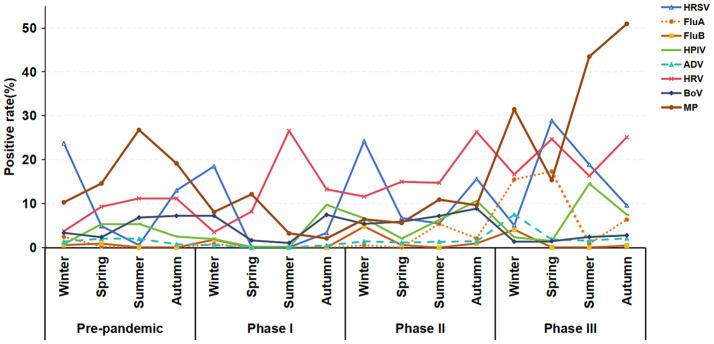
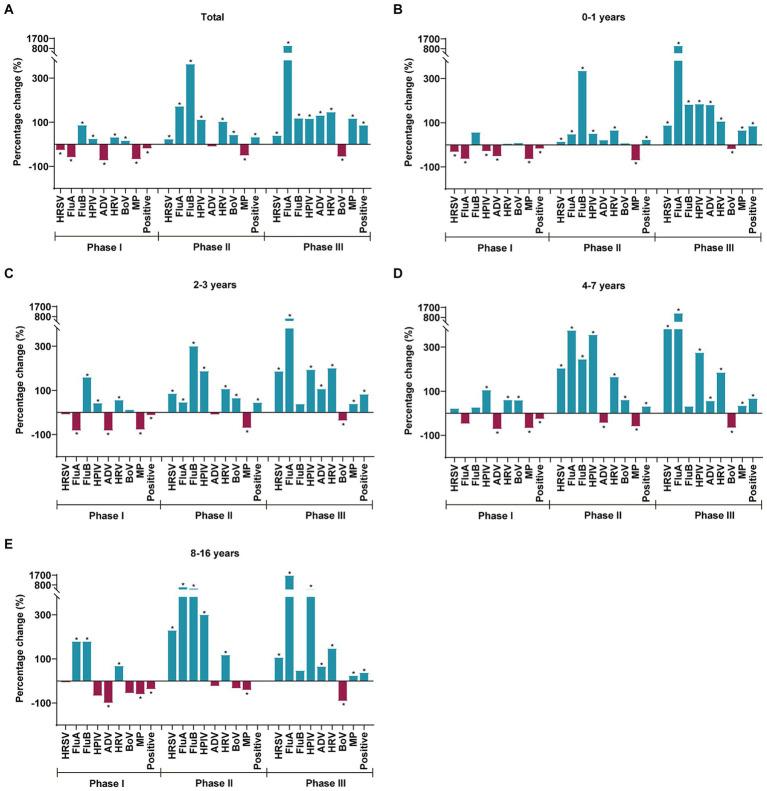
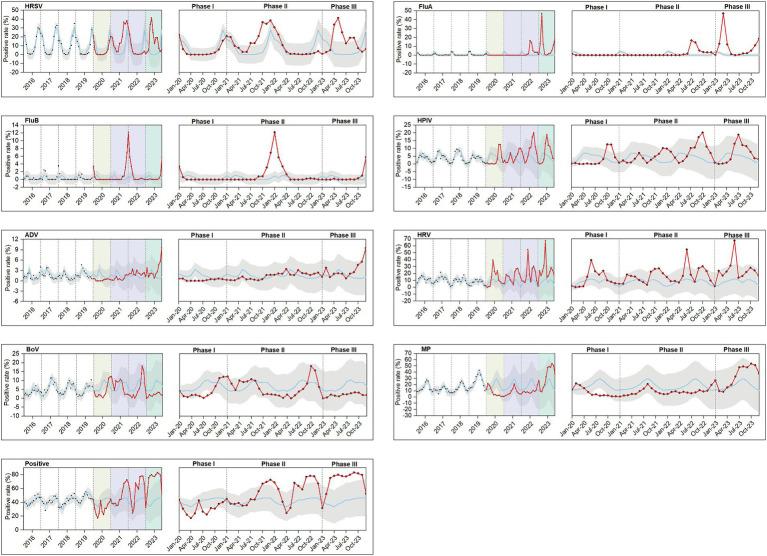
When compared with the average pre-pandemic levels, the pathogen-positive rate decreased by 19.27% in Phase I (OR: 0.70; 95% CI: 0.67-0.74), increased by 32.87% in Phase II (OR: 1.78; 95% CI: 1.72-1.84), and increased by 79.16% in Phase III (OR: 4.58; 95% CI: 4.37-4.79). In Phase I, the positive rates of HRSV, FluA, ADV, and MP decreased by 26.72, 58.97, 72.85, and 67.87%, respectively, and the positive rates of FluB, HPIV, HRV, and BoV increased by 86.84, 25, 32.37, and 16.94%, respectively. In Phase III, the positive rates of HRSV, FluA, FluB, HPIV, ADV, and HRV increased by 39.74, 1046.15, 118.42, 116.57, 131.13, and 146.40%, respectively, while the positive rate of BoV decreased by 56.12%. MP was inhibited during the epidemic, and MP showed a delayed outbreak after the ending of the zero-COVID policy. Compared with the average pre-pandemic levels, the MP-positive rate in Phase III increased by 116.7% (OR: 2.86; 95% CI: 2.74-2.99), with the highest increase in 0-1-year-old children.
CONCLUSION
The strict and large-scale implementation of the zero-COVID policy in the early stages of the COVID-19 pandemic was the main driving factor for the sharp reduction in the rate of children's respiratory pathogenic infections. The termination of this policy can cause a resurgence or escalation of pathogenic infections.
背景
在 COVID-19 大流行期间,中国实施了长达 3 年的“动态清零”政策,这对广泛的急性呼吸道感染(ARTIs)产生了重大影响。在“动态清零”政策结束后,儿童呼吸道病原体的流行病学特征尚不清楚。
方法
分析了苏州大学附属儿童医院 2016 年至 2023 年间 82708 例急性呼吸道感染患儿的 8 种病原体(人呼吸道合胞病毒[HRSV]、甲型流感[FluA]、乙型流感[FluB]、人副流感病毒[HPIV]、腺病毒[ADV]、人鼻病毒[HRV]、博卡病毒[BoV]和[MP])的病因学诊断数据。比较了中国苏州在大流行第一年(2020 年,第 I 阶段)和大流行第二年和第三年(2021-2022 年,第 II 阶段)以及“动态清零”政策结束后的第一年(2023 年,第 III 阶段)与大流行前年份(2016-2019 年)的呼吸道感染变化。
结果
与大流行前的平均水平相比,第 I 阶段病原体阳性率下降 19.27%(OR:0.70;95%CI:0.67-0.74),第 II 阶段上升 32.87%(OR:1.78;95%CI:1.72-1.84),第 III 阶段上升 79.16%(OR:4.58;95%CI:4.37-4.79)。第 I 阶段 HRSV、FluA、ADV 和 MP 的阳性率分别下降 26.72%、58.97%、72.85%和 67.87%,FluB、HPIV、HRV 和 BoV 的阳性率分别上升 86.84%、25%、32.37%和 16.94%。第 III 阶段 HRSV、FluA、FluB、HPIV、ADV 和 HRV 的阳性率分别上升 39.74%、1046.15%、118.42%、116.57%、131.13%和 146.40%,而 BoV 的阳性率下降 56.12%。MP 在疫情期间受到抑制,在“动态清零”政策结束后出现延迟爆发。与大流行前的平均水平相比,第 III 阶段 MP 阳性率上升 116.7%(OR:2.86;95%CI:2.74-2.99),0-1 岁儿童上升幅度最大。
结论
COVID-19 大流行早期严格、大规模实施“动态清零”政策是导致儿童呼吸道病原感染率急剧下降的主要驱动因素。该政策的终止可能导致病原感染的再次爆发或升级。



 Zotero 插件