
GR突变大鼠的盐敏感性高血压与血浆多不饱和脂肪酸水平改变及主动脉血管反应性有关。
Salt-sensitive hypertension in GR mutant rats is associated with altered plasma polyunsaturated fatty acid levels and aortic vascular reactivity.
作者信息
Verouti S, Aeschlimann G, Wang Q, Del Olmo D Ancin, Peyter A C, Menétrey S, Winter D V, Odermatt A, Pearce D, Hummler E, Vanderriele P E
机构信息
Department of Biomedical Sciences, University of Lausanne, Lausanne, Switzerland.
National Center of Competence in Research, Kidney.CH, Lausanne, Switzerland.
出版信息
Pflugers Arch. 2025 Jan;477(1):37-53. doi: 10.1007/s00424-024-03014-y. Epub 2024 Sep 10.
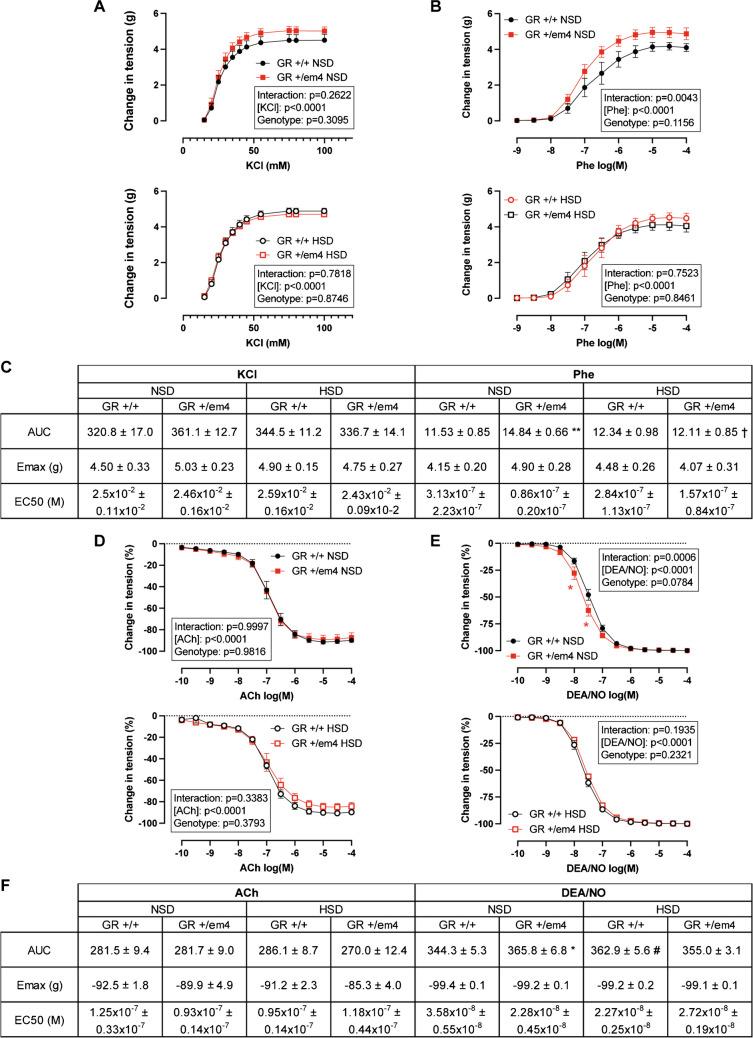
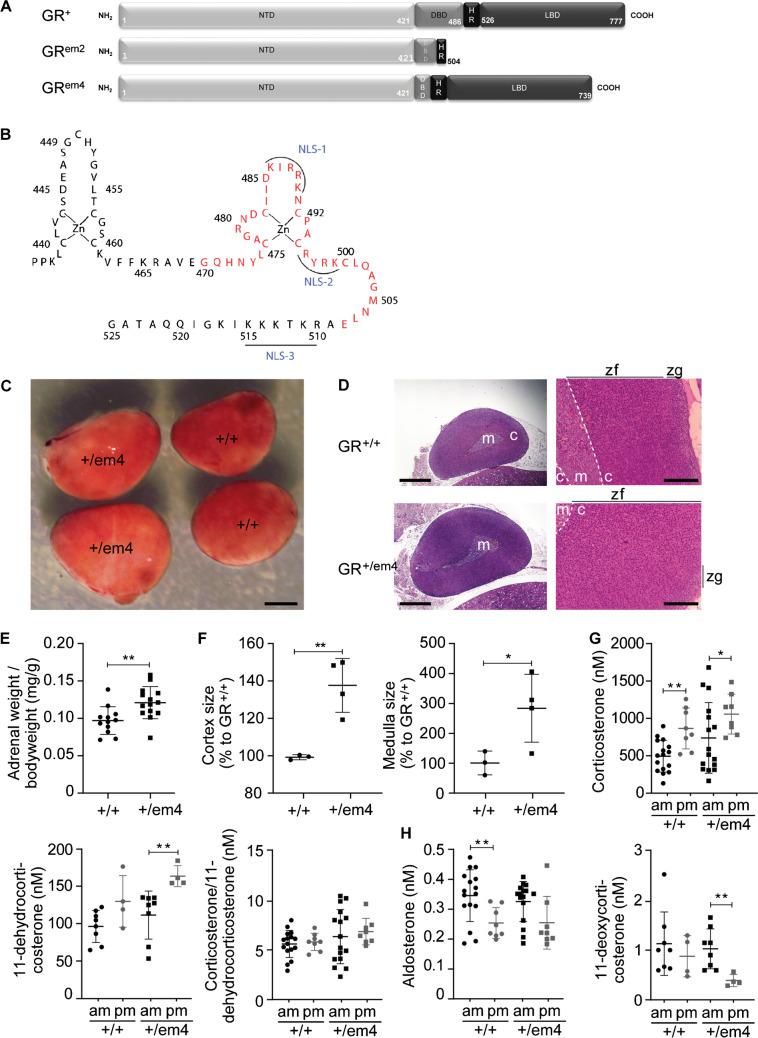
In humans, glucocorticoid resistance is attributed to mutations in the glucocorticoid receptor (GR). Most of these mutations result in decreased ligand binding, transactivation, and/or translocation, albeit with normal protein abundances. However, there is no clear genotype‒phenotype relationship between the severity or age at disease presentation and the degree of functional loss of the receptor. Previously, we documented that a GR rat line developed clinical features of glucocorticoid resistance, namely, hypercortisolemia, adrenal hyperplasia, and salt-sensitive hypertension. In this study, we analyzed the GR rat model heterozygously mutant for the deletion of exon 3, which encompasses the second zinc finger, including the domains of DNA binding, dimerization, and nuclear localization signals. On a standard diet, mutant rats exhibited a trend toward increased corticosterone levels and a normal systolic blood pressure and heart rate but presented with adrenal hyperplasia. They exhibited increased adrenal soluble epoxide hydroxylase (sEH), favoring an increase in less active polyunsaturated fatty acids. Indeed, a significant increase in nonactive omega-3 and omega-6 polyunsaturated fatty acids, such as 5(6)-DiHETrE or 9(10)-DiHOME, was observed with advanced age (10 versus 5 weeks old) and following a switch to a high-salt diet accompanied by salt-sensitive hypertension. In thoracic aortas, a reduced soluble epoxide hydrolase (sEH) protein abundance resulted in altered vascular reactivity upon a standard diet, which was blunted upon a high-salt diet. In conclusion, mutations in the GR affecting the ligand-binding domain as well as the dimerization domain resulted in deregulated GR signaling, favoring salt-sensitive hypertension in the absence of obvious mineralocorticoid excess.
在人类中,糖皮质激素抵抗归因于糖皮质激素受体(GR)的突变。这些突变大多导致配体结合、反式激活和/或易位减少,尽管蛋白质丰度正常。然而,疾病表现的严重程度或年龄与受体功能丧失程度之间没有明确的基因型-表型关系。此前,我们记录了一个GR大鼠品系出现了糖皮质激素抵抗的临床特征,即高皮质醇血症、肾上腺增生和盐敏感性高血压。在本研究中,我们分析了外显子3缺失的GR大鼠杂合突变模型,外显子3包含第二个锌指,包括DNA结合、二聚化和核定位信号结构域。在标准饮食下,突变大鼠的皮质酮水平有升高趋势,收缩压和心率正常,但出现肾上腺增生。它们的肾上腺可溶性环氧化物水解酶(sEH)增加,有利于活性较低的多不饱和脂肪酸增加。事实上,随着年龄增长(10周龄与5周龄相比)以及转为高盐饮食并伴有盐敏感性高血压后,观察到非活性ω-3和ω-6多不饱和脂肪酸如5(6)-二氢二十碳三烯酸(DiHETrE)或9(10)-二氢十八碳二烯酸(DiHOME)显著增加。在胸主动脉中,标准饮食下可溶性环氧化物水解酶(sEH)蛋白丰度降低导致血管反应性改变,高盐饮食时这种改变减弱。总之,影响配体结合结构域以及二聚化结构域的GR突变导致GR信号失调,在无明显盐皮质激素过多的情况下引发盐敏感性高血压。
 Zotero 插件