
成人患者脉搏血氧饱和度外周灌注指数:叙述性综述。
Peripheral perfusion index of pulse oximetry in adult patients: a narrative review.
机构信息
State Key Laboratory of Complex Severe and Rare Diseases, Department of Critical Care Medicine, Peking Union Medical College Hospital, Peking Union Medical College, Chinese Academy of Medical Science, Beijing, China.
出版信息
Eur J Med Res. 2024 Sep 11;29(1):457. doi: 10.1186/s40001-024-02048-3.
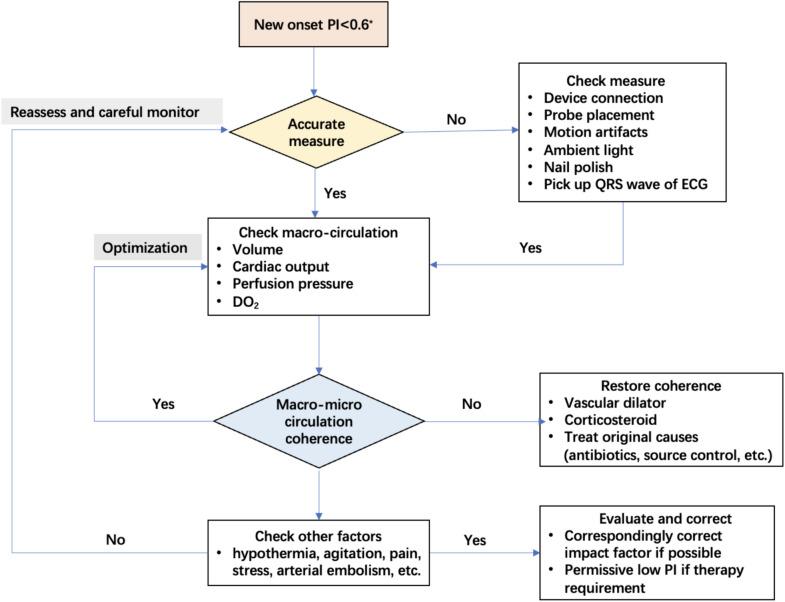
The peripheral perfusion index (PI) is derived from pulse oximetry and is defined as the ratio of the pulse wave of the pulsatile portion (arteries) to the non-pulsatile portion (venous and other tissues). A growing number of clinical studies have supported the use of PI in various clinical scenarios, such as guiding hemodynamic management and serving as an indicator of outcome and organ function. In this review, we will introduce and discuss this traditional but neglected indicator of the peripheral microcirculatory perfusion. Further clinical trials are required to clarify the normal and critical values of PI for different monitoring devices in various clinical conditions, to establish different standards of PI-guided strategies, and to determine the effect of PI-guided therapy on outcome.
外周灌注指数(PI)源自脉搏血氧饱和度,定义为脉动部分(动脉)与非脉动部分(静脉和其他组织)的脉搏波的比值。越来越多的临床研究支持在各种临床情况下使用 PI,例如指导血流动力学管理以及作为预后和器官功能的指标。在这篇综述中,我们将介绍和讨论这个传统但被忽视的外周微循环灌注指标。需要进一步的临床试验来明确不同监测设备在不同临床情况下的 PI 的正常和临界值,建立 PI 指导策略的不同标准,并确定 PI 指导治疗对预后的影响。

 Zotero 插件