
根治机会丧失的原因:胆囊癌术后 10 年随访的多中心评估。
What eliminates the chance for cure: a multi-center evaluation on 10-year follow-up of gallbladder cancer after surgical resection.
机构信息
Department of General Surgery, State Key Laboratory of Complex Severe and Rare Diseases, Peking Union Medical College Hospital, Chinese Academy of Medical Science and Peking Union Medical College, Beijing, China.
Junior Clinical Cooperation Unit Translational Gastrointestinal Oncology and Preclinical Models, German Cancer Research Center (DKFZ), Heidelberg, Germany.
出版信息
Ann Med. 2024 Dec;56(1):2402072. doi: 10.1080/07853890.2024.2402072. Epub 2024 Sep 12.
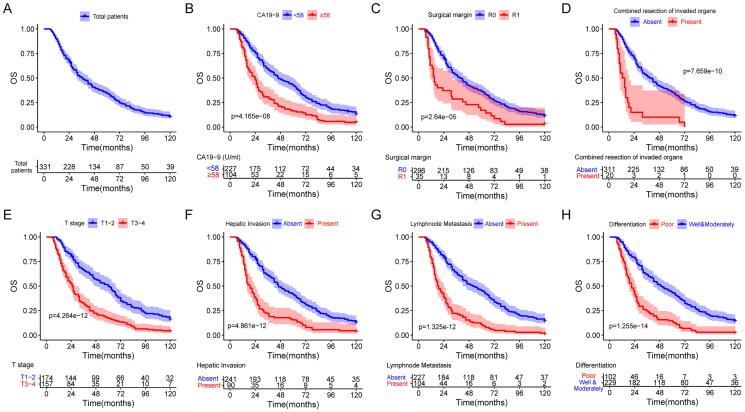
Curative resection stands as the sole potential cure for gallbladder cancer (GBC); nevertheless, a dearth of knowledge persists regarding long-term follow-up data and prognostic factors that hinder achieving a cure post-surgery. A retrospective cohort study was conducted by analyzing pathologically confirmed initial resections for GBC between 2000 and 2013 across three Chinese medical centers. The concept of observed cure refers to a 10-year survival period devoid of any disease recurrence. Employing a semiparametric proportional hazards mixture cure model enabled the identification of clinicopathological factors impeding a cure for GBC post-surgery. In our current study, a total of 331 patients were included, with a follow-up period exceeding a decade. The median overall survival (OS) was recorded at 31.6 months, with 39 patients (11.78%) achieving a 10-year OS, classified as 10-year survivors. Within this subset, 36 patients reached a 10-year relapse-free survival, denoting cure, and yielding an observed cure rate of 10.88%. Notably, factors such as combined surgical resection involving invaded organs, positive lymph node metastasis, and R1 resection (below 1%) were identified as virtually precluding a cure. Additionally, patients with T3-4 stage, hepatic invasion, advanced AJCC stage or poor tumor differentiation exhibited a low likelihood of achieving cure (below 5%). The discovery of these prognostic factors holds significant value in tailoring individualized treatment strategies and enhancing clinical decision-making processes.
根治性切除术是治疗胆囊癌 (GBC) 的唯一潜在方法;然而,缺乏长期随访数据和预后因素的知识,这阻碍了手术后的治愈。本研究通过分析 2000 年至 2013 年三个中国医学中心经病理证实的初始 GBC 切除术,开展了一项回顾性队列研究。观察治愈的概念是指 10 年无任何疾病复发的生存期。采用半参数比例风险混合治愈模型,确定了手术后阻碍 GBC 治愈的临床病理因素。在本研究中,共纳入 331 例患者,随访时间超过 10 年。中位总生存期 (OS) 为 31.6 个月,39 例患者 (11.78%) 达到 10 年 OS,被归类为 10 年幸存者。在这一组中,36 例患者达到了 10 年无复发生存,即治愈,观察到的治愈率为 10.88%。值得注意的是,联合侵犯器官的手术切除、阳性淋巴结转移和 R1 切除 (低于 1%)等因素几乎可以排除治愈的可能性。此外,T3-4 期、肝侵犯、晚期 AJCC 分期或肿瘤分化不良的患者治愈的可能性较低 (低于 5%)。这些预后因素的发现对制定个体化治疗策略和增强临床决策过程具有重要意义。

 Zotero 插件