
突发疫情条件下基于 SEIARD 动态模型的核酸检测安全策略研究。
Research on safety strategies for nucleic acid testing in sudden epidemic conditions based on a SEIARD dynamic model.
机构信息
College of Mathematics and Statistics, Henan University of Science and Technology, Luoyang, Henan Province, 471000, China.
Endocrinology and Metabolism Center, Henan Key Laboratory of Rare Diseases, The First Affiliated Hospital, and College of Clinical Medicine of Henan University of Science and Technology, Luoyang City, Henan Province, 471003, China.
出版信息
Sci Rep. 2024 Sep 13;14(1):21385. doi: 10.1038/s41598-024-71595-w.
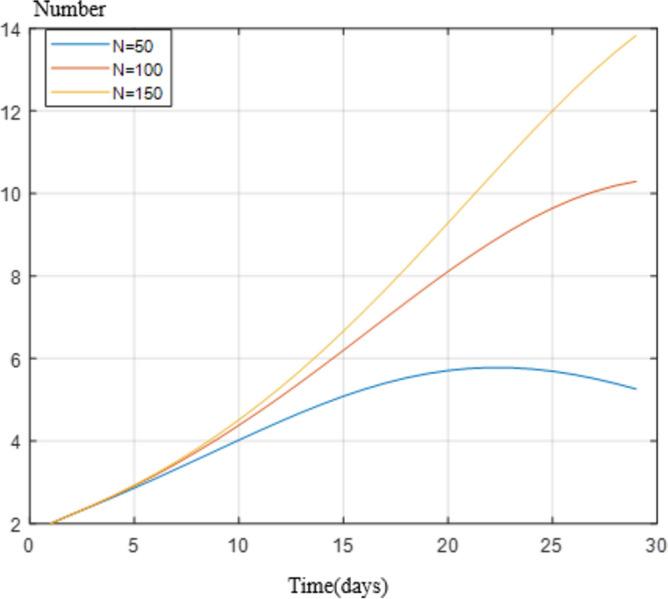
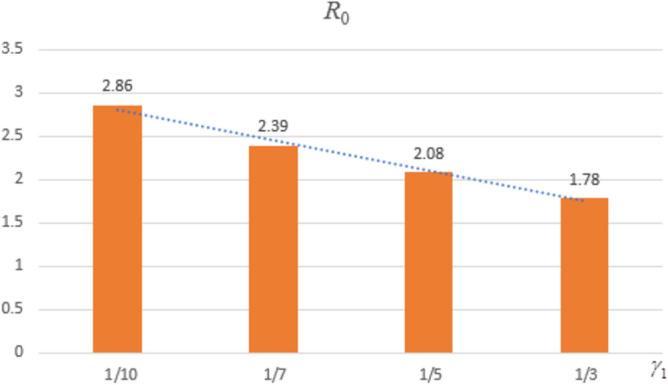
Infectious diseases have caused enormous disasters in human society, and asymptomatic carriers are an important challenge in our epidemic prevention and control process. Nucleic acid testing has played an important role in rapid testing for asymptomatic individuals. How to carry out nucleic acid testing in a scientific manner is a practical problem encountered in normal production and life. Based on the real COVID-19 epidemic data from Shanghai, we established a susceptible-exposed-infected-asymptomatic-recovered-death (SEIARD) dynamic model. The least squares method was used to fit the data and estimate the unknown parameters β and E(0) in the model, and MATLAB software was employed to simulate the development of the epidemic. The data fitting results indicated that the SEIARD model can better describe the early development patterns of the epidemic (R = 0.98; MAPE = 2.54%). We calculated the basic reproduction number of the Shanghai epidemic as R = 2.86. As the frequency of nucleic acid testing increased, the basic reproduction number R continued to decrease. When there is one latent carrier and one asymptomatic carrier in the nucleic acid testing team, the number of queues is directly proportional to the number of infected individuals, the nucleic acid testing team increases by 50 people, and the number of new asymptomatic cases increases by approximately 4 people. If both susceptible individuals (S) and asymptomatic patients (A) are not wearing masks, the infection rate reaches approximately 7%; after wearing masks, the final infection rate is less than 1% at 1.5 m between two people. The queue spacing is inversely proportional to the number of infected individuals. With a distance of d = 1 m, a nucleic acid testing team of 100 people added 8% of the infected individuals; when d = 1.5 m, fewer than 2% of the newly infected individuals. The results confirmed that controlling the queue size for nucleic acid testing, strictly wearing masks, and maintaining a queue spacing of more than 1.5 m are safe and effective nucleic acid testing strategies. Our findings are also applicable to the prevention of other newly emerging infectious diseases.
传染病在人类社会造成了巨大的灾难,无症状感染者是我们在疫情防控过程中的一个重要挑战。核酸检测在快速检测无症状个体方面发挥了重要作用。如何科学地进行核酸检测是正常生产生活中遇到的实际问题。基于上海真实的 COVID-19 疫情数据,我们建立了一个易感-暴露-感染-无症状-恢复-死亡(SEIARD)动力学模型。采用最小二乘法对数据进行拟合,估计模型中的未知参数β和 E(0),并使用 MATLAB 软件对疫情的发展进行模拟。数据拟合结果表明,SEIARD 模型能够更好地描述疫情的早期发展模式(R=0.98;MAPE=2.54%)。我们计算出上海疫情的基本再生数为 R=2.86。随着核酸检测频率的增加,基本再生数 R 持续下降。当核酸检测队伍中有一个潜伏期感染者和一个无症状感染者时,队列数量与感染人数成正比,核酸检测队伍增加 50 人,新增无症状病例数增加约 4 人。如果易感个体(S)和无症状患者(A)都不戴口罩,感染率约为 7%;两人之间戴口罩后,最终感染率不到 1%,间距为 1.5 米。队列间距与感染人数成反比。当距离 d=1 米时,一个 100 人的核酸检测队伍增加了 8%的感染人数;当 d=1.5 米时,新感染人数不到 2%。结果证实,控制核酸检测队列规模、严格佩戴口罩、保持 1.5 米以上的队列间距是安全有效的核酸检测策略。我们的研究结果也适用于预防其他新发传染病。




 Zotero 插件