
高质量的脂质抑制和 B0 匀场用于人脑 H MRSI。
High-quality lipid suppression and B0 shimming for human brain H MRSI.
机构信息
Department of Radiology and Biomedical Imaging, Magnetic Resonance Research Center, USA.
Department of Radiology and Biomedical Imaging, Magnetic Resonance Research Center, USA.
出版信息
Neuroimage. 2024 Oct 15;300:120845. doi: 10.1016/j.neuroimage.2024.120845. Epub 2024 Sep 12.
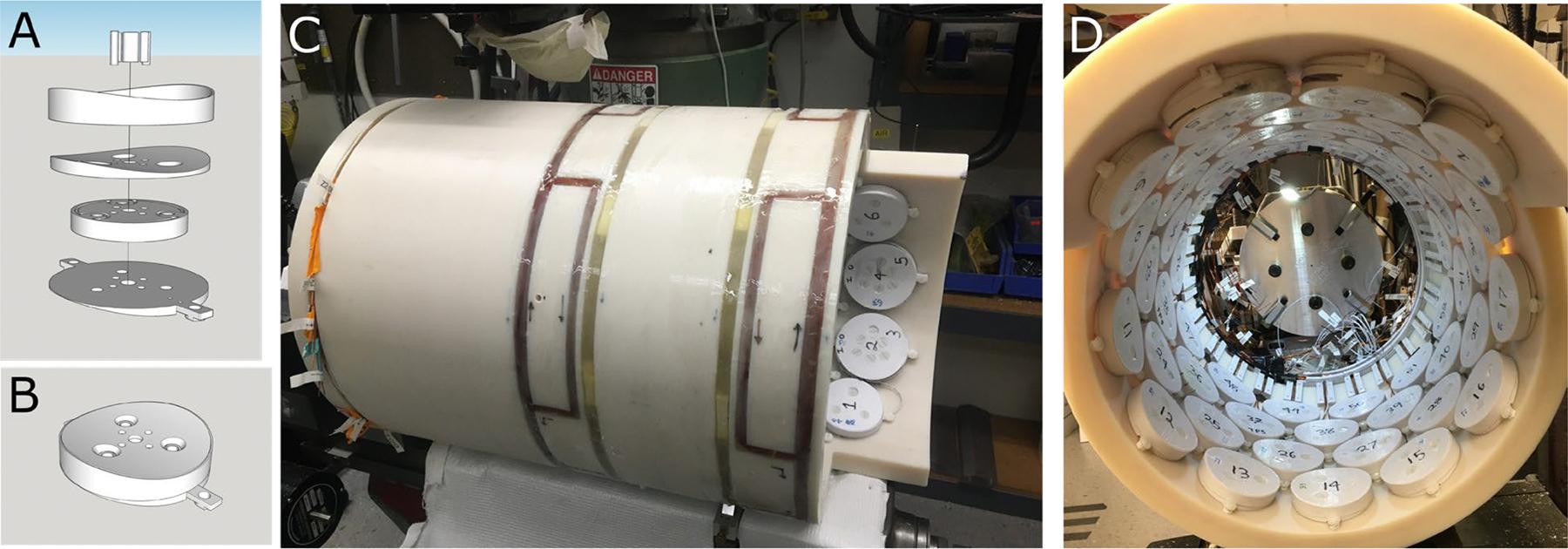
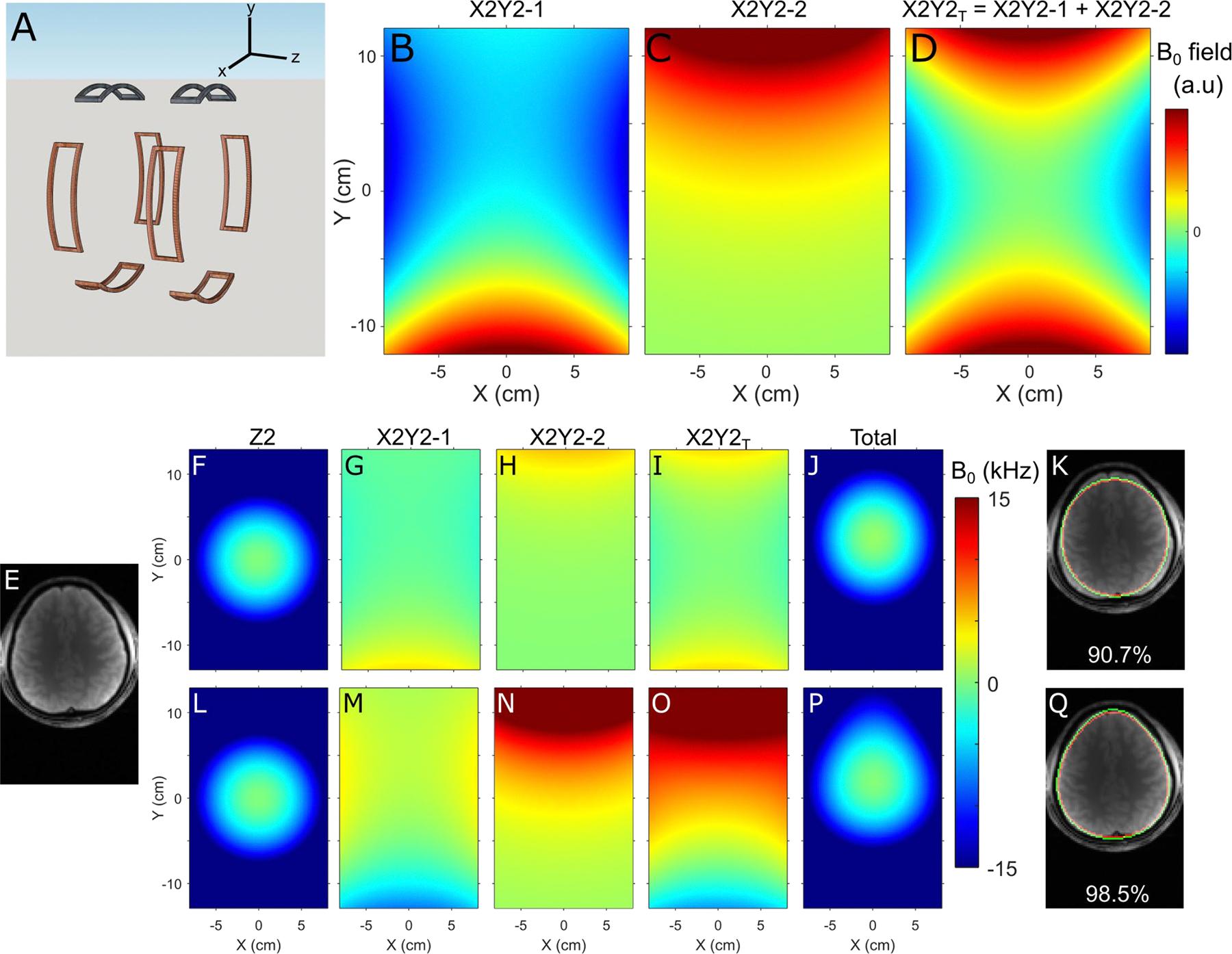
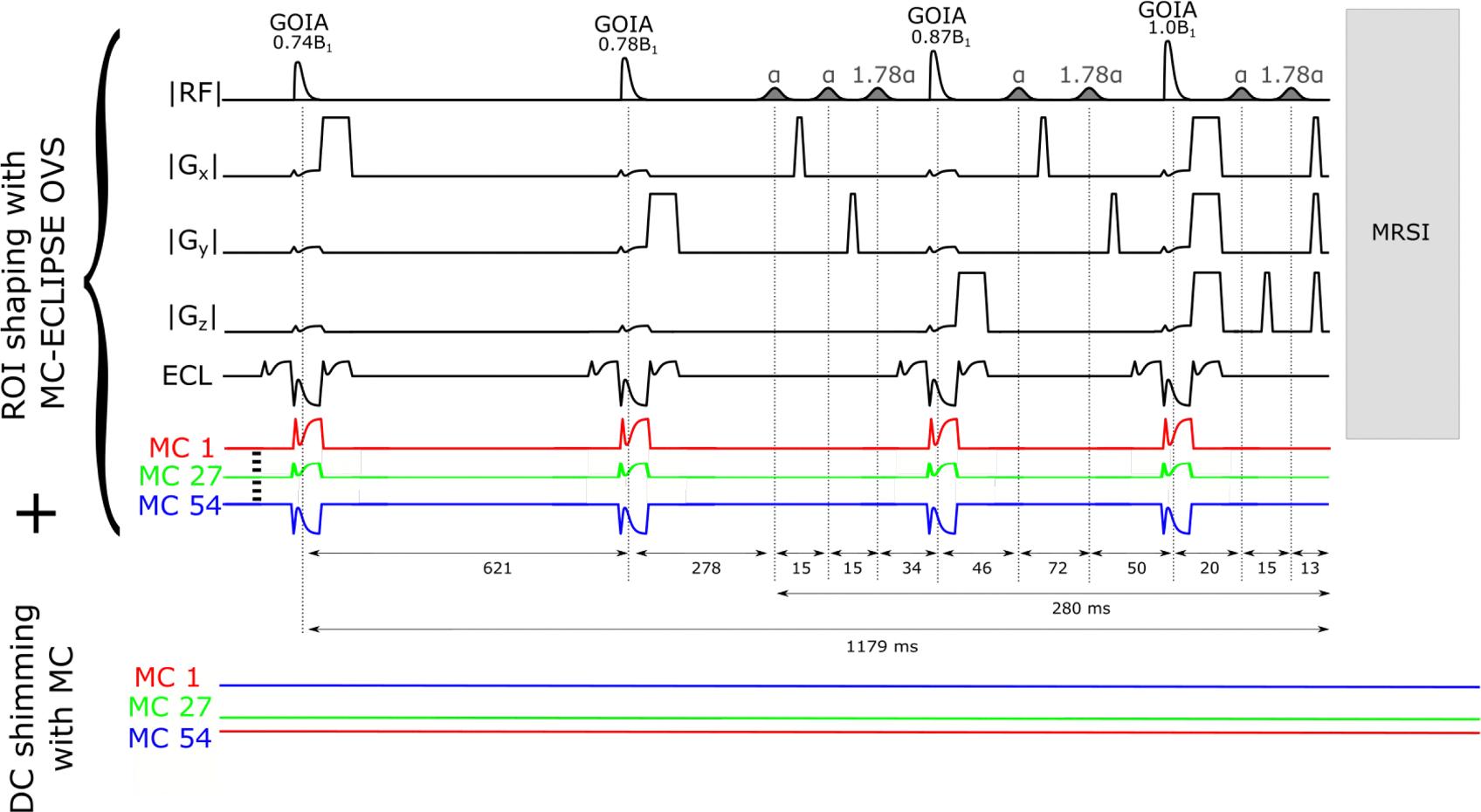
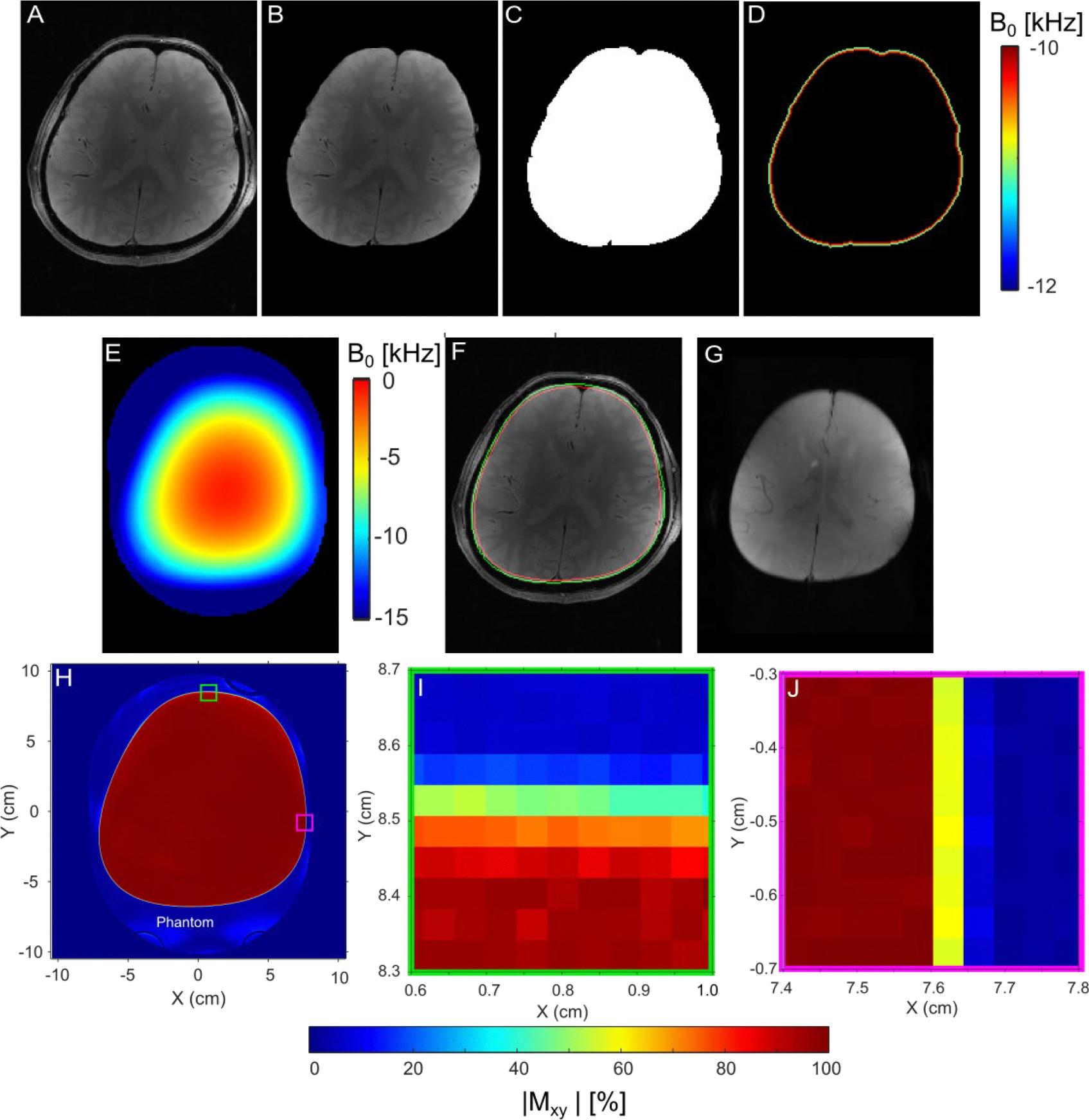
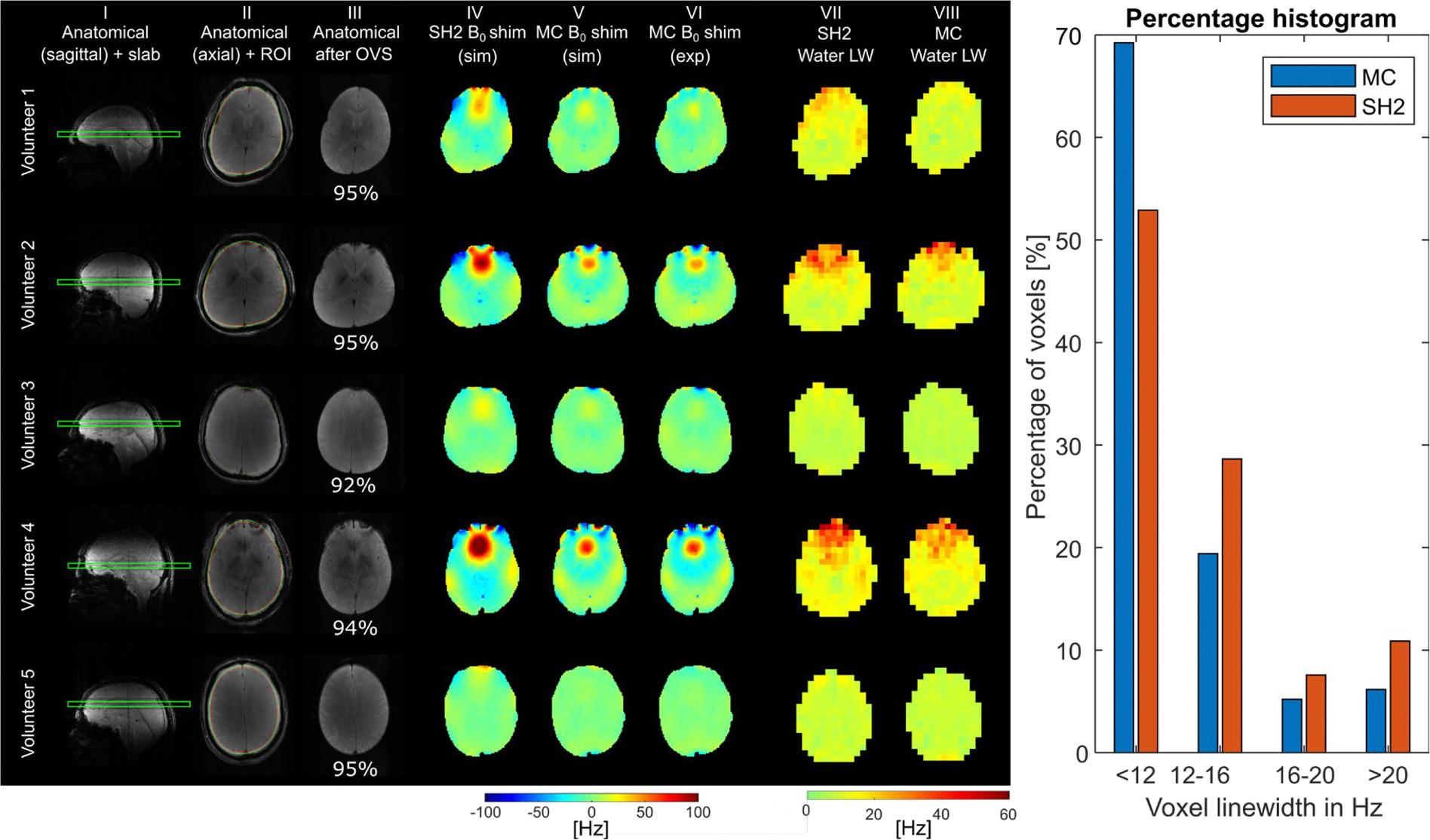
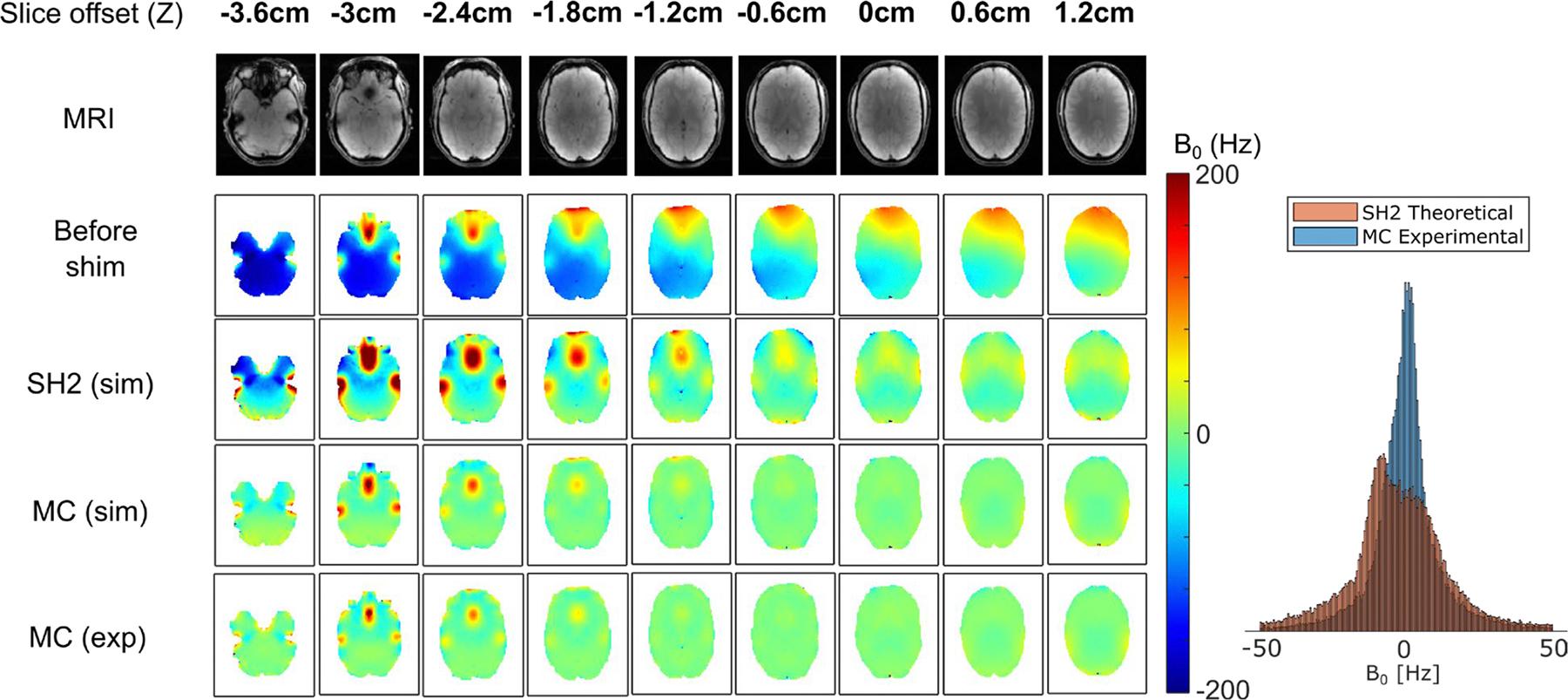
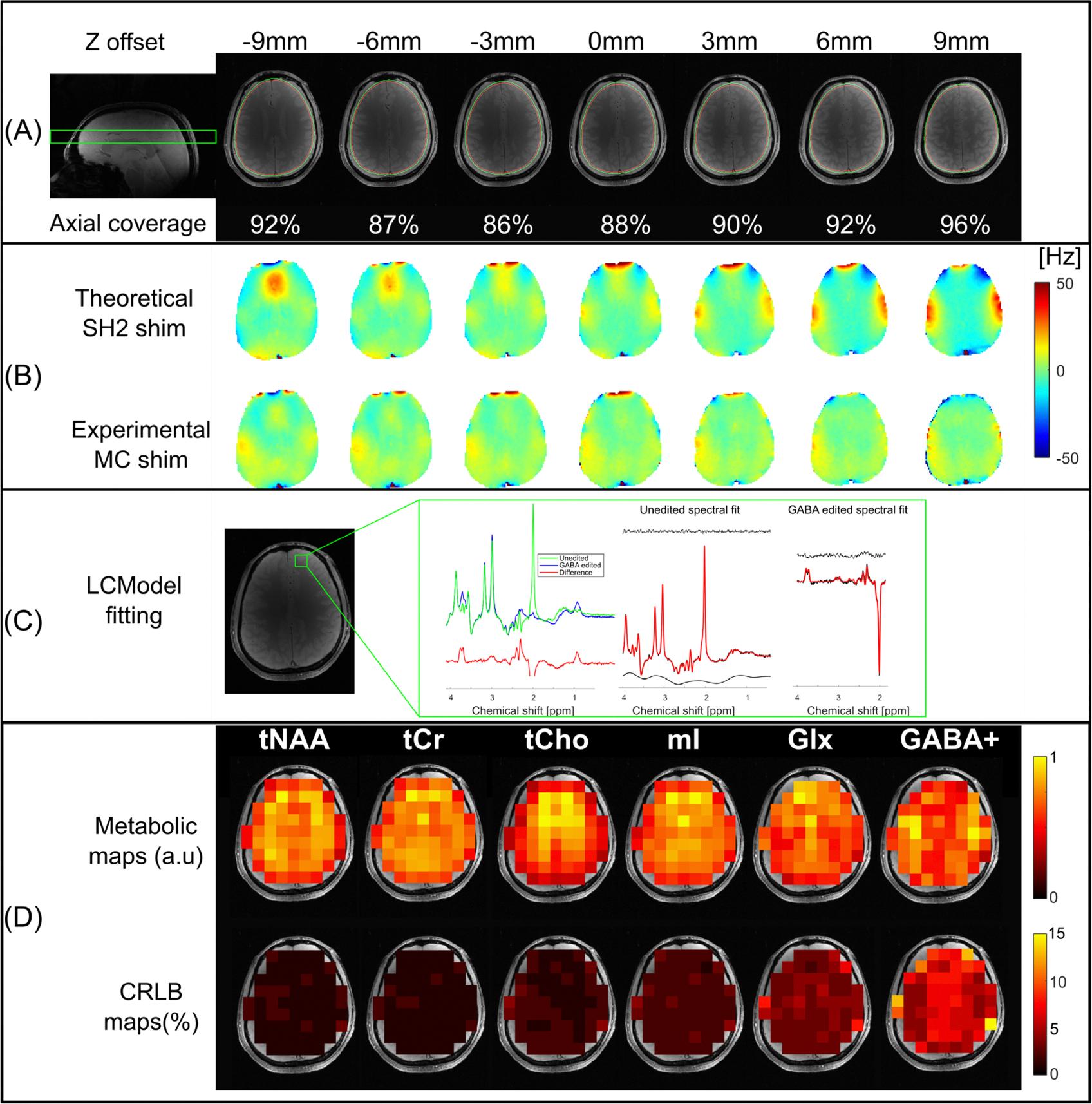
Magnetic Resonance Spectroscopic Imaging (MRSI) is a powerful technique that can map the metabolic profile in the brain non-invasively. Extracranial lipid contamination and insufficient B homogeneity however hampers robustness, and as a result has hindered widespread use of MRSI in clinical and research settings. Over the last six years we have developed highly effective extracranial lipid suppression methods with a second order gradient insert (ECLIPSE) utilizing inner volume selection (IVS) and outer volume suppression (OVS) methods. While ECLIPSE provides > 100-fold in lipid suppression with modest radio frequency (RF) power requirements and immunity to B field variations, axial coverage is reduced for non-elliptical head shapes. In this work we detail the design, construction, and utility of MC-ECLIPSE, a pulsed second order gradient coil with Z2 and X2Y2 fields, combined with a 54-channel multi-coil (MC) array. The MC-ECLIPSE platform allows arbitrary region of interest (ROI) shaped OVS for full-axial slice coverage, in addition to MC-based B field shimming, for robust human brain proton MRSI. In vivo experiments demonstrate that MC-ECLIPSE allows axial brain coverage of 92-95 % is achieved following arbitrary ROI shaped OVS for various head shapes. The standard deviation (SD) of the residual B field following SH2 and MC shimming were 25 ± 9 Hz and 18 ± 8 Hz over a 5 cm slab, and 18 ± 5 Hz and 14 ± 6 Hz over a 1.5 cm slab, respectively. These results demonstrate that B magnetic field shimming with the MC array supersedes second order harmonic capabilities available on standard MRI systems for both restricted and large ROIs. Furthermore, MC based B shimming provides comparable shimming performance to an unrestricted SH5 shim set for both restricted, and 5-cm slab shim challenges. Phantom experiments demonstrate the high level of localization performance achievable with MC-ECLIPSE, with ROI edge chemical shift displacements ranging from 1-3 mm with a median value of 2 mm, and transition width metrics ranging from 1-2.5 mm throughout the ROI edge. Furthermore, MC based B shimming is comparable to performance following a full set of unrestricted spherical harmonic fields up to order 5. Short echo time MRSI and GABA-edited MRSI acquisitions in the human brain following MC-shimming and arbitrary ROI shaping demonstrate full-axial slice coverage and extracranial lipid artifact free spectra. MC-ECLIPSE allows full-axial coverage and robust MRSI acquisitions, while allowing interrogation of cortical tissue proximal to the skull, which has significant value in a wide range of neurological and psychiatric conditions.
磁共振波谱成像(MRSI)是一种强大的技术,可以非侵入性地绘制大脑中的代谢谱。然而,颅外脂质污染和不均匀的 B 场会阻碍其稳健性,因此限制了 MRSI 在临床和研究环境中的广泛应用。在过去的六年中,我们利用内体积选择(IVS)和外体积抑制(OVS)方法,开发了具有二阶梯度插入(ECLIPSE)的高效颅外脂质抑制方法。虽然 ECLIPSE 提供了 >100 倍的脂质抑制,射频(RF)功率要求适中,并且对 B 场变化具有免疫力,但对于非椭圆形头部形状,轴向覆盖范围会减小。在这项工作中,我们详细介绍了 MC-ECLIPSE 的设计、构建和实用性,这是一种带有 Z2 和 X2Y2 场的脉冲二阶梯度线圈,结合了 54 通道多线圈(MC)阵列。MC-ECLIPSE 平台允许对各种头部形状进行任意感兴趣区域(ROI)形状的 OVS,以实现全轴向切片覆盖,此外还可以进行基于 MC 的 B 场调谐,用于稳健的人脑质子 MRSI。体内实验表明,MC-ECLIPSE 允许在各种头部形状下对 ROI 形状进行任意 OVS 后,实现 92-95%的轴向脑覆盖。在 5 cm 平板上,SH2 和 MC 调谐后的剩余 B 场的标准差(SD)分别为 25±9 Hz 和 18±8 Hz,在 1.5 cm 平板上,分别为 18±5 Hz 和 14±6 Hz。这些结果表明,对于受限和大 ROI,MC 阵列的 B 磁场调谐优于标准 MRI 系统上可用的二阶谐波能力。此外,基于 MC 的 B 调谐在受限和 5 cm 平板调谐挑战方面提供了与不受限制的 SH5 调谐集相当的调谐性能。 体模实验证明了 MC-ECLIPSE 可以实现高水平的定位性能,ROI 边缘的化学位移位移范围为 1-3mm,中位数为 2mm,过渡宽度指标范围为 1-2.5mm 贯穿 ROI 边缘。此外,基于 MC 的 B 调谐与高达 5 阶的完整无限制球谐场的性能相当。对 MC 调谐和任意 ROI 形状后的人脑进行短回波时间 MRSI 和 GABA 编辑 MRSI 采集,证明了全轴向切片覆盖和无颅外脂质伪影的光谱。MC-ECLIPSE 允许全轴向覆盖和稳健的 MRSI 采集,同时允许对靠近颅骨的皮质组织进行检测,这在广泛的神经和精神疾病条件下具有重要价值。

 Zotero 插件