
通过共轭传递工程调控小 RNA 来调节基因表达。
Modulation of gene expression through conjugative delivery of engineered regulatory small RNAs.
机构信息
Department of Biological Sciences, Institute of Structural and Molecular Biology, Birkbeck College, London, United Kingdom.
Division of Biosciences, Institute of Structural and Molecular Biology, University College London, London, United Kingdom.
出版信息
J Bacteriol. 2024 Oct 24;206(10):e0014224. doi: 10.1128/jb.00142-24. Epub 2024 Sep 18.
UNLABELLED
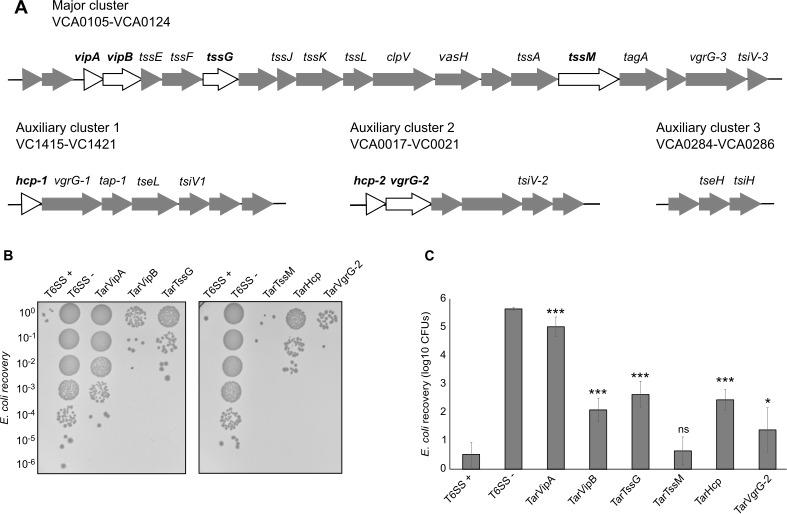
The increase in antibiotic resistance in bacteria has prompted the efforts in developing new alternative strategies for pathogenic bacteria. We explored the feasibility of targeting by neutralizing bacterial cellular processes rather than outright killing the pathogen. We investigated the efficacy of delivering engineered regulatory small RNAs (sRNAs) to modulate gene expression through DNA conjugation. As a proof of concept, we engineered several sRNAs targeting the type VI secretion system (T6SS), several of which were able to successfully knockdown the T6SS activity at different degrees. Using the same strategy, we modulated exopolysaccharide production and motility. Lastly, we delivered an sRNA targeting T6SS into via conjugation and observed a rapid knockdown of the T6SS activity. Coupling conjugation with engineered sRNAs represents a novel way of modulating gene expression in opening the door for the development of novel prophylactic and therapeutic applications.
IMPORTANCE
Given the prevalence of antibiotic resistance, there is an increasing need to develop alternative approaches to managing pathogenic bacteria. In this work, we explore the feasibility of modulating the expression of various cellular systems in using engineered regulatory sRNAs delivered into cells via DNA conjugation. These sRNAs are based on regulatory sRNAs found in and exploit its native regulatory machinery. By delivering these sRNAs conjugatively along with a real-time marker for DNA transfer, we found that complete knockdown of a targeted cellular system could be achieved within one cell division cycle after sRNA gene delivery. These results indicate that conjugative delivery of engineered regulatory sRNAs is a rapid and robust way of precisely targeting .
未加标签
细菌对抗生素的耐药性不断增加,促使人们努力开发针对病原菌的新替代策略。我们探索了通过中和细菌细胞过程而不是直接杀死病原体来靶向的可行性。我们研究了通过 DNA 结合传递工程调控小 RNA(sRNA)来调节基因表达的功效。作为概念验证,我们设计了几种针对 VI 型分泌系统(T6SS)的 sRNA,其中几种能够成功地在不同程度上降低 T6SS 的活性。使用相同的策略,我们调节了胞外多糖的产生和运动性。最后,我们通过结合将靶向 T6SS 的 sRNA 递送至 中,并观察到 T6SS 活性的快速降低。将结合与工程 sRNA 相结合代表了一种在 中调节基因表达的新方法,为开发新的预防和治疗应用开辟了道路。
重要性
鉴于抗生素耐药性的普遍存在,人们越来越需要开发替代方法来管理病原菌。在这项工作中,我们探索了使用通过 DNA 结合递送至细胞中的工程调控 sRNA 来调节各种细胞系统在 中的表达的可行性。这些 sRNA 基于在 中发现的调控 sRNA,并利用其天然的调控机制。通过共轭递送来传递这些 sRNA 以及用于 DNA 转移的实时标记物,我们发现,在 sRNA 基因传递后一个细胞分裂周期内,可以实现靶向细胞系统的完全敲低。这些结果表明,共轭传递工程调控 sRNA 是一种快速而强大的精确靶向 的方法。



 Zotero 插件