
不同水产养殖动物水产饲料中的微塑料污染
Microplastic pollution in aquafeed of diverse aquaculture animals.
作者信息
Mohsen Mohamed, Lin Jibin, Lu Kangle, Wang Ling, Zhang Chunxiao
机构信息
Xiamen Key Laboratory for Feed Quality Testing and Safety Evaluation, Fisheries College, Jimei University, Xiamen City, Fujian Province, 361021, PR China.
Department of Fish Production, Faculty of Agriculture, Al-Azhar University, Nasr City, Cairo, 11884, Egypt.
出版信息
Heliyon. 2024 Sep 3;10(17):e37370. doi: 10.1016/j.heliyon.2024.e37370. eCollection 2024 Sep 15.
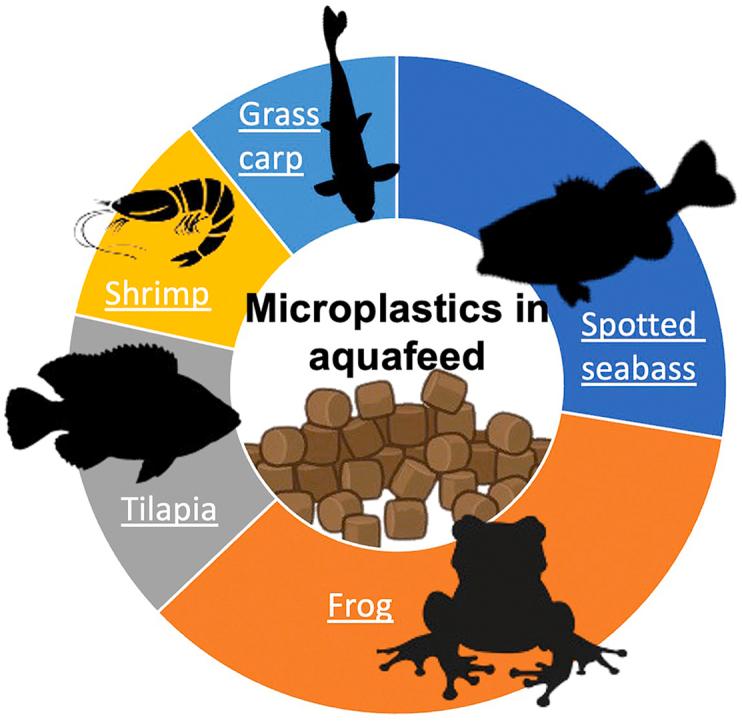
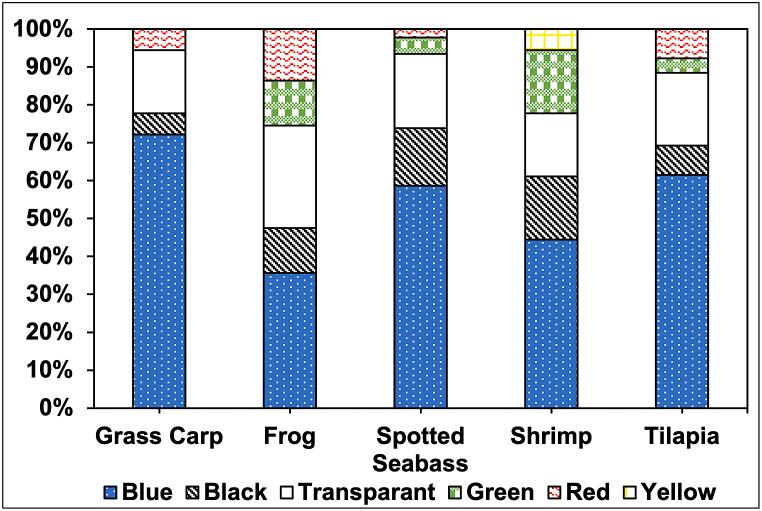
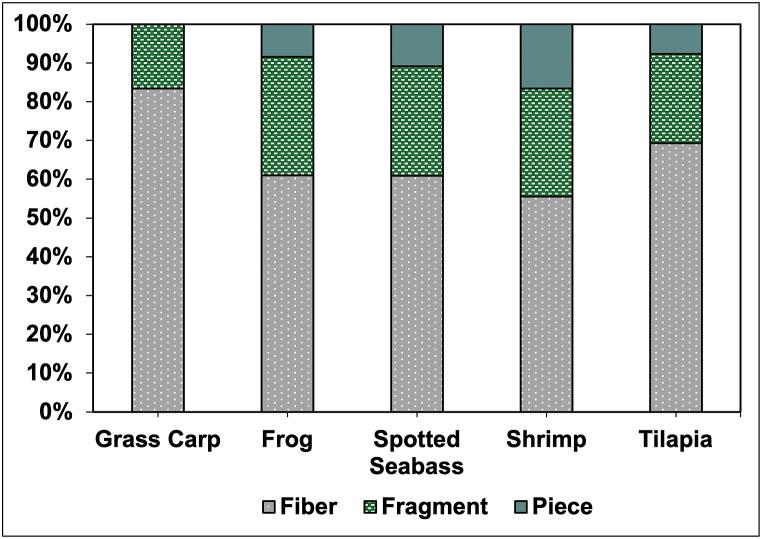
Microplastics have emerged as pervasive contaminants, and determining their occurrence in aquafeed is key for evaluating their risks to farmed animals and, by extension, humans. However, knowledge about microplastic in aquafeed is still limited. Herein, we determined microplastic characteristics in aquafeed for five important aquaculture animals with different feeding habits. Aquafeed samples were collected for spotted sea bass, shrimp, grass carp, Tilapia, and frogs from main companies in China. The samples were digested using chemical digestion, and the residuals were subjected to a density separation. Microplastics were identified under the microscope and characterized by their shape, color, size, and polymer type. The results showed that microplastics are highly abundant in the feed of frogs, followed by spotted sea bass, Tilapia, grass carp, and shrimp. We found that feed size contributes to the total microplastic abundance in the feed. Further, microplastics were mainly in microfiber form, and the dominant polymer type was propylene, suggesting that packaging and processing are the main sources of pollution. Additionally, the most abundant size of microplastics was 100-1000 μm. Calculating microplastic ingestion risk, the spotted sea bass had the greatest recorded risk of microplastic ingestion, followed by grass carp, frogs, Tilapia, and shrimp. This study lays a foundational step toward understanding microplastic effects on aquaculture animals and calls for further environmentally relevant laboratory experiments to assess the risk of microplastic ingestion on animals and potential transfer to humans.
微塑料已成为普遍存在的污染物,确定其在水产饲料中的存在情况是评估其对养殖动物乃至人类风险的关键。然而,关于水产饲料中微塑料的知识仍然有限。在此,我们确定了具有不同摄食习惯的五种重要水产养殖动物的水产饲料中的微塑料特征。从中国主要公司收集了鲈鱼、虾、草鱼、罗非鱼和青蛙的水产饲料样本。样本采用化学消化法进行消化,残留物进行密度分离。在显微镜下识别微塑料,并根据其形状、颜色、大小和聚合物类型进行表征。结果表明,青蛙饲料中的微塑料含量极高,其次是鲈鱼、罗非鱼、草鱼和虾。我们发现饲料粒度对饲料中微塑料的总含量有影响。此外,微塑料主要呈微纤维形式,主要聚合物类型为丙烯,这表明包装和加工是主要污染来源。此外,微塑料最常见的尺寸为100 - 1000微米。计算微塑料摄入风险,记录显示鲈鱼摄入微塑料的风险最大,其次是草鱼、青蛙、罗非鱼和虾。本研究为了解微塑料对水产养殖动物的影响迈出了基础性的一步,并呼吁开展更多与环境相关的实验室实验,以评估微塑料摄入对动物的风险以及对人类的潜在转移风险。





 Zotero 插件