
对一组囊性纤维化儿科患者进行生化评估。
Biochemical assessment in a cohort of pediatric patients with cystic fibrosis.
机构信息
Faculty of Biology, University of Bucharest, Bucharest, Romania.
Alessandrescu-Rusescu National Institute for Mother and Child Health, Bucharest, Romania.
出版信息
J Med Life. 2024 Jun;17(6):610-619. doi: 10.25122/jml-2024-0288.
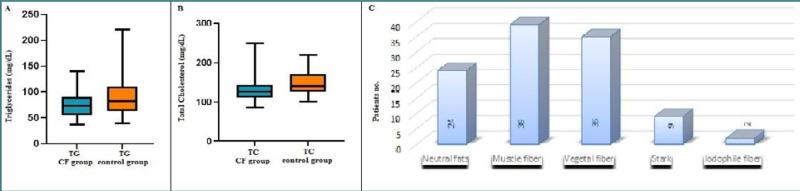
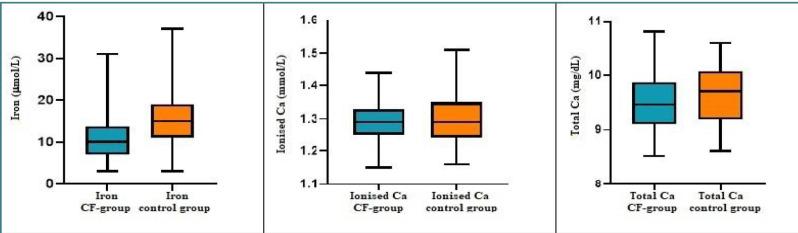
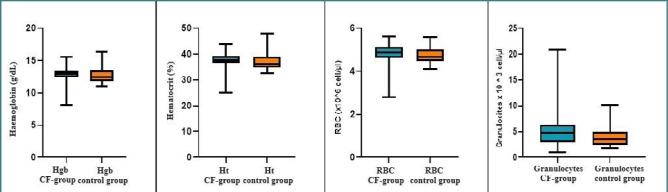
Cystic fibrosis (CF) is a recessive inherited disorder caused by genetic mutations in the CF transmembrane conductance regulator () gene. It is a multisystem condition that primarily induces abnormal mucus accumulation in the respiratory system and obstructs the intrapancreatic common bile duct, causing a reduction in the delivery of digestive enzymes to the small intestine. Thus, patients with CF are characterized by maldigestion, malabsorption, and recurrent airway bacterial infections. Clinical monitoring of the health status of patients with CF is mandatory for increasing the patients' lifespan. To assess the feasibility of monitoring life quality (LQ) in pediatric patients with cystic fibrosis (CF) and to explore the relationship between biochemical parameters and clinical symptoms, our study analyzed inflammatory responses related to CF, medication, and pulmonary bacterial infections in 52 patients diagnosed with CF. Blood, hypo-pharyngeal exudate, and fecal samples were analyzed using clinical biochemistry, hematology, and microbiology techniques at the Alessandrescu-Rusescu National Institute for Mother and Child Health central laboratory in Bucharest, Romania. All the participants adhered to their prescribed outpatient CF regimens and appeared clinically stable. The overall clinical status of patients with CF was observed and compared with that of a healthy control group, which consisted of individuals similar in number and age. The screened patients with CF presented an impaired lipid status and chronic infections with various bacteria, iron, and vitamin (A, D, and E) deficiencies. Our findings provide insights into the pathophysiological mechanisms of CF and suggest that tailored monitoring and personalized therapeutic strategies could improve patient management.
囊性纤维化(CF)是一种由 CF 跨膜电导调节因子(CFTR)基因的遗传突变引起的隐性遗传性疾病。它是一种多系统疾病,主要导致呼吸系统中异常黏液积聚,并阻塞胰内共同胆管,从而减少消化酶向小肠的输送。因此,CF 患者的特点是消化不良、吸收不良和反复呼吸道细菌感染。对 CF 患者健康状况的临床监测对于延长患者寿命是强制性的。为了评估监测囊性纤维化(CF)儿科患者生活质量(LQ)的可行性,并探讨生化参数与临床症状之间的关系,我们的研究分析了 52 例 CF 患者与 CF 相关的炎症反应、药物和肺部细菌感染。在罗马尼亚布加勒斯特的 Alessandrescu-Rusescu 国家母婴健康中心实验室,使用临床生物化学、血液学和微生物学技术分析了血液、咽分泌物和粪便样本。所有参与者均遵循其规定的门诊 CF 治疗方案,且临床状况稳定。观察 CF 患者的整体临床状况,并将其与具有相似数量和年龄的健康对照组进行比较。筛查出的 CF 患者存在脂质状况受损以及各种细菌、铁和维生素(A、D 和 E)慢性感染。我们的研究结果提供了对 CF 病理生理机制的深入了解,并表明量身定制的监测和个性化治疗策略可以改善患者管理。




 Zotero 插件