
III 型代谢型谷氨酸受体:对抗缺血性脑损伤中兴奋性毒性的守护者,对新生儿情况有影响。
Group III metabotropic glutamate receptors: guardians against excitotoxicity in ischemic brain injury, with implications for neonatal contexts.
机构信息
Department of Neurochemistry, Mossakowski Medical Research Institute, Polish Academy of Sciences, Pawińskiego 5, Warsaw, 02-106, Poland.
出版信息
Pharmacol Rep. 2024 Dec;76(6):1199-1218. doi: 10.1007/s43440-024-00651-z. Epub 2024 Sep 17.
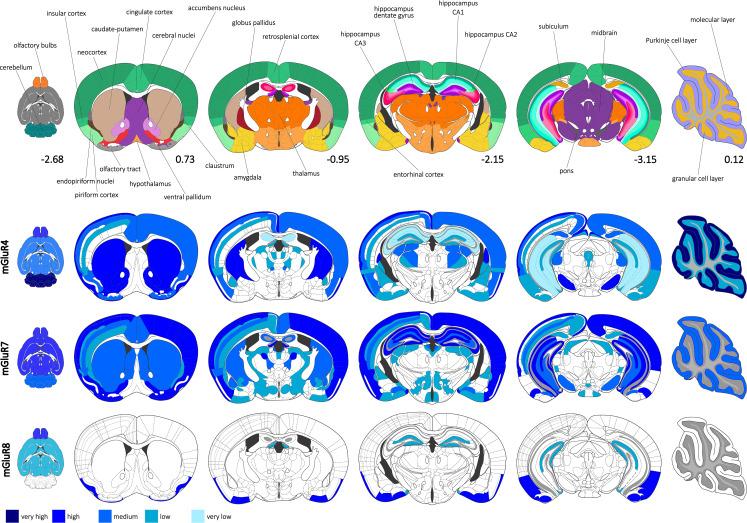
The group III metabotropic glutamate receptors (mGluRs), comprising mGluR4, mGluR6, mGluR7, and mGluR8, offer neuroprotective potential in mitigating excitotoxicity during ischemic brain injury, particularly in neonatal contexts. They are G-protein coupled receptors that inhibit adenylyl cyclase and reduce neurotransmitter release, mainly located presynaptically and acting as autoreceptors. This review aims to examine the differential expression and function of group III mGluRs across various brain regions such as the cortex, hippocampus, and cerebellum, with a special focus on the neonatal stage of development. Glutamate excitotoxicity plays a crucial role in the pathophysiology of brain ischemia in neonates. While ionotropic glutamate receptors are traditional targets for neuroprotection, their direct inhibition often leads to severe side effects due to their critical roles in normal neurotransmission and synaptic plasticity. Group III mGluRs provide a more nuanced and potentially safer approach by modulating rather than blocking glutamatergic transmission. Their downstream signaling cascade results in the regulation of intracellular calcium levels, neuronal hyperpolarization, and reduced neurotransmitter release, effectively decreasing excitotoxic signaling without completely suppressing essential glutamatergic functions. Importantly, the neuroprotective effects of group III mGluRs extend beyond direct modulation of glutamate release influencing glial cell function, neuroinflammation, and oxidative stress, all of which contribute to secondary injury cascades in brain ischemia. This comprehensive analysis of group III mGluRs multifaceted neuroprotective potential provides valuable insights for developing novel therapeutic strategies to combat excitotoxicity in neonatal ischemic brain injury.
III 组代谢型谷氨酸受体(mGluRs)包括 mGluR4、mGluR6、mGluR7 和 mGluR8,在减轻缺血性脑损伤中的兴奋性毒性方面具有神经保护潜力,尤其是在新生儿期。它们是 G 蛋白偶联受体,可抑制腺苷酸环化酶并减少神经递质释放,主要位于突触前并作为自受体起作用。本综述旨在检查 III 组 mGluRs 在大脑不同区域(如皮质、海马体和小脑)中的差异表达和功能,特别关注发育的新生儿阶段。谷氨酸兴奋性毒性在新生儿脑缺血的病理生理学中起着至关重要的作用。虽然离子型谷氨酸受体是神经保护的传统靶点,但由于它们在正常神经传递和突触可塑性中的关键作用,直接抑制它们常常会导致严重的副作用。III 组 mGluRs 通过调节而不是阻断谷氨酸传递,提供了一种更细致入微且潜在更安全的方法。它们的下游信号级联反应导致细胞内钙水平的调节、神经元超极化和神经递质释放减少,有效减少兴奋性信号而不会完全抑制必需的谷氨酸能功能。重要的是,III 组 mGluRs 的神经保护作用不仅限于直接调节谷氨酸释放,还影响神经胶质细胞功能、神经炎症和氧化应激,所有这些都有助于脑缺血中的继发性损伤级联反应。对 III 组 mGluRs 多方面神经保护潜力的综合分析为开发治疗新生儿缺血性脑损伤中兴奋性毒性的新治疗策略提供了有价值的见解。

 Zotero 插件