
布拉迪斯拉发口腔面部感染的抗生素药敏性:一项 10 年回顾性研究。
Antibiotic susceptibility of orofacial infections in Bratislava: a 10-year retrospective study.
机构信息
Faculty of Medicine, Department of Oral and Maxillofacial Surgery, Comenius University Bratislava, University Hospital Bratislava - Ružinov, Ružinovská 6 Bratislava 826 06, Bratislava, Slovakia.
出版信息
Clin Oral Investig. 2024 Sep 21;28(10):538. doi: 10.1007/s00784-024-05937-3.
OBJECTIVES
Aim of this study was to analyse causal microbiological agents and their bacterial resistance in orofacial infections requiring hospital admission.
MATERIALS AND METHODS
Presented is a 10-year retrospective study of patients hospitalised at a single department in 2014-2023. 744 patients were involved. In the statistical analysis, following data was evaluated: causal microbes and their resistance to Penicillin, Amoxicillin-Clavulanate, Clindamycin and Metronidazole.
RESULTS
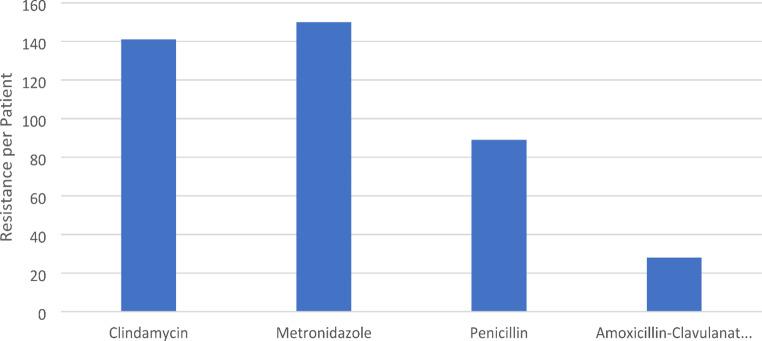
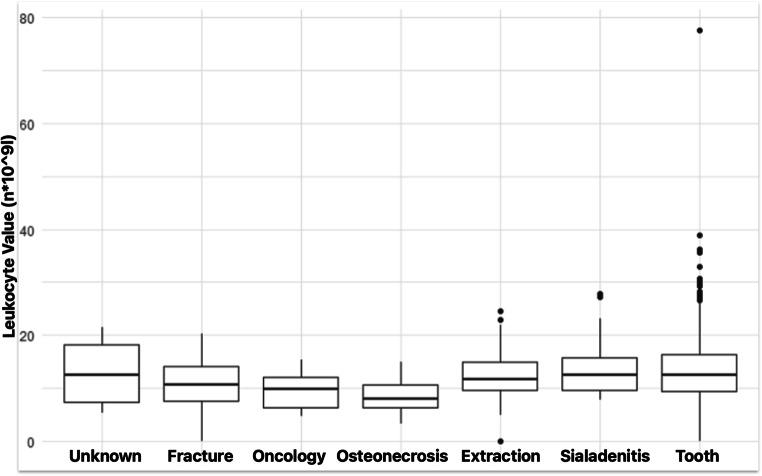
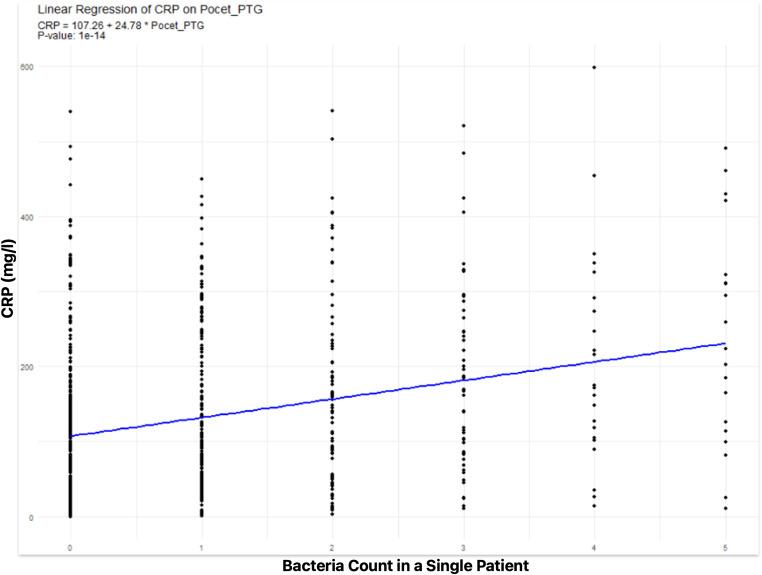
Most frequent aetiology was odontogenic with causal tooth in socket (n = 468; 62,9%), followed by odontogenic - post extraction (n = 152; 20.4%), jaw fracture (n = 41; 5.5%), sialadenitis n = 31 (4.2%), osteonecrosis n = 22 (3.0%), oncological diagnosis in head and neck (n = 17; 2.3%), unknown (n = 10; 1.3%) and multiple factors (n = 3; 0.4%). 408 patients (54.8%) underwent extraoral abscess revision, 336 patients (45.2%) patients were treated locally without extraoral revision. In odontogenic group with tooth still present, superior CRP (m = 145.8 mg/l; SD = 117.7) and leukocyte values (m = 13.6*10l; SD = 6.6) were observed in comparison to other groups. There were 698 cultivated bacteria in 362 patients. Most frequent bacteria were Streptococci (n = 162; 23.2%), Prevotella (n = 83; 11.2%) and Parvimonas (n = 65; 9.3%). Clindamycin resistance was highest (n = 180 resistant bacteria; 25.8%), followed by Metronidazole (n = 178; 25.5%), Penicillin (n = 107; 15.3%) and Amoxicillin-Clavulanate (n = 34; 4.9%).
CONCLUSIONS
Orofacial infections in head and neck region are mostly of odontogenic origin with causal tooth still in socket. Causal bacteria show a high antibiotic resistance rate, especially to Clindamycin and Metronidazole.
CLINICAL RELEVANCE
Acquired data will be used to determine guidelines for empirical antibiotic prescription in cases of orofacial infections.
目的
本研究旨在分析需要住院治疗的口腔颌面部感染的病原微生物及其细菌耐药性。
材料和方法
本研究为 2014 年至 2023 年在单一科室住院的患者进行的 10 年回顾性研究。共纳入 744 例患者。在统计分析中,评估了以下数据:病原微生物及其对青霉素、阿莫西林克拉维酸、克林霉素和甲硝唑的耐药性。
结果
最常见的病因是牙源性,包括牙槽窝内的病牙(n=468;62.9%)、牙源性-拔牙后(n=152;20.4%)、颌骨骨折(n=41;5.5%)、唾液腺炎(n=31;4.2%)、骨坏死(n=22;3.0%)、头颈部肿瘤诊断(n=17;2.3%)、不明原因(n=10;1.3%)和多种因素(n=3;0.4%)。408 例(54.8%)患者行口腔外脓肿切开引流术,336 例(45.2%)患者行局部治疗,未行口腔外切开引流术。在仍有牙存在的牙源性组中,C 反应蛋白(CRP)(m=145.8mg/L;SD=117.7)和白细胞值(m=13.6*109/L;SD=6.6)明显高于其他组。在 362 例患者中共培养出 698 株细菌。最常见的细菌为链球菌(n=162;23.2%)、普雷沃菌(n=83;11.2%)和小韦荣球菌(n=65;9.3%)。克林霉素耐药率最高(n=180 株耐药菌;25.8%),其次是甲硝唑(n=178 株;25.5%)、青霉素(n=107 株;15.3%)和阿莫西林克拉维酸(n=34 株;4.9%)。
结论
头颈部口腔颌面部感染主要来源于牙源性,且病牙仍在牙槽窝内。病原微生物表现出较高的抗生素耐药率,尤其是对克林霉素和甲硝唑。
临床意义
获得的数据将用于确定口腔颌面部感染经验性抗生素处方的指南。




 Zotero 插件