
围手术期因素在癌症患者预后中的作用:事物都有两面性。
The role of perioperative factors in the prognosis of cancer patients: A coin has two sides.
作者信息
Tu Yingzhou, Wang Sen, Wang Haoran, Zhang Peiyao, Wang Mengyu, Liu Cunming, Yang Chun, Jiang Riyue
机构信息
Department of Anesthesiology and Perioperative Medicine, the First Affiliated Hospital of Nanjing Medical University, Nanjing 210029, China.
Department of Radiation Oncology, the First Affiliated Hospital of Nanjing Medical University, Nanjing 210029, China.
出版信息
J Biomed Res. 2024 Sep 25;39(2):1-12. doi: 10.7555/JBR.38.20240164.
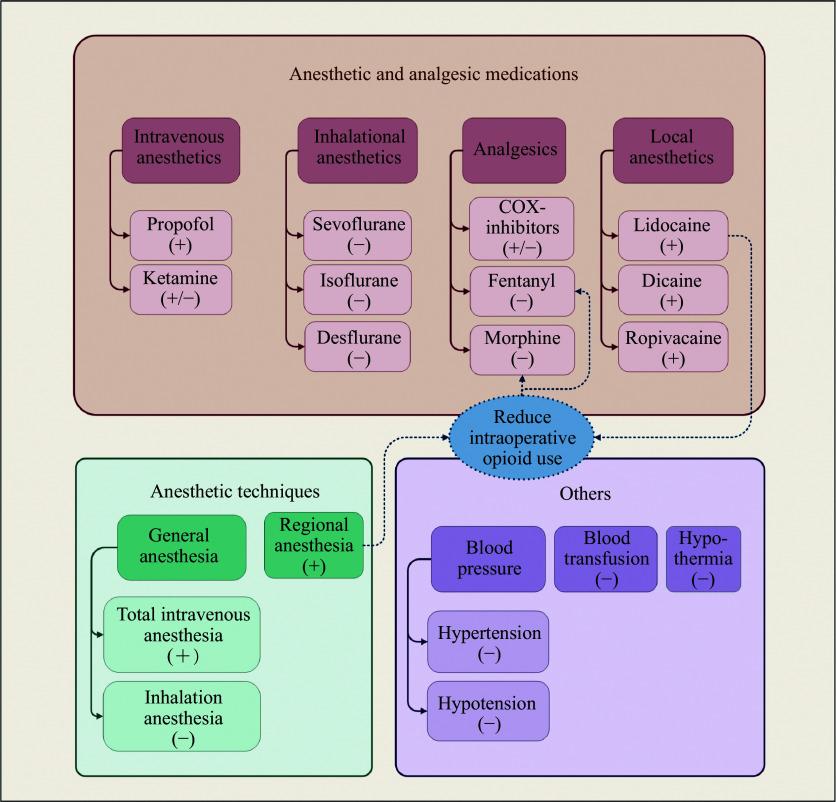
Cancer, the second leading cause of mortality globally, poses a significant health challenge. The conventional treatment for solid tumors involves surgical intervention, followed by chemo- and radio-therapies as well as target therapies, but the recurrence and metastasis of cancers remain a major issue. Anesthesia is essential for ensuring patient comfort and safety during surgical procedures. Despite its crucial role during the surgery, the precise effect of anesthesia on cancer patient outcomes is not clearly understood. This comprehensive review aims to elucidate the various anesthesia strategies used in the perioperative care of cancer patients and their potential effects on patients' prognosis, but understanding the complex relationship between anesthesia and cancer outcomes is crucial, given the complexity in cancer treaments. Examining potential implications of anesthesia strategies on cancer patient prognosis may help better understand treatment efficacy and risk factors of cancer recurrence and metastasis. Through a detailed analysis of anesthesia practices in cancer surgery, this review aims to provide insights that may lead to improving the existing anesthesia protocols and ultimately reduce risk factors for patient outcomes in the field of oncology.
癌症是全球第二大死因,构成了重大的健康挑战。实体瘤的传统治疗包括手术干预,随后是化疗、放疗以及靶向治疗,但癌症的复发和转移仍然是一个主要问题。麻醉对于确保手术过程中患者的舒适度和安全性至关重要。尽管麻醉在手术期间起着关键作用,但麻醉对癌症患者预后的确切影响尚不清楚。这篇综述旨在阐明癌症患者围手术期护理中使用的各种麻醉策略及其对患者预后的潜在影响,鉴于癌症治疗的复杂性,了解麻醉与癌症预后之间的复杂关系至关重要。研究麻醉策略对癌症患者预后的潜在影响可能有助于更好地理解癌症复发和转移的治疗效果及风险因素。通过对癌症手术中麻醉实践的详细分析,本综述旨在提供相关见解,以改进现有的麻醉方案,并最终降低肿瘤学领域患者预后的风险因素。
 Zotero 插件