
在哥伦比亚,幼儿感染及其对胃肠道环境的影响。
infection of young children in Colombia and its impact on the gastrointestinal environment.
机构信息
Department of Microbiology, University of Tennessee, Knoxville, Tennessee, USA.
Grupo de Investigación en Manejo Clínico-CliniUDES, Facultad de Ciencias de la Salud, Universidad de Santander, Bucaramanga, Colombia.
出版信息
mSphere. 2024 Oct 29;9(10):e0034224. doi: 10.1128/msphere.00342-24. Epub 2024 Sep 25.
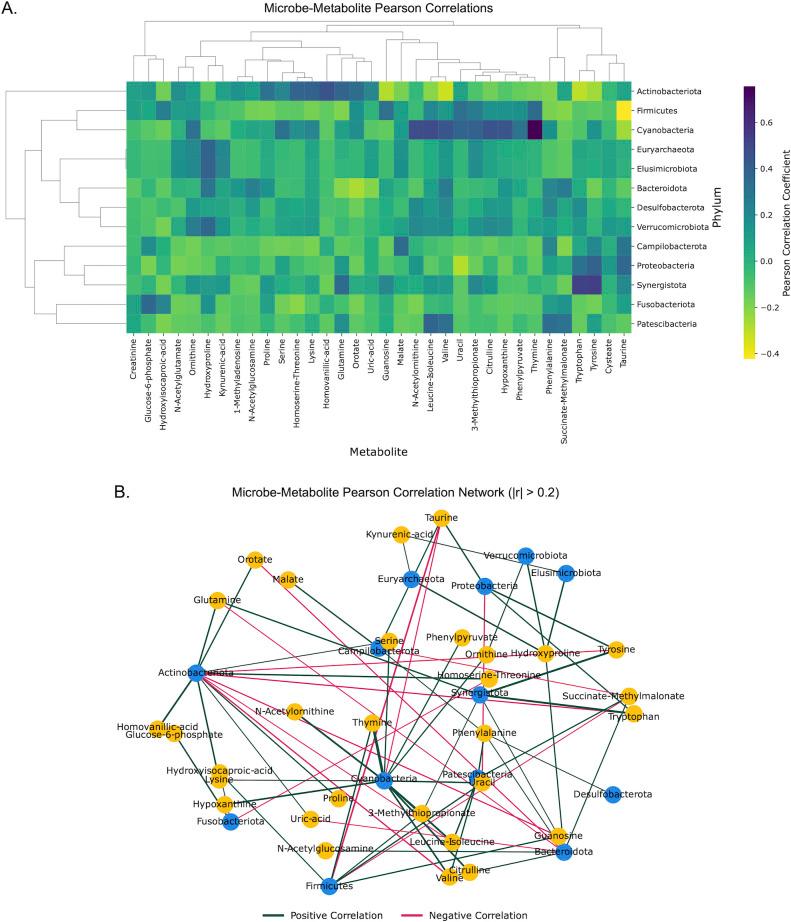
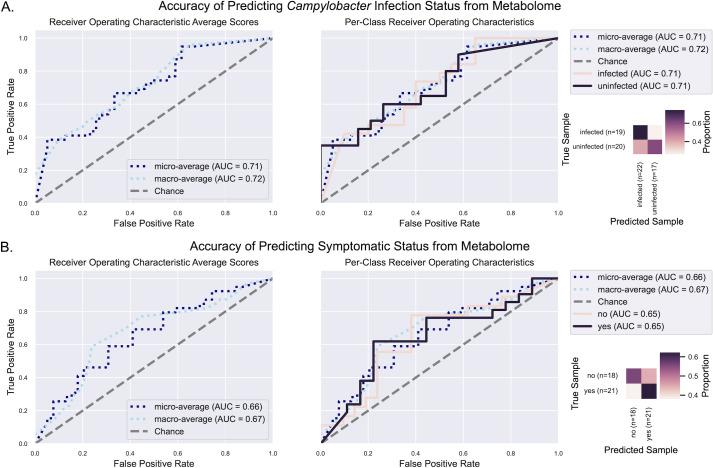
infections are a leading cause of bacterial-derived gastroenteritis worldwide with particularly profound impacts on pediatric patients in low- and middle-income countries. It remains unclear how impacts these hosts, though it is becoming increasingly evident that it is a multifactorial process that depends on the host immune response, the gastrointestinal microbiota, various bacterial factors, and host nutritional status. Since these factors likely vary between adult and pediatric patients in different regions of the world, it is important that studies define these attributes in well-characterized clinical cohorts in diverse settings. In this study, we analyzed the fecal microbiota and the metabolomic and micronutrient profiles of asymptomatic and symptomatic pediatric patients in Colombia who were either infected or uninfected with during a case-controlled study on acute diarrheal disease. Here, we report that the microbiome of infected children only changed in their abundance of spp. despite the inclusion of children with or without diarrhea. In addition to increased computational models were used to identify fecal metabolites that were associated with infection and found that glucose-6-phosphate and homovanillic acid were the strongest predictors of infection in these pediatric patients, which suggests that colonocyte metabolism is impacted during infection. Despite changes to the fecal metabolome, the concentrations of intestinal minerals and trace elements were not significantly impacted by infection but were elevated in uninfected children with diarrhea.IMPORTANCEGastrointestinal infection with pathogenic species has long been recognized as a significant cause of human morbidity. Recently, it has been observed that pediatric populations in low- and middle-income countries are uniquely impacted by these organisms in that infected children can be persistently colonized, develop enteric dysfunction, and exhibit reduced development and growth. While the association of species with these long-term effects continues to emerge, the impact of infection on the gastrointestinal environment of these children remains uncharacterized. To address this knowledge gap, our group leveraged clinical samples collected during a previous study on gastrointestinal infections in pediatric patients to examine the fecal microbiota, metabolome, and micronutrient profiles of those infected with species and found that the metabolome was impacted in a way that suggests gastrointestinal cell metabolism is affected during infection, which is some of the first data indicating how gastrointestinal health in these patients may be affected.
感染是导致全球细菌性肠炎的主要原因,特别是对中低收入国家的儿科患者产生了深远的影响。目前尚不清楚如何影响这些宿主,但越来越明显的是,这是一个多因素的过程,取决于宿主免疫反应、胃肠道微生物群、各种细菌因素和宿主营养状况。由于这些因素在世界不同地区的成年和儿科患者中可能有所不同,因此重要的是,研究应在不同环境中具有良好特征的临床队列中定义这些属性。在这项研究中,我们分析了哥伦比亚无症状和有症状的儿科患者的粪便微生物群以及代谢组学和微量营养素谱,这些患者在急性腹泻病的病例对照研究中感染或未感染 。在这里,我们报告说,感染儿童的微生物组仅在其 spp.的丰度上发生变化,尽管包括有或没有腹泻的儿童。除了增加的计算模型被用于鉴定与 感染相关的粪便代谢物,并发现葡萄糖-6-磷酸和高香草酸是这些儿科患者感染的最强预测因子,这表明感染期间结肠细胞代谢受到影响。尽管粪便代谢组发生了变化,但 感染并未显著影响肠道矿物质和微量元素的浓度,但在无腹泻的感染儿童中升高。
重要性
致病性 物种的胃肠道感染长期以来一直被认为是人类发病的重要原因。最近,人们观察到,中低收入国家的儿科人群受到这些生物的独特影响,即感染的儿童可以持续定植,出现肠道功能障碍,并表现出发育和生长迟缓。虽然 物种与这些长期影响的关联仍在不断出现,但感染对这些儿童胃肠道环境的影响仍未得到描述。为了弥补这一知识空白,我们的研究小组利用之前在儿科患者胃肠道感染研究中收集的临床样本,检查了感染 物种的患者的粪便微生物群、代谢组和微量营养素谱,发现代谢组受到影响,这表明感染期间胃肠道细胞代谢受到影响,这是首批表明这些患者的胃肠道健康可能受到影响的一些数据。

 Zotero 插件