
1型糖尿病患者的特征影响开始胰岛素泵治疗的教育过程:一项观察性研究。
Characteristics of people with type 1 diabetes influence the educational process for starting insulin pump therapy: an observational study.
作者信息
Izquierdo Verónica, Pazos-Couselo Marcos, González-Rodríguez María, Martínez-Santos Alba-Elena, Andujar-Plata Paula, Díaz-Trastoy Olaia, Fernández-Pombo Antía, Sigüeiro-Paulos Sara, Rodríguez-González Raquel
机构信息
Faculty of Nursing, University of Santiago de Compostela, Santiago de Compostela, Spain.
Health Research Institute of Santiago de Compostela (IDIS), Santiago de Compostela, Spain.
出版信息
Health Educ Res. 2024 Dec 17;39(6):524-534. doi: 10.1093/her/cyae030.
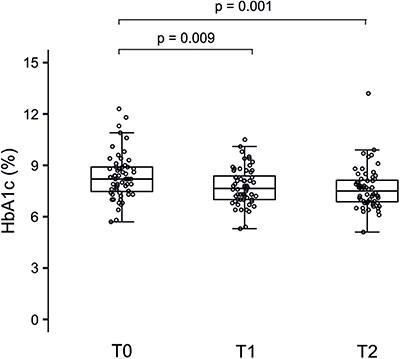
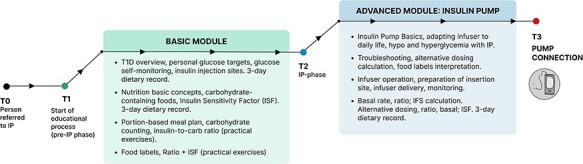
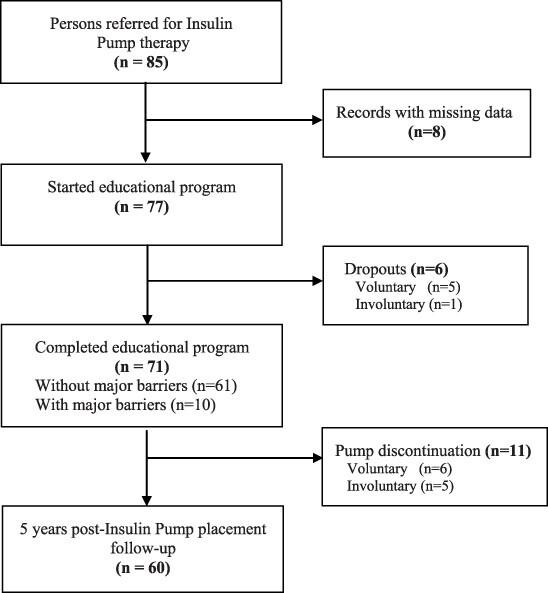
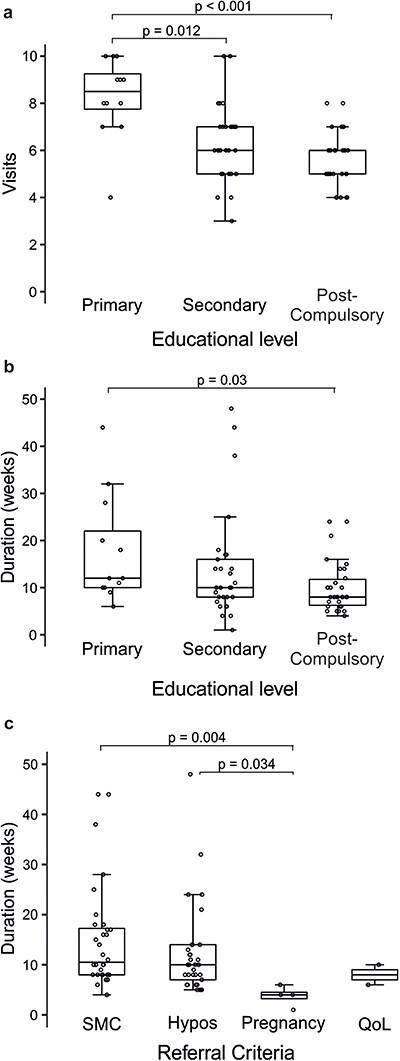
Limited data exist on educational programs for people using insulin pump (IP) therapy or those considering its initiation, and the influence of individual characteristics on their educational pathway remains unclear. Our aim was to analyze the characteristics of people with type 1 diabetes (T1D) referred for IP therapy and how these characteristics may influence their educational process. A retrospective descriptive observational study was carried out on people with T1D referred for participation in a structured pre-IP educational program in a hospital setting. Educational, sociodemographic and clinical variables were collected and analyzed. Participants were followed up 5 years after IP placement. Seventy-one people finalized the educational program, of whom 10 experienced major barriers to completing it. People with lower educational level required more sessions and weeks to complete it compared to those with higher educational levels. People referred due to suboptimal metabolic control and hypoglycemia also required more time to complete the process. It is essential for diabetes educators to recognize the diversity of characteristics, needs and challenges among the participants in an educational program. Based on this, they must adapt strategies to provide more effective, person-centered diabetes education and support, fostering positive and sustained outcomes and engagement for participants.
关于胰岛素泵(IP)治疗使用者或考虑开始使用胰岛素泵治疗者的教育项目,现有数据有限,而且个体特征对其教育途径的影响仍不明确。我们的目的是分析转诊接受IP治疗的1型糖尿病(T1D)患者的特征,以及这些特征如何影响他们的教育过程。对转诊至医院参加结构化IP预教育项目的T1D患者进行了一项回顾性描述性观察研究。收集并分析了教育、社会人口统计学和临床变量。在植入IP 5年后对参与者进行随访。71人完成了教育项目,其中10人在完成项目过程中遇到了重大障碍。与教育水平较高的人相比,教育水平较低的人完成项目需要更多的课程和时间。因代谢控制不佳和低血糖而转诊的人完成该过程也需要更多时间。糖尿病教育工作者必须认识到教育项目参与者在特征、需求和挑战方面的多样性。基于此,他们必须调整策略,以提供更有效、以患者为中心的糖尿病教育和支持,促进参与者取得积极和持续的成果并积极参与。
 Zotero 插件