
气候引起的朝鲜半岛特有植物分布动态和生态位适应
Climate-induced distribution dynamics and niche adaptation of South Korean endemic plants across the Korean Peninsula.
机构信息
Division of Forest Biodiversity Research, Korea National Arboretum, 509 Gwangneungsumogwon-ro, Soheul-eup, Pocheon, 11186, Korea.
Major of Bio & Environmental Technology, Seoul Women's University, 621 Hwarang-ro, Nowon-gu, Seoul, 01797, Korea.
出版信息
Sci Rep. 2024 Sep 27;14(1):22253. doi: 10.1038/s41598-024-73569-4.
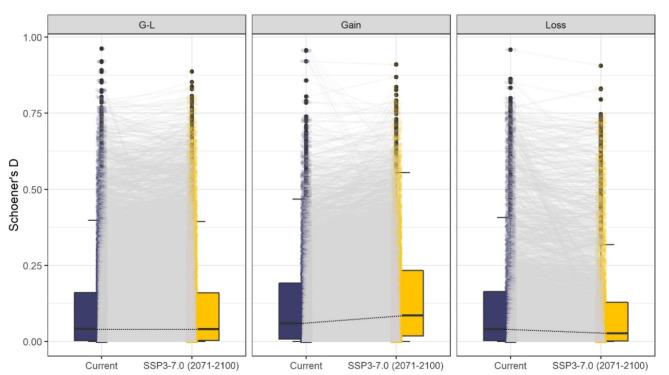
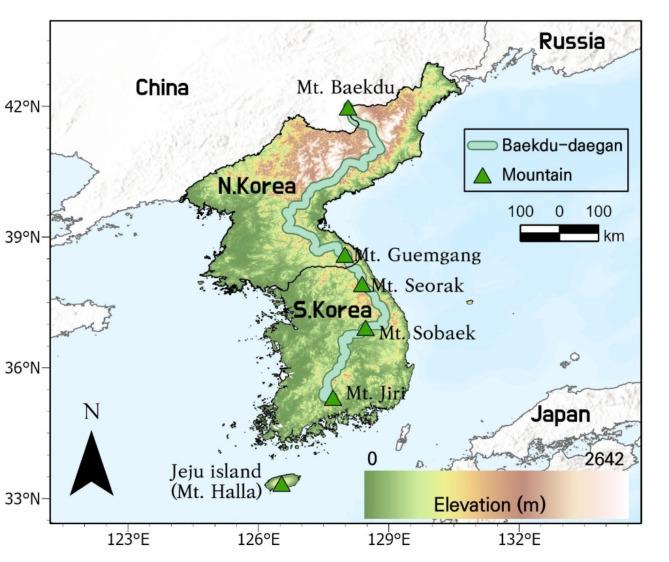
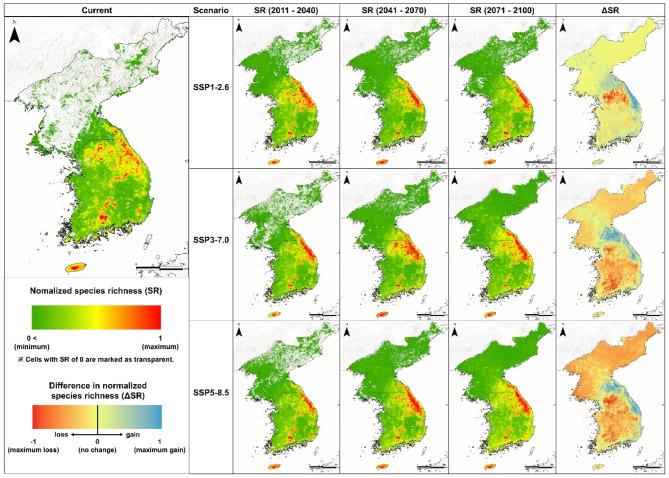
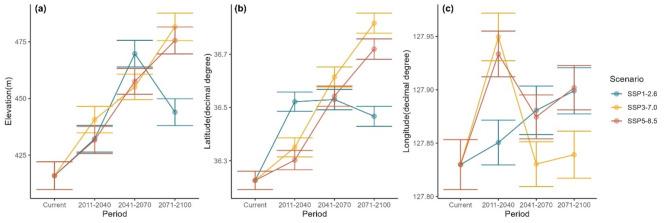
As climate change intensifies, endemic plants native to South Korea, especially those in specialized ecological niches, confront heightened risks of distribution shifts and habitat degradation. To provide a comprehensive understanding of these impacts, this study evaluates the climate-induced distribution dynamics and niche adaptation of these endemic species across the entire Korean Peninsula. Utilizing species distribution models (SDMs) for 179 plant species and incorporating environmental variables under projected future climate scenarios, our analysis identified unique distribution and niche adaptation patterns. Findings demonstrate that specialized endemic species are likely to migrate to higher altitudes and latitudes, highlighting their distinct vulnerability due to limited ecological niches. Our comparative approach underscores the necessity for refined conservation strategies that address the specific requirements of these endemic species, as opposed to those with wider distributions. This research offers valuable insights into biodiversity conservation amid climate change, proposing targeted actions such as the establishment of protected areas, habitat restoration, and the implementation of assisted migration strategies to safeguard these vital endemic plant species throughout the Korean Peninsula.
随着气候变化的加剧,原产于韩国的特有植物,特别是那些生活在特殊生态位的植物,面临着分布转移和栖息地退化的更高风险。为了全面了解这些影响,本研究评估了这些特有物种在整个朝鲜半岛上由气候引起的分布动态和生态位适应。本研究使用物种分布模型(SDM)对 179 种植物物种进行评估,并结合未来气候情景下的环境变量,我们的分析确定了独特的分布和生态位适应模式。研究结果表明,专业化的特有物种可能会迁移到更高的海拔和纬度,这突出了它们由于生态位有限而明显的脆弱性。我们的比较方法强调了需要制定精细的保护策略,以满足这些特有物种的具体要求,而不是针对那些分布更广的物种。本研究为气候变化中的生物多样性保护提供了有价值的见解,并提出了有针对性的行动,如建立保护区、栖息地恢复和实施辅助迁移策略,以保护整个朝鲜半岛的这些重要的特有植物物种。

 Zotero 插件