
达托霉素在儿科患者中的真实世界临床特征及结局:一项回顾性病例系列研究
Real-World Clinical Characteristics and Outcomes with Daptomycin Use in Pediatric Patients: A Retrospective Case Series.
作者信息
Persha Hanna, Thacker Stephen A, Hornback Krutika Mediwala, Alvira-Arill Gustavo R, Lueking Richard, Morrisette Taylor
机构信息
Department of Pharmacy Services, Medical University of South Carolina Shawn Jenkins Children's Hospital, Charleston, SC 29425, USA.
Department of Pediatrics, Division of Infectious Diseases, Medical University of South Carolina Health, Charleston, SC 29425, USA.
出版信息
Antibiotics (Basel). 2024 Sep 2;13(9):833. doi: 10.3390/antibiotics13090833.
INTRODUCTION
Daptomycin (DAP) is a cyclic lipopeptide that exhibits potent in vitro activity against many drug-resistant gram-positive organisms, including methicillin-resistant (MRSA) and vancomycin-resistant enterococci (VRE). Despite substantial reports evaluating the clinical outcomes of DAP within the adult population, real-world data are lacking in children. The primary goal of this evaluation was to describe the clinical characteristics and outcomes of DAP use in pediatric patients across a wide range of infections.
METHODS
This retrospective evaluation included patients < 18 years of age who were treated with DAP from January 2014 to May 2023. The primary objective was to evaluate the composite clinical success, which was defined as a 30-day survival, the lack of a 30-day microbiological recurrence, and the resolution of signs and symptoms of an acute infection without therapy modifications based on clinical failures. Secondary objectives included adverse effects potentially attributable to DAP and reasons for DAP utilization.
RESULTS
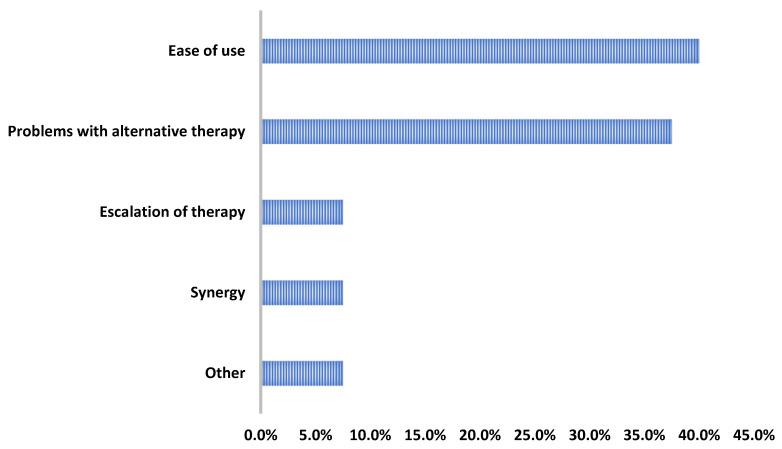
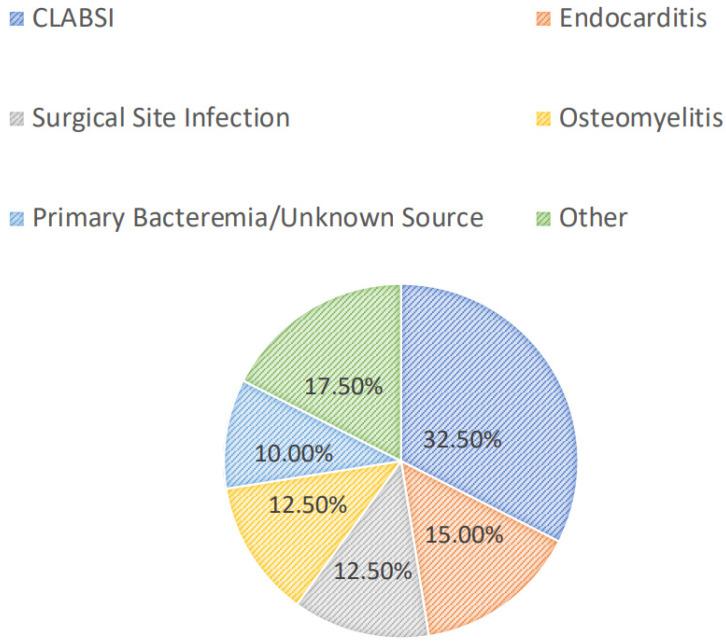
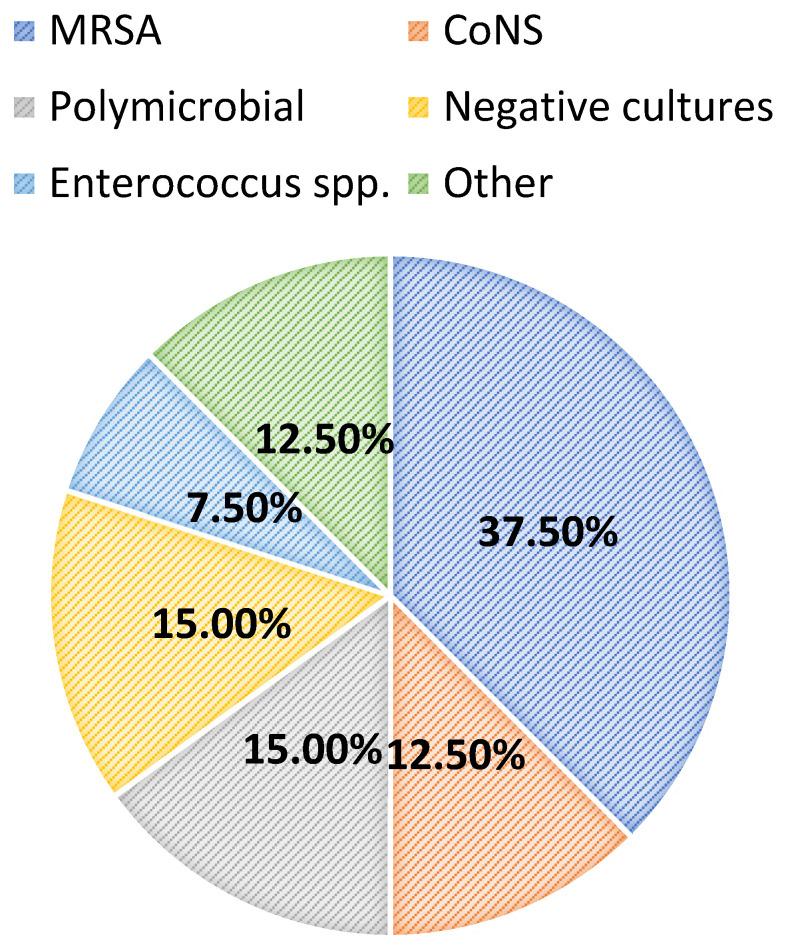
Forty patients were included, which were predominately male (62.5%) and white (52.5%), with a median age of 8.7 [IQR, 4.4-16.0] years. DAP was used for a wide range of infections, including central line-associated bloodstream infections (CLABSIs; 32.5%), infective endocarditis (15.0%), surgical-site infections (12.5%), and osteomyelitis (12.5%). The most common pathogen isolated was MRSA (37.5%), and most patients were bacteremic (60.0%). The median DAP dose was 8 [IQR, 6-10] mg/kg, and the median duration of the DAP therapy was 11.5 [IQR, 4.8-18.8] days. Most patients achieved composite clinical success (75.0%). An adverse effect occurred in 5.0% of the patients. DAP was prescribed the most for its ease of use/ability to facilitate discharge (40.0%) and/or for issues with alternative therapies (37.5%).
CONCLUSION
Most pediatric patients that received DAP demonstrated clinical success with a low incidence of adverse effects. Larger, real-world studies of DAP use are necessary to further assess clinical outcomes.
引言
达托霉素(DAP)是一种环脂肽,对许多耐药革兰氏阳性菌具有强大的体外活性,包括耐甲氧西林金黄色葡萄球菌(MRSA)和耐万古霉素肠球菌(VRE)。尽管有大量报告评估了达托霉素在成人中的临床疗效,但儿童的真实世界数据仍然缺乏。本评估的主要目的是描述达托霉素在广泛感染的儿科患者中的临床特征和疗效。
方法
这项回顾性评估纳入了2014年1月至2023年5月期间接受达托霉素治疗的18岁以下患者。主要目标是评估综合临床成功率,其定义为30天生存率、30天内无微生物复发,以及在未因临床失败而调整治疗的情况下急性感染的体征和症状得到缓解。次要目标包括可能归因于达托霉素的不良反应以及使用达托霉素的原因。
结果
共纳入40例患者,其中男性占多数(62.5%),白人占52.5%,中位年龄为8.7岁[四分位间距,4.4 - 16.0岁]。达托霉素用于多种感染,包括中心静脉导管相关血流感染(CLABSIs;32.5%)、感染性心内膜炎(15.0%)、手术部位感染(12.5%)和骨髓炎(12.5%)。分离出的最常见病原体是MRSA(37.5%),大多数患者有菌血症(60.0%)。达托霉素的中位剂量为8mg/kg[四分位间距,6 - 10mg/kg],达托霉素治疗的中位持续时间为11.5天[四分位间距,4.8 - 18.8天]。大多数患者取得了综合临床成功(75.0%)。5.0%的患者出现了不良反应。达托霉素因其使用方便/便于出院(40.0%)和/或替代疗法存在问题(37.5%)而被最常使用。
结论
大多数接受达托霉素治疗的儿科患者显示出临床成功,不良反应发生率较低。需要开展更大规模的达托霉素使用真实世界研究,以进一步评估临床疗效。
 Zotero 插件