
研究芽孢杆菌和乳酸菌对养殖水体水质、生长、存活、免疫反应及肠道微生物群的影响
Investigating the Effect of Bacilli and Lactic Acid Bacteria on Water Quality, Growth, Survival, Immune Response, and Intestinal Microbiota of Cultured .
作者信息
Vega-Carranza Ana Sofía, Escamilla-Montes Ruth, Fierro-Coronado Jesús Arturo, Diarte-Plata Genaro, Guo Xianwu, García-Gutiérrez Cipriano, Luna-González Antonio
机构信息
Instituto Politécnico Nacional, Centro Interdisciplinario de Investigación para el Desarrollo Integral Regional-Unidad Sinaloa, Departamento de Acuacultura, Boulevard Juan de Dios Bátiz Paredes #250, Col. San Joachín, Guasave 81101, Sinaloa, Mexico.
Instituto Politécnico Nacional, Centro de Biotecnología Genómica, Boulevard del Maestro S/N Esquina Elías Piña, Col. Narciso Mendoza, Reynosa 88710, Tamaulipas, Mexico.
出版信息
Animals (Basel). 2024 Sep 14;14(18):2676. doi: 10.3390/ani14182676.
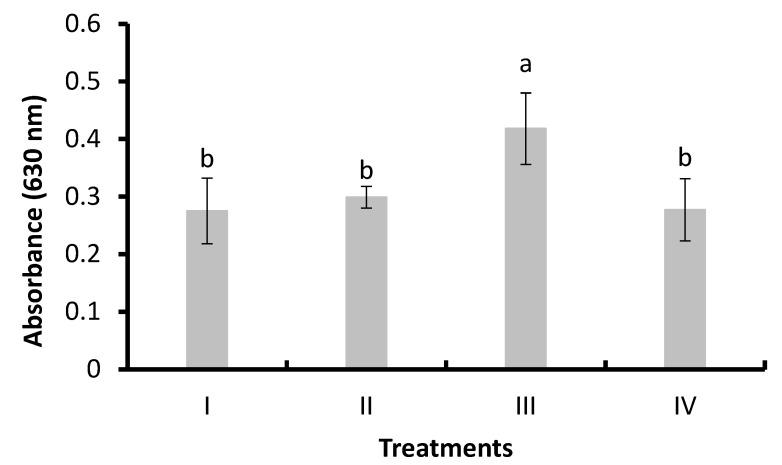
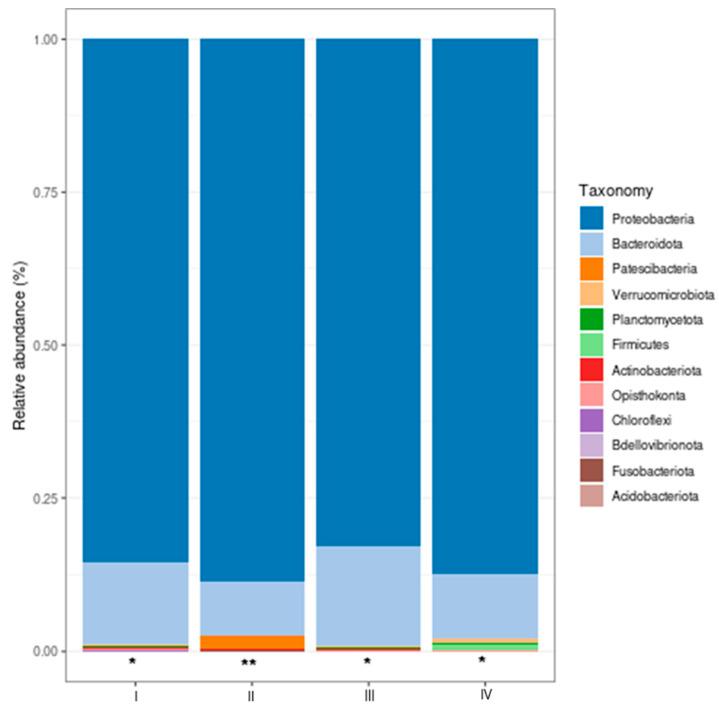
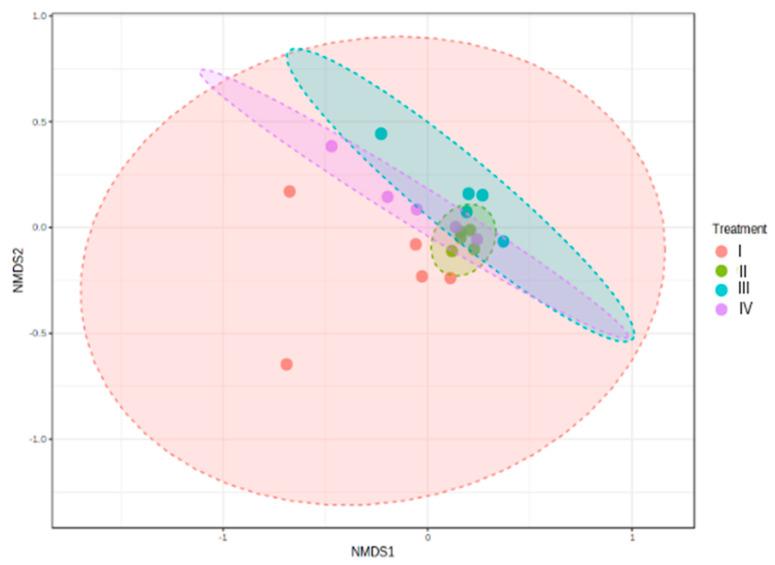
Shrimp is one of the most important aquaculture industries. Therefore, we determined the effect of nitrifying-probiotic bacteria on water quality, growth, survival, immune response, and intestinal microbiota of cultured without water exchange. In vitro, only used total ammonia nitrogen (TAN), nitrites, and nitrates since nitrogen bubbles were produced. TAN decreased significantly in the treatments with and and , but no differences were observed in nitrites. Nitrates were significantly higher in the treatments with bacteria. The final weight was higher only with bacilli and bacilli and LAB treatments. The survival of shrimp in the bacterial treatments increased significantly, and superoxide anion increased significantly only in lactic acid bacteria (LAB) treatment. The activity of phenoloxidase decreased significantly in the treatments with bacteria compared to the control. Shrimp treated with bacilli in the water showed lower species richness. The gut bacterial community after treatments was significantly different from that of the control. Linoleic acid metabolism was positively correlated with final weight and superoxide anion, whereas quorum sensing was correlated with survival. Thus, bacilli and LAB in the water of hyperintensive culture systems act as heterotrophic nitrifers, modulate the intestinal microbiota and immune response, and improve the growth and survival of shrimp. This is the first report on and identified as nitrifying bacteria.
对虾养殖是最重要的水产养殖业之一。因此,我们研究了硝化益生菌对无水交换养殖条件下对虾水质、生长、存活、免疫反应及肠道微生物群的影响。在体外实验中,由于产生了氮气泡,仅检测了总氨氮(TAN)、亚硝酸盐和硝酸盐。在添加芽孢杆菌、芽孢杆菌与乳酸菌组合的处理组中,TAN显著降低,但亚硝酸盐含量无差异。添加细菌的处理组中硝酸盐含量显著更高。仅芽孢杆菌、芽孢杆菌与乳酸菌处理组的最终体重更高。细菌处理组对虾的存活率显著提高,超氧阴离子仅在乳酸菌(LAB)处理组中显著增加。与对照组相比,细菌处理组中酚氧化酶的活性显著降低。水体中添加芽孢杆菌处理的对虾肠道细菌物种丰富度较低。处理后的肠道细菌群落与对照组显著不同。亚油酸代谢与最终体重和超氧阴离子呈正相关,群体感应与存活率相关。因此,超集约养殖系统水体中的芽孢杆菌和乳酸菌可作为异养硝化菌,调节肠道微生物群和免疫反应,提高对虾的生长和存活率。这是首次报道将芽孢杆菌和乳酸菌鉴定为硝化细菌。






 Zotero 插件