
连接意大利供水系统的自动售货机中食用冰中邻苯二甲酸盐和重金属的分析研究。
Analytical Investigation of Phthalates and Heavy Metals in Edible Ice from Vending Machines Connected to the Italian Water Supply.
作者信息
De Vietro Nicoletta, Triggiano Francesco, Cotugno Pietro, Palmisani Jolanda, Di Gilio Alessia, Zambonin Carlo, de Gennaro Gianluigi, Mancini Giovanna, Aresta Antonella Maria, Diella Giusy, Marcotrigiano Vincenzo, Sorrenti Giovanni Trifone, Marzocca Piersaverio, Lampedecchia Michele, Sorrenti Domenico Pio, D'Aniello Ezio, Gramegna Matilde, Nencha Alessandra, Caputo Antonio, Giovine Marta, Spinelli Caterina, Caggiano Giuseppina
机构信息
Department of Biosciences, Biotechnologies and Environment, University of Bari "Aldo Moro", Via Orabona 4, 70126 Bari, Italy.
Interdisciplinary Department of Medicine-Hygiene Section, University of Bari "Aldo Moro", Piazza G. Cesare 11, 70124 Bari, Italy.
出版信息
Foods. 2024 Sep 13;13(18):2910. doi: 10.3390/foods13182910.
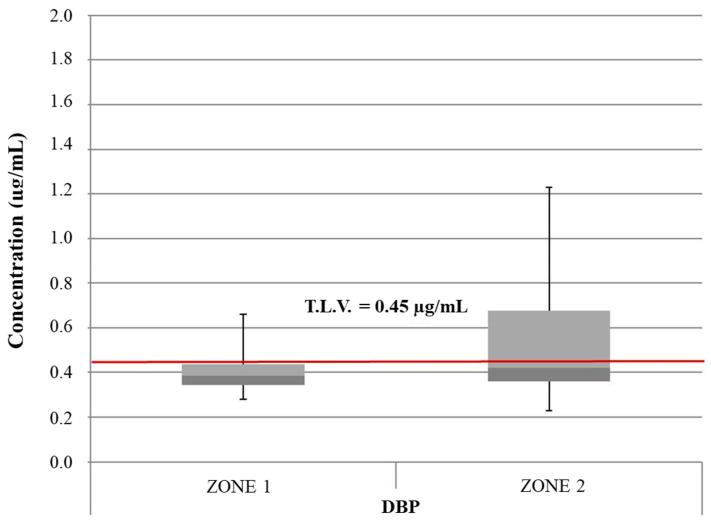
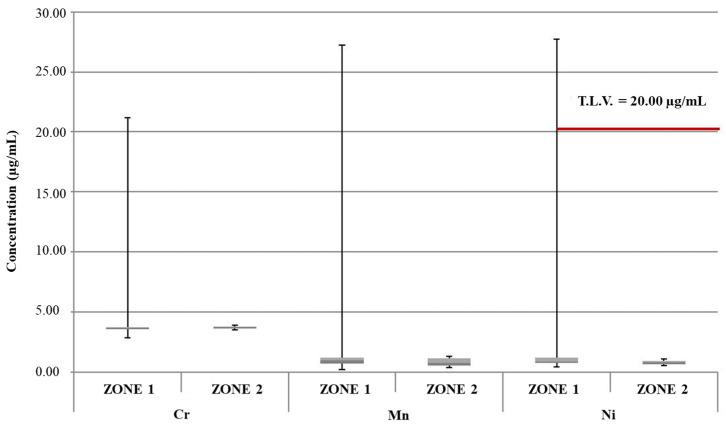
Edible ice is often produced by special machines that can represent a source of significant chemical and microbiological contamination. In this work, the presence of phthalic acid esters (phthalates, PAEs) and heavy metals in ice cubes distributed by 77 vending machines installed in two different zones in southern Italy and fed by water from the public water supply was investigated. Solid-phase microextraction coupled to gas chromatography-mass spectrometry (SPME-GC/MS) was used to evaluate contamination with four PAEs, which were selected because they are commonly used in the production of food-contact plastics, while inductively coupled plasma mass spectrometry (ICP/MS) was used to quantify the heavy metals. It was found that ice samples, especially those from one of the two considered zones (zone 2), exceeded the dibutyl phthalate (DBP) threshold limit value; some ice cubes from the other zone (zone 1) instead showed levels of both lead (Pb) and nickel (Ni) up to one order of magnitude higher than those observed in samples collected in zone 2 and higher than the maximum permitted values (European Directive n. 2184/2020). Since the water source connected to the ice vending machines was found to be free from significant levels of all considered target compounds and metals, the high levels of DBP, Ni, and Pb in ice cubes could be attributed to the components and/or to the state of repair of the ice vending machines themselves.
食用冰通常由特殊机器生产,这些机器可能是化学和微生物严重污染的来源。在这项工作中,对意大利南部两个不同区域安装的77台自动售冰机所售冰块中的邻苯二甲酸酯(酞酸酯,PAEs)和重金属进行了调查,这些售冰机由公共供水系统供水。采用固相微萃取-气相色谱-质谱联用(SPME-GC/MS)法评估四种PAEs的污染情况,选择这四种PAEs是因为它们常用于生产食品接触塑料,同时采用电感耦合等离子体质谱(ICP/MS)法定量重金属。结果发现,冰样,尤其是来自两个考虑区域之一(区域2)的冰样,超过了邻苯二甲酸二丁酯(DBP)的阈值限值;而来自另一个区域(区域1)的一些冰块中的铅(Pb)和镍(Ni)含量比在区域2采集的样品中观察到的高出一个数量级,且高于最大允许值(欧洲指令第2184/2020号)。由于发现连接到自动售冰机的水源中所有考虑的目标化合物和金属含量均未超标,冰块中高含量的DBP、Ni和Pb可能归因于自动售冰机本身的部件和/或维修状况。



 Zotero 插件