
临床辅助检查在检测肥胖与代谢综合征儿童及青少年炎症中的作用
The Role of Paraclinical Investigations in Detecting Inflammation in Children and Adolescents with Obesity and Metabolic Syndrome.
作者信息
Podeanu Mihaela-Andreea, Vintilescu Ștefănița Bianca, Ionele Claudiu Marinel, Sandu Raluca Elena, Niculescu Carmen Elena, Florescu Mirela-Marinela, Stepan Mioara Desdemona
机构信息
Doctoral School, University of Medicine and Pharmacy of Craiova, 200349 Craiova, Romania.
Department of Infant Care, Pediatrics and Neonatology, University of Medicine and Pharmacy of Craiova, 200349 Craiova, Romania.
出版信息
Life (Basel). 2024 Sep 23;14(9):1206. doi: 10.3390/life14091206.
UNLABELLED
Obesity is linked to the increasing prevalence of metabolic syndrome (MetS), even among the pediatric population. Some inflammatory and cardioembolic indexes derived from routine laboratory tests have captivated the attention of the medical community.
OBJECTIVES
The aim of our study was to evaluate whether these markers are effective in distinguishing varying degrees of obesity and MetS in children and adolescents.
METHODS
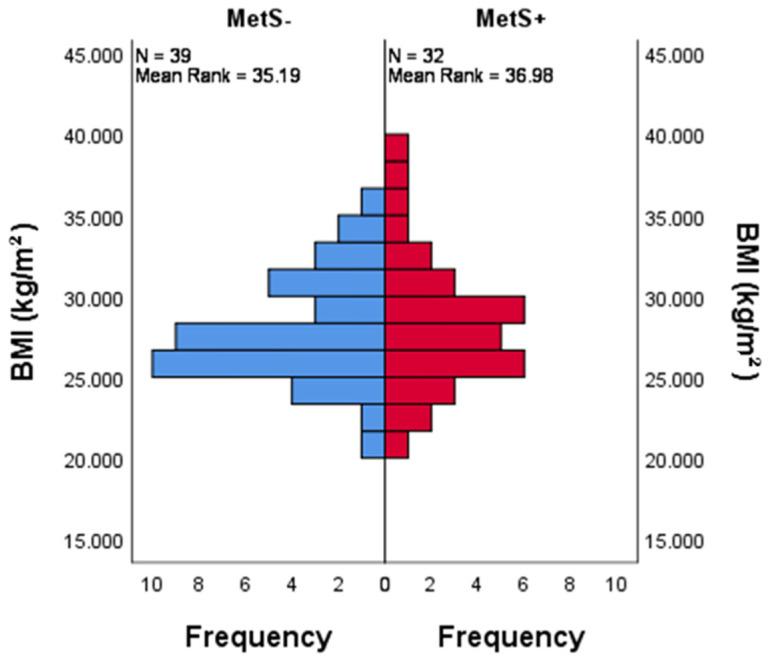
We conducted a retrospective study. A total of 71 children and adolescents, aged between 6 and 16, were included in the study. Among them, 5 were overweight, 35 had obesity, and 31 had severe obesity. According to the NCEP ATP III criteria, 32 individuals had Metabolic Syndrome (MetS), while 39 did not have MetS.
RESULTS
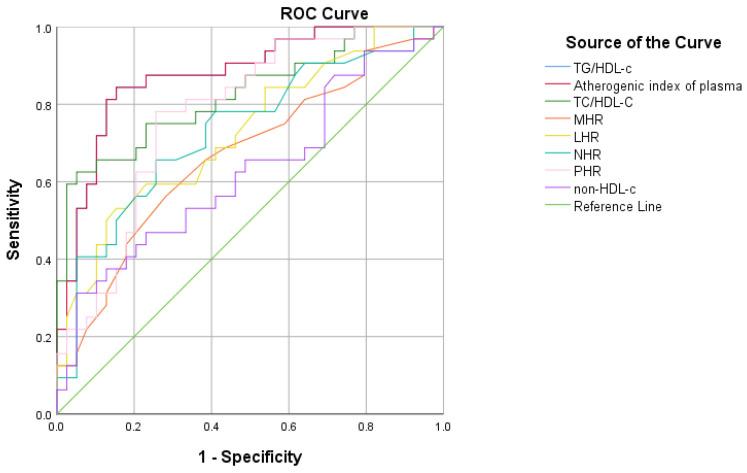
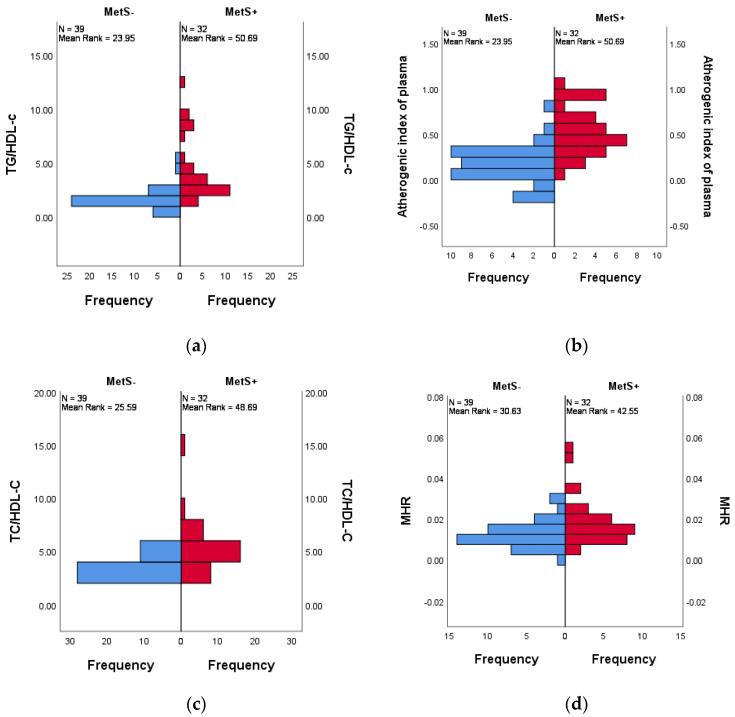
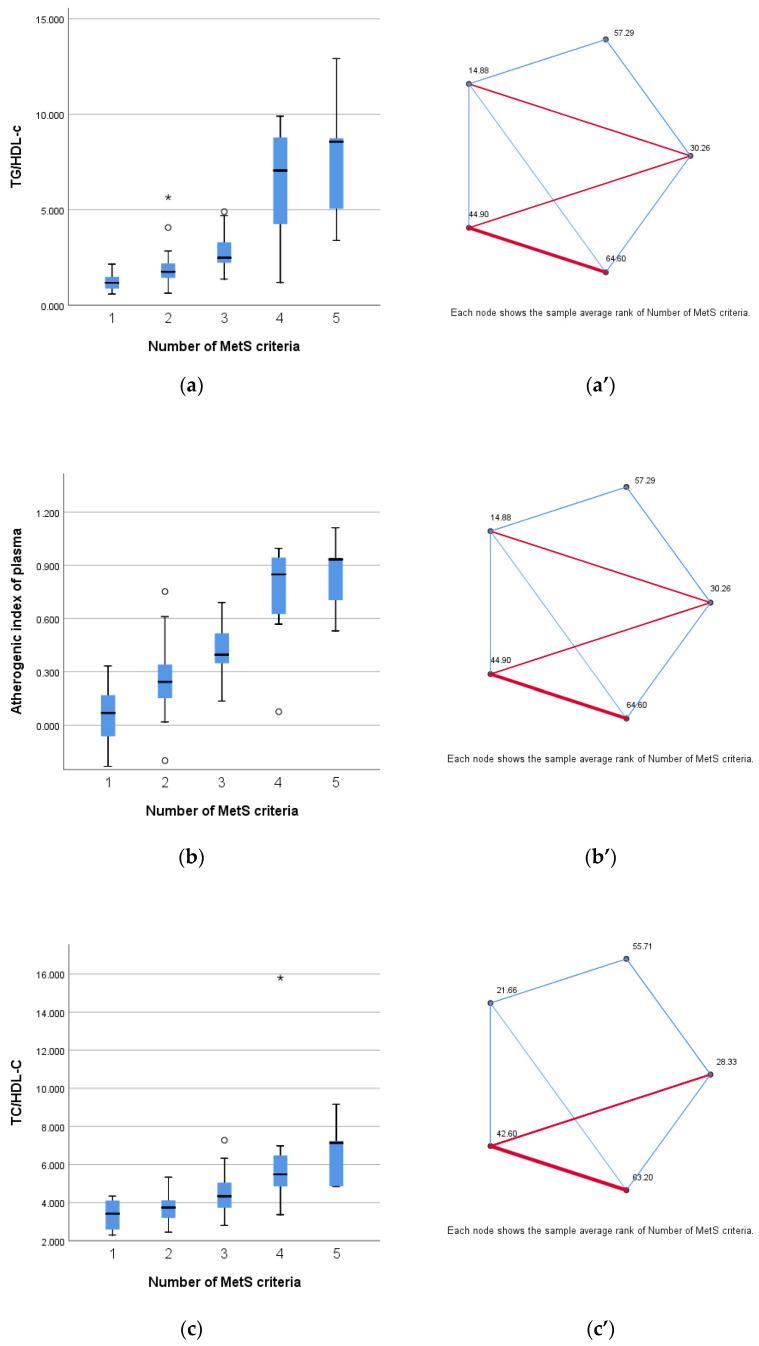
The MetS positive group had higher values of TG/HDL-C ( < 0.001), TC/HDL-C ( < 0.001), MHR ( = 0.015), LHR ( = 0.001), NHR ( = 0.001), atherogenic index of plasma ( < 0.001), and PHR ( < 0.001). ESR, NLR, PLR, and SII did not progressively increase with the number of MetS criteria. The ROC curve analysis demonstrated that markers such as TG/HDL-C, the atherogenic index of plasma, TC/HDL-C, LHR, NHR, and PHR were effective in identifying MetS in children and adolescents with obesity.
CONCLUSIONS
In conclusion, we determined that some novel inflammatory and cardioembolic indexes are useful in assessing MetS and obesity in children and adolescents.
未标注
肥胖与代谢综合征(MetS)患病率的上升有关,即使在儿童群体中也是如此。一些从常规实验室检查得出的炎症和心脏栓塞指标引起了医学界的关注。
目的
我们研究的目的是评估这些标志物在区分儿童和青少年不同程度的肥胖和代谢综合征方面是否有效。
方法
我们进行了一项回顾性研究。共有71名6至16岁的儿童和青少年纳入研究。其中,5人超重,35人肥胖,31人重度肥胖。根据NCEP ATP III标准,32人患有代谢综合征(MetS),39人没有代谢综合征。
结果
MetS阳性组的TG/HDL-C(<0.001)、TC/HDL-C(<0.001)、MHR(=0.015)、LHR(=0.001)、NHR(=0.001)、血浆致动脉粥样硬化指数(<0.001)和PHR(<0.001)值更高。ESR、NLR、PLR和SII并未随着MetS标准数量的增加而逐渐升高。ROC曲线分析表明,TG/HDL-C、血浆致动脉粥样硬化指数、TC/HDL-C、LHR、NHR和PHR等标志物在识别肥胖儿童和青少年的MetS方面有效。
结论
总之,我们确定一些新的炎症和心脏栓塞指标在评估儿童和青少年的MetS和肥胖方面是有用的。
 Zotero 插件