
基于P3BH/聚氨酯基体与有机改性蒙脱石的聚合物生物纳米复合材料——力学性能、热性能、生物降解性及细胞毒性
Polymer Bionanocomposites Based on a P3BH/Polyurethane Matrix with Organomodified Montmorillonite-Mechanical and Thermal Properties, Biodegradability, and Cytotoxicity.
作者信息
Krzykowska Beata, Uram Łukasz, Frącz Wiesław, Kovářová Miroslava, Sedlařík Vladimir, Hanusova Dominika, Kisiel Maciej, Paciorek-Sadowska Joanna, Borowicz Marcin, Zarzyka Iwona
机构信息
Department of Organic Chemistry, Faculty of Chemistry, Rzeszów University of Technology, Powstańców Warszawy 6, 35-959 Rzeszów, Poland.
Department of Inorganic and Analytical Chemistry, Faculty of Chemistry, Rzeszów University of Technology, Powstańców Warszawy 6, 35-959 Rzeszów, Poland.
出版信息
Polymers (Basel). 2024 Sep 23;16(18):2681. doi: 10.3390/polym16182681.
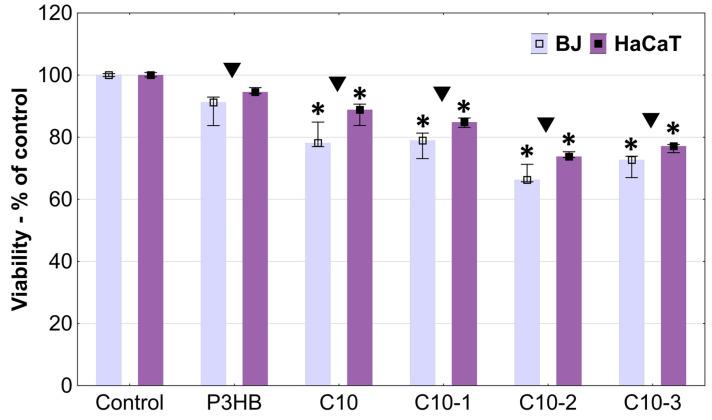
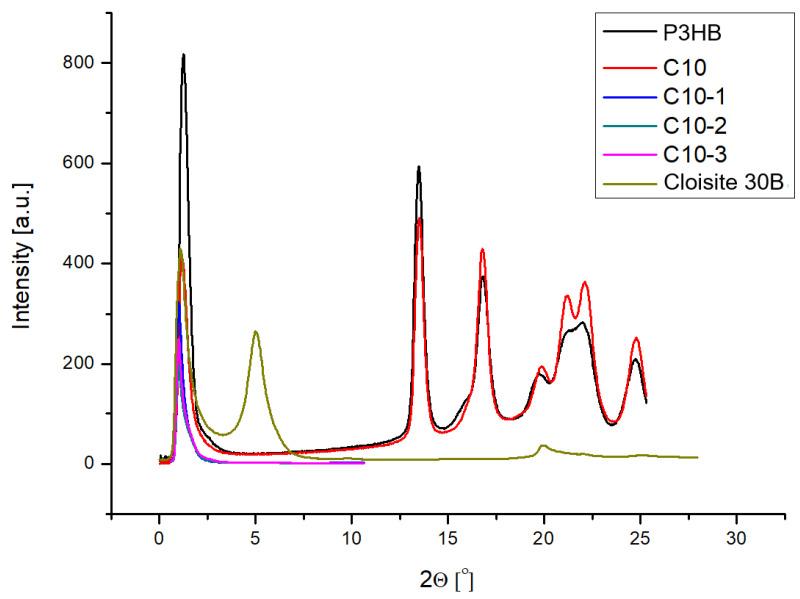
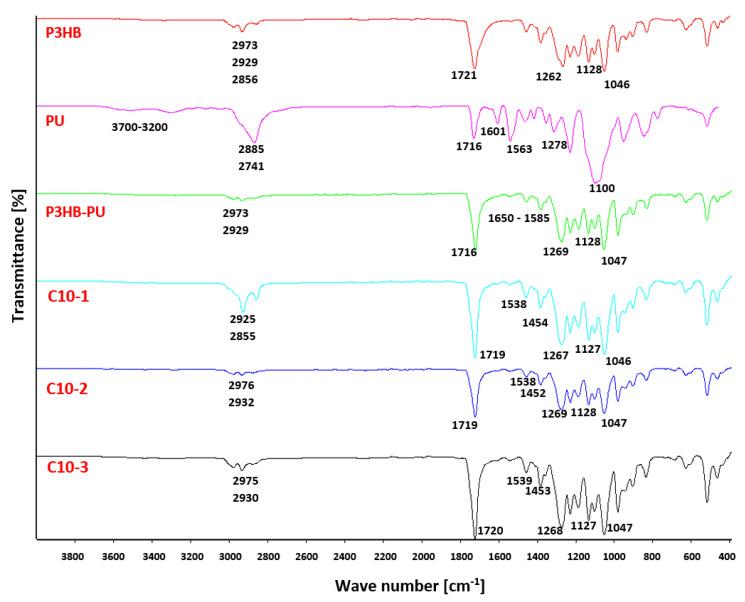
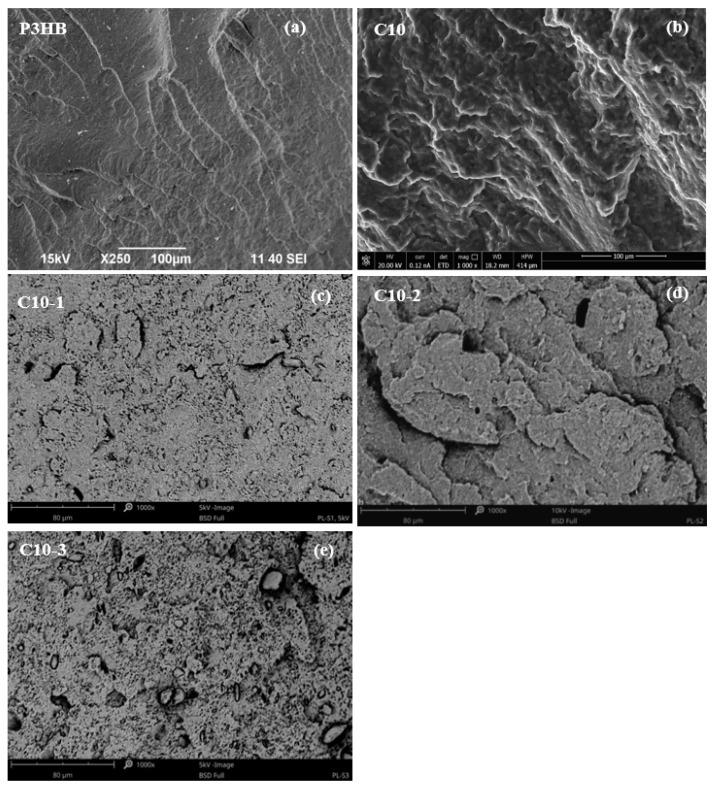
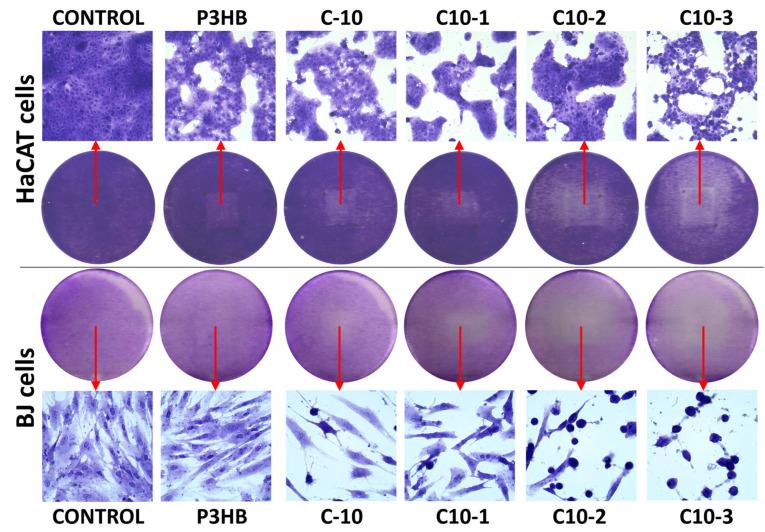
In the present work, hybrid nanobiocomposites based on poly(3-hydroxybutyrate), P3HB, with the use of aromatic linear polyurethane as modifier and organic nanoclay, Cloisite 30B, as a nanofiller were produced. The aromatic linear polyurethane (PU) was synthesized in a reaction of diphenylmethane 4,4'-diisocyanate and polyethylene glycol with a molecular mass of 1000 g/mole. The obtained nanobiocomposites were characterized by the small-angle X-ray scattering technique, scanning electron microscopy, Fourier infrared spectroscopy, thermogravimetry, and differential scanning calorimetry, and moreover, their selected mechanical properties, biodegradability, and cytotoxicity were tested. The effect of the organomodified montmorillonite presence in the biocomposites on their properties was investigated and compared to those of the native P3HB and the P3HB-PU composition. The obtained hybrid nanobiocomposites have an exfoliated structure. The presence and content of Cloisite 30B influence the P3HB-PU composition's properties, and 2 wt.% Cloisite 30B leads to the best improvement in the aforementioned properties. The obtained results indicate that the thermal stability and mechanical properties of P3HB were improved, particularly in terms of increasing the degradation temperature, reducing hardness, and increasing impact strength, which were also confirmed by the morphological analysis of these bionanocomposites. However, the presence of organomodified montmorillonite in the obtained polymer biocomposites decreased their biodegradability slightly. The produced hybrid polymer nanobiocomposites have tailored mechanical and thermal properties and processing conditions for their expected application in the production of biodegradable, short-lived products for agriculture. Moreover, in vitro studies on human skin fibroblasts and keratinocytes showed their satisfactory biocompatibility and low cytotoxicity, which make them safe when in contact with the human body, for instance, in biomedical applications.
在本研究中,制备了基于聚(3-羟基丁酸酯)(P3HB)的杂化纳米生物复合材料,使用芳香族线性聚氨酯作为改性剂,有机纳米黏土Cloisite 30B作为纳米填料。芳香族线性聚氨酯(PU)是通过二苯基甲烷4,4'-二异氰酸酯与分子量为1000 g/mol的聚乙二醇反应合成的。通过小角X射线散射技术、扫描电子显微镜、傅里叶红外光谱、热重分析和差示扫描量热法对所得纳米生物复合材料进行了表征,此外,还测试了它们的部分力学性能、生物降解性和细胞毒性。研究了生物复合材料中有机改性蒙脱土的存在对其性能的影响,并与天然P3HB和P3HB-PU组合物的性能进行了比较。所得杂化纳米生物复合材料具有剥离结构。Cloisite 30B的存在和含量影响P3HB-PU组合物的性能,2 wt.%的Cloisite 30B能使上述性能得到最佳改善。所得结果表明,P3HB的热稳定性和力学性能得到了改善,特别是在提高降解温度、降低硬度和增加冲击强度方面,这些生物纳米复合材料的形态分析也证实了这一点。然而,所得聚合物生物复合材料中有机改性蒙脱土的存在使其生物降解性略有降低。所制备的杂化聚合物纳米生物复合材料具有定制的力学和热性能以及加工条件,有望应用于农业用可生物降解的短期产品生产中。此外,对人皮肤成纤维细胞和角质形成细胞的体外研究表明它们具有良好的生物相容性和低细胞毒性,这使得它们在与人体接触时(例如在生物医学应用中)是安全的。




 Zotero 插件