
衰老小鼠中疫苗诱导抗体反应的免疫代谢调节
Immunometabolic Regulation of Vaccine-Induced Antibody Responses in Aging Mice.
作者信息
Frasca Daniela, Romero Maria, Padula Laura, Fisher Eva, Strbo Natasa
机构信息
Department of Microbiology and Immunology, University of Miami Miller School of Medicine, Miami, FL 33136, USA.
Sylvester Comprehensive Cancer Center, University of Miami Miller School of Medicine, Miami, FL 33136, USA.
出版信息
Vaccines (Basel). 2024 Aug 26;12(9):960. doi: 10.3390/vaccines12090960.
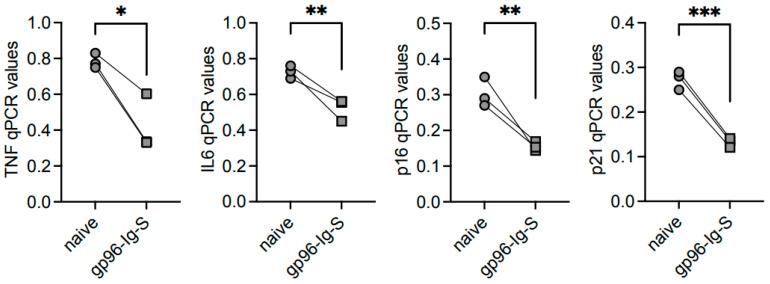
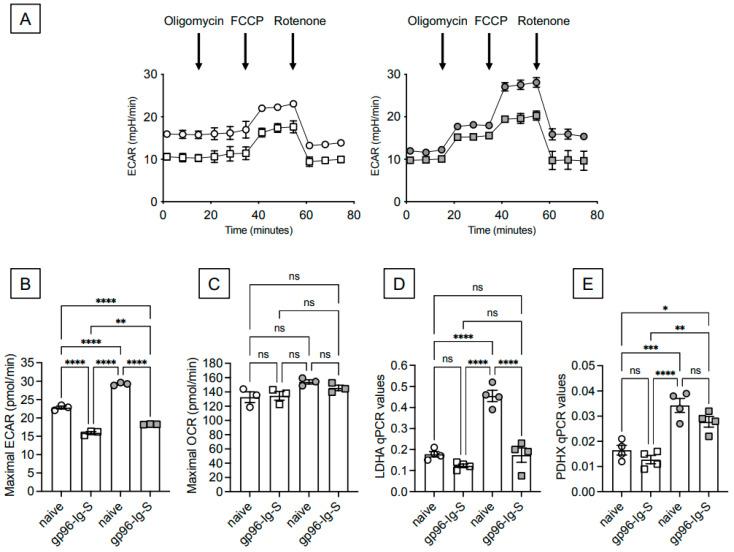
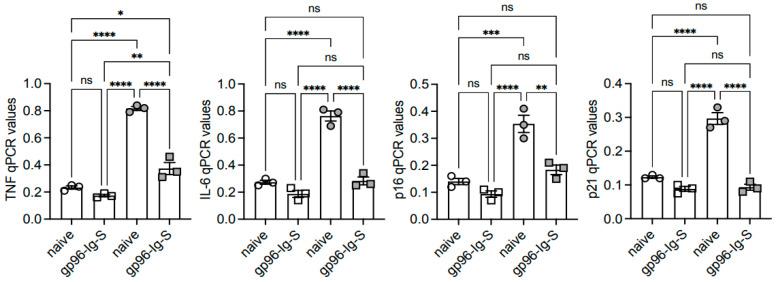
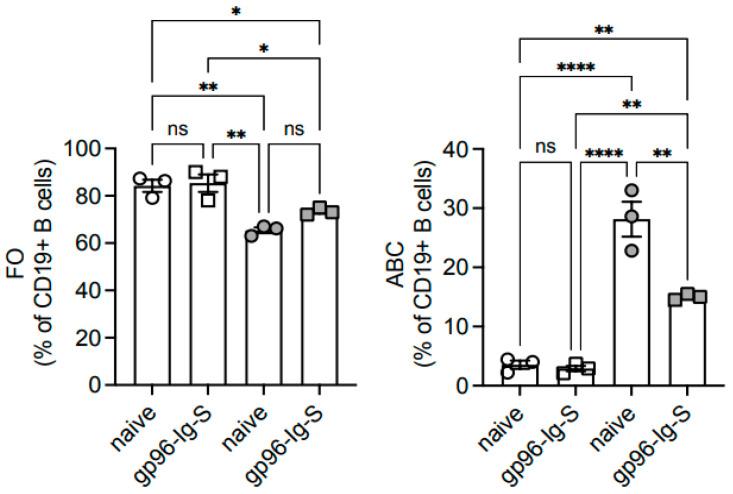
Immune cells undergo metabolic reprogramming to meet the demands associated with immune responses. The effects of aging on these pathways and on the metabolic phenotype of the immune cells participating in antibody responses to vaccines are still largely unknown. Here we used a vaccine for SARS-CoV-2 that utilizes the cellular heat shock chaperone glycoprotein 96 (gp96), engineered to co-express SARS-CoV-2 Spike (spike) protein (gp96-Ig-S). Results show that this vaccine induces comparable B cell primary responses in young and old mice at later time points, but a significantly lesser secondary response in old as compared to young mice, with the antibodies generated in the secondary response being also of lower avidity. This occurs because aging changes the B cell metabolic phenotype and induces hyper-metabolic B cells that are associated with higher intrinsic inflammation and decreased protective antibody responses. However, the gp96-Ig-S vaccine was found to be effective in significantly reducing the metabolic/inflammatory status of B cells from old mice, suggesting the possibility that targeting metabolic pathways may improve immune function in old mice that do not respond adequately to the vaccine.
免疫细胞会经历代谢重编程,以满足与免疫反应相关的需求。衰老对这些途径以及参与疫苗抗体反应的免疫细胞代谢表型的影响在很大程度上仍不清楚。在此,我们使用了一种针对严重急性呼吸综合征冠状病毒2(SARS-CoV-2)的疫苗,该疫苗利用细胞热休克伴侣糖蛋白96(gp96),经工程改造后共表达SARS-CoV-2刺突(Spike)蛋白(gp96-Ig-S)。结果表明,该疫苗在较晚时间点在年轻和老年小鼠中诱导出相当的B细胞初次反应,但与年轻小鼠相比,老年小鼠的二次反应明显较弱,二次反应中产生的抗体亲和力也较低。出现这种情况是因为衰老改变了B细胞代谢表型,并诱导了与更高内在炎症和保护性抗体反应降低相关的高代谢B细胞。然而,发现gp96-Ig-S疫苗在显著降低老年小鼠B细胞的代谢/炎症状态方面是有效的,这表明靶向代谢途径可能改善对疫苗反应不足的老年小鼠的免疫功能。


 Zotero 插件