
埃塞俄比亚亚的斯亚贝巴老年择期骨科患者术后谵妄:一项多中心纵向研究。
Postoperative delirium among elderly elective orthopedic patients in Addis Ababa Ethiopia: a multicentere longitudinal study.
机构信息
Wachemo University College of Health and Medical Sciences, Hosanna, Ethiopia.
Addis Ababa University College of Health Sciences, Addis Ababa, Ethiopia.
出版信息
BMC Anesthesiol. 2024 Sep 28;24(1):343. doi: 10.1186/s12871-024-02729-w.
BACKGROUND
Delirium is a neurocognitive disorder characterized by an acute and relatively rapid decline in cognition, disturbance of consciousness, reduced ability to focus, and shift of attention. It mainly affects elderly patients with an incidence of about 8-23% after an operation. It frequently occurs between 24-hrs and 5 days after surgery. It results in serious medical management problems. Hence, identifying the incidence and associated factors may help prevent and manage its sequel in the elderly.
OBJECTIVE
Assessment of the incidence and associated factors of postoperative delirium(POD) among elderly elective orthopedic surgical patients in Addis Ababa public hospitals, Ethiopia, 2024.
METHODS
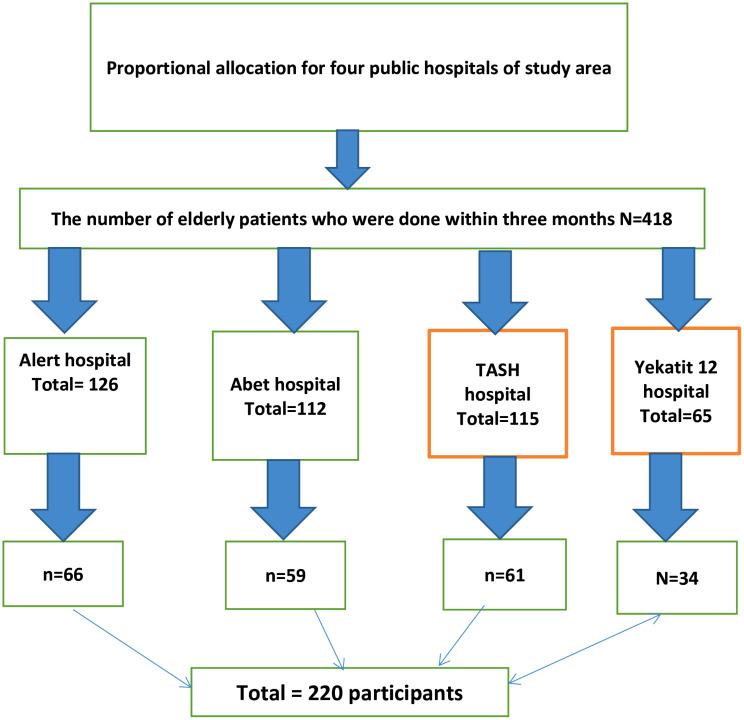
A multi-centered longitudinal study was conducted on 220 elderly (age ≥ 65 years) patients in four selected public hospitals of the study area from February 2024 to May 2024, and a systematic sampling technique was used to select the study units. Data was collected through chart review and interviews of patients, and postoperative delirium was assessed using the confusion assessment method (CAM). Both bivariable and multivariable logistic regression models were used for statistical analysis. The strength of association was determined with an adjusted odds ratio (AOR) with a 95% confidence interval(CI) at a p-value of < 0.05.
RESULTS
A total of 220 patients were studied, and the incidence of POD among elderly elective orthopedic surgical patients was 33.7%. Age 65-75(AOR = 0.47, 95%CI (0.226-0.97)), Induction using ketamine (AOR = 1.32, 95%CI(1.109-3.87), p = 0.003)), perioperative opioid use (AOR = 2.20, 95%CI(1.073 4.5313)), intraoperative anticholinergic use(AOR = 2.24,95%CI(1.831-4.235)), recent hospitalization history (AOR = 2.24,95%CI(1.202-4.206)), and transfusion (AOR = 2.83,95%CI(1.295-6.193)) were significantly associated with POD (p < 0.05).
CONCLUSION AND RECOMMENDATIONS
The incidence of POD in the study area was high (33.7%); advanced age, hospitalization history, Anesthesia induction by Ketamine, perioperative anticholinergic uses, opioid use, and blood transfusion use were associated factors for postoperative delirium. We recommend giving due attention to elderly patients with advanced age, history of hospitalization, perioperative Ketamie use, perioperative anticholinergic uses, opioid use, and blood transfusion use undergoing elderly elective orthopedic surgery.
背景
谵妄是一种以认知功能急性和相对迅速下降、意识障碍、注意力集中能力下降和注意力转移为特征的神经认知障碍。它主要影响 65 岁以上的老年患者,手术后的发病率约为 8-23%。它通常在手术后 24-72 小时内发生。它会导致严重的医疗管理问题。因此,识别发病率和相关因素可能有助于预防和管理老年人的后续问题。
目的
评估 2024 年埃塞俄比亚亚的斯亚贝巴公立医院接受择期骨科手术的老年患者术后谵妄(POD)的发生率和相关因素。
方法
2024 年 2 月至 5 月,在该地区的四家选定公立医院对 220 名(年龄≥65 岁)老年患者进行了一项多中心纵向研究,采用系统抽样技术选择研究单位。通过病历回顾和患者访谈收集数据,使用混乱评估方法(CAM)评估术后谵妄。采用双变量和多变量逻辑回归模型进行统计分析。关联强度用调整后的优势比(AOR)表示,置信区间(CI)为 95%,p 值<0.05。
结果
共研究了 220 名患者,老年择期骨科手术患者的 POD 发生率为 33.7%。年龄 65-75 岁(AOR=0.47,95%CI(0.226-0.97))、使用氯胺酮诱导(AOR=1.32,95%CI(1.109-3.87))、围手术期使用阿片类药物(AOR=2.20,95%CI(1.073-4.5313))、术中使用抗胆碱能药物(AOR=2.24,95%CI(1.831-4.235))、近期住院史(AOR=2.24,95%CI(1.202-4.206))和输血(AOR=2.83,95%CI(1.295-6.193))与 POD 显著相关(p<0.05)。
结论和建议
该地区 POD 的发生率较高(33.7%);年龄较大、住院史、氯胺酮诱导麻醉、围手术期使用抗胆碱能药物、阿片类药物使用和输血是术后谵妄的相关因素。我们建议对接受择期骨科手术的老年患者给予充分关注,这些患者年龄较大、有住院史、围手术期使用氯胺酮、围手术期使用抗胆碱能药物、阿片类药物使用和输血。

 Zotero 插件