
通过将易感性的时空异质性嵌入到均匀模型中进行管理:一种基于机制和深度学习的研究。
Managing spatio-temporal heterogeneity of susceptibles by embedding it into an homogeneous model: A mechanistic and deep learning study.
机构信息
School of Mathematics and Statistics, Xi'an Jiaotong University, Xi'an, People's Republic of China.
The Interdisciplinary Research Center for Mathematics and Life Sciences, Xi'an Jiaotong University, Xi'an, People's Republic of China.
出版信息
PLoS Comput Biol. 2024 Sep 30;20(9):e1012497. doi: 10.1371/journal.pcbi.1012497. eCollection 2024 Sep.
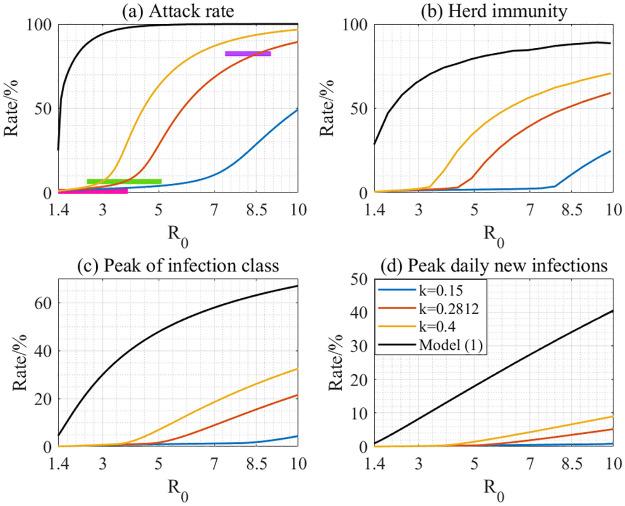
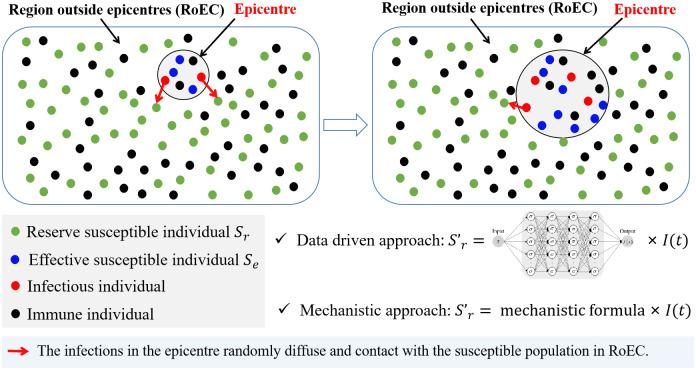
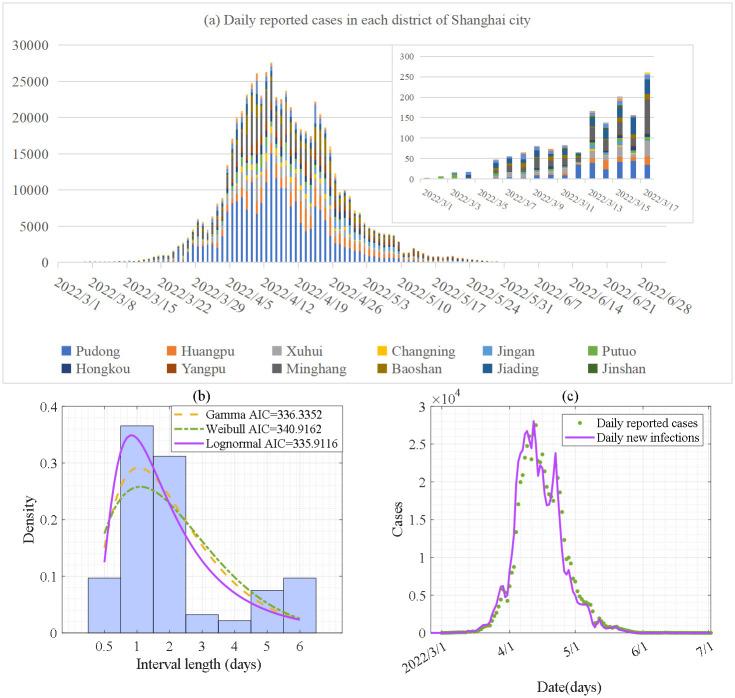
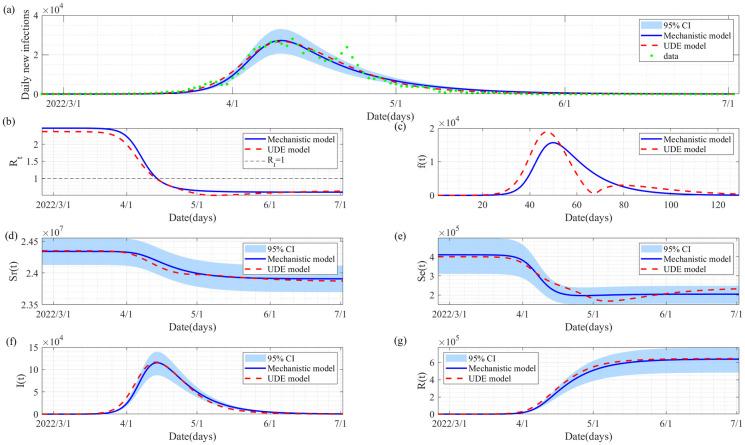
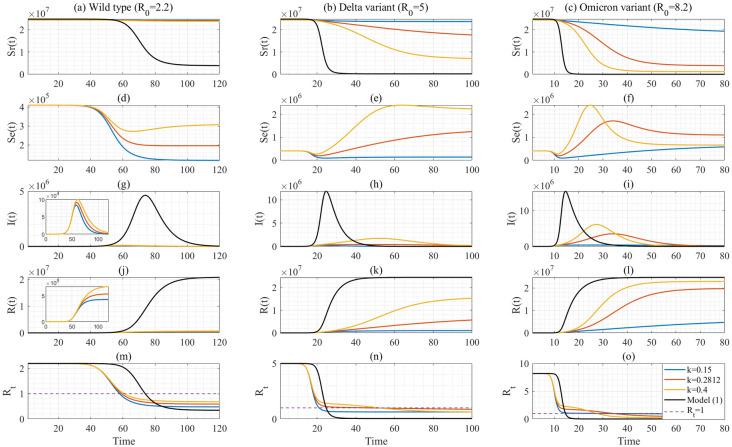
Accurate prediction of epidemics is pivotal for making well-informed decisions for the control of infectious diseases, but addressing heterogeneity in the system poses a challenge. In this study, we propose a novel modelling framework integrating the spatio-temporal heterogeneity of susceptible individuals into homogeneous models, by introducing a continuous recruitment process for the susceptibles. A neural network approximates the recruitment rate to develop a Universal Differential Equations (UDE) model. Simultaneously, we pre-set a specific form for the recruitment rate and develop a mechanistic model. Data from a COVID Omicron variant outbreak in Shanghai are used to train the UDE model using deep learning methods and to calibrate the mechanistic model using MCMC methods. Subsequently, we project the attack rate and peak of new infections for the first Omicron wave in China after the adjustment of the dynamic zero-COVID policy. Our projections indicate an attack rate and a peak of new infections of 80.06% and 3.17% of the population, respectively, compared with the homogeneous model's projections of 99.97% and 32.78%, thus providing an 18.6% improvement in the prediction accuracy based on the actual data. Our simulations demonstrate that heterogeneity in the susceptibles decreases herd immunity for ~37.36% of the population and prolongs the outbreak period from ~30 days to ~70 days, also aligning with the real case. We consider that this study lays the groundwork for the development of a new class of models and new insights for modelling heterogeneity.
准确预测疫情对于制定控制传染病的明智决策至关重要,但解决系统中的异质性是一个挑战。在本研究中,我们提出了一种新的建模框架,通过引入易感人群的连续招募过程,将易感人群的时空异质性纳入同质模型中。神经网络逼近招募率,以开发通用微分方程(UDE)模型。同时,我们预先设定招募率的特定形式,并开发出一种机制模型。我们使用深度学习方法从上海的 COVID-19 奥密克戎变异爆发数据中训练 UDE 模型,并使用 MCMC 方法对机制模型进行校准。随后,我们根据动态零 COVID 政策的调整,预测中国首例奥密克戎波的感染攻击率和新感染高峰。我们的预测表明,与同质模型预测的 99.97%和 32.78%相比,中国的感染攻击率和新感染高峰分别为 80.06%和 3.17%,因此基于实际数据,预测准确性提高了 18.6%。我们的模拟表明,易感人群的异质性使人群的群体免疫降低了约 37.36%,并将疫情持续时间从约 30 天延长至约 70 天,这与实际情况一致。我们认为,这项研究为开发一类新的模型和对异质性建模的新见解奠定了基础。
 Zotero 插件