
穿越肿瘤微环境的武装嵌合抗原受体T细胞的治疗靶点。
Therapeutic targets of armored chimeric antigen receptor T cells navigating the tumor microenvironment.
作者信息
Li Xianjun, Chen Tianjun, Li Xuehan, Zhang Hanyu, Li Yingjing, Zhang Shuyuan, Luo Shengnan, Zheng Tongsen
机构信息
Harbin Medical University Cancer Hospital, Harbin, 150081, China.
Department of Breast Surgery, Harbin Medical University Cancer Hospital, Harbin, 150081, China.
出版信息
Exp Hematol Oncol. 2024 Sep 30;13(1):96. doi: 10.1186/s40164-024-00564-w.
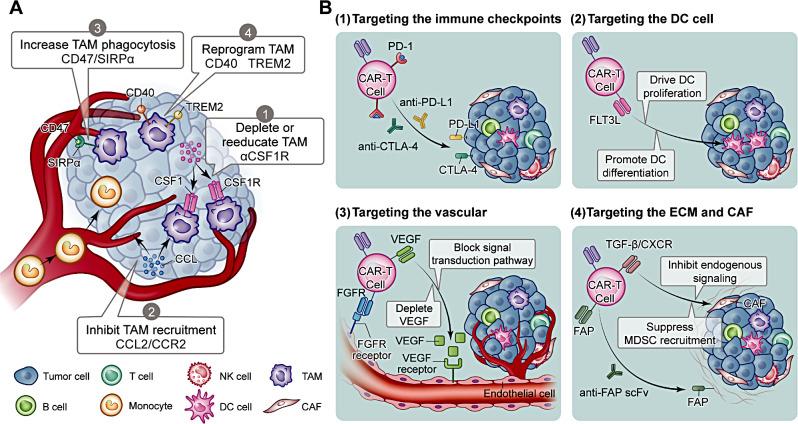
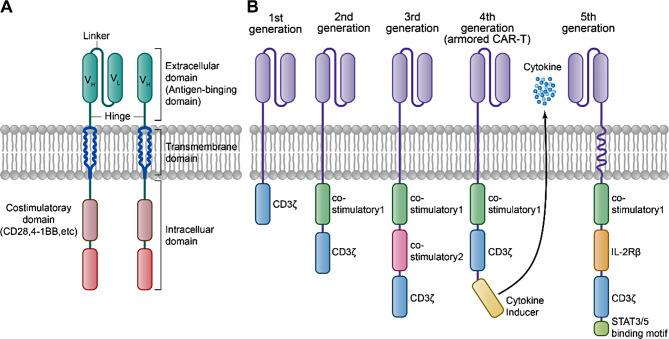
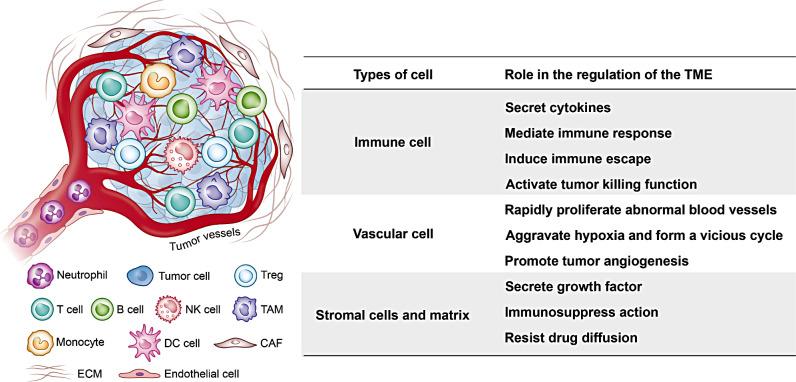
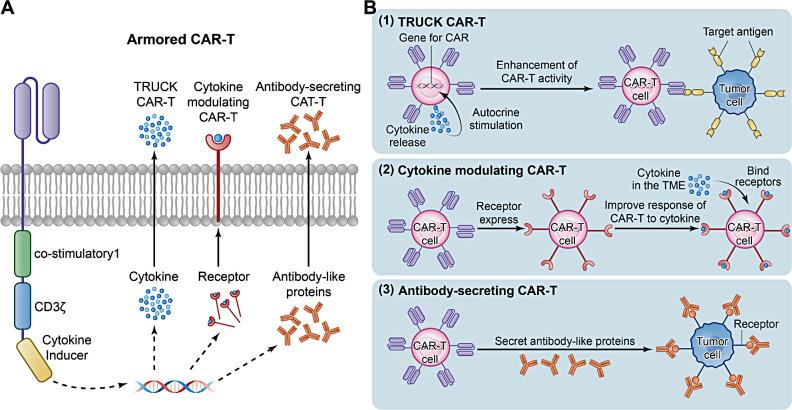
Chimeric antigen receptor (CAR) T cell therapy, which targets tumors with high specificity through the recognition of particular antigens, has emerged as one of the most rapidly advancing modalities in immunotherapy, demonstrating substantial success against hematological malignancies. However, previous generations of CAR-T cell therapy encountered numerous challenges in treating solid tumors, such as the lack of suitable targets, high immunosuppression, suboptimal persistence, and insufficient infiltration owing to the complexities of the tumor microenvironment, all of which limited their efficacy. In this review, we focus on the current therapeutic targets of fourth-generation CAR-T cells, also known as armored CAR-T cells, and explore the mechanisms by which these engineered cells navigate the tumor microenvironment by targeting its various components. Enhancing CAR-T cells with these therapeutic targets holds promise for improving their effectiveness against solid tumors, thus achieving substantial clinical value and advancing the field of CAR-T cell therapy. Additionally, we discuss potential strategies to overcome existing challenges and highlight novel targets that could further enhance the efficacy of CAR-T cell therapy in treating solid tumors.
嵌合抗原受体(CAR)T细胞疗法通过识别特定抗原以高度特异性靶向肿瘤,已成为免疫疗法中发展最为迅速的模式之一,在治疗血液系统恶性肿瘤方面取得了显著成功。然而,前几代CAR-T细胞疗法在治疗实体瘤时遇到了诸多挑战,例如缺乏合适的靶点、高免疫抑制、持久性欠佳以及由于肿瘤微环境的复杂性导致浸润不足等,所有这些都限制了它们的疗效。在本综述中,我们聚焦于第四代CAR-T细胞(也称为武装CAR-T细胞)当前的治疗靶点,并探讨这些工程化细胞通过靶向肿瘤微环境的各种成分在其中游走的机制。利用这些治疗靶点增强CAR-T细胞有望提高其对实体瘤的疗效,从而实现重大的临床价值并推动CAR-T细胞疗法领域的发展。此外,我们讨论了克服现有挑战的潜在策略,并强调了可能进一步提高CAR-T细胞疗法治疗实体瘤疗效的新靶点。
 Zotero 插件