
膀胱癌治疗中的新兴分子疗法
Emerging molecular therapies in the treatment of bladder cancer.
作者信息
Bell Scott D, Quinn Anthony E, Spitzer Tom D, Voss Brady B, Wakefield Mark R, Fang Yujiang
机构信息
Department of Microbiology, Immunology & Pathology, Des Moines University, West Des Moines, IA 50266, USA.
Department of Surgery, University of Missouri School of Medicine, Columbia, MO 65212, USA.
出版信息
Explor Target Antitumor Ther. 2024;5(5):1135-1154. doi: 10.37349/etat.2024.00267. Epub 2024 Aug 29.
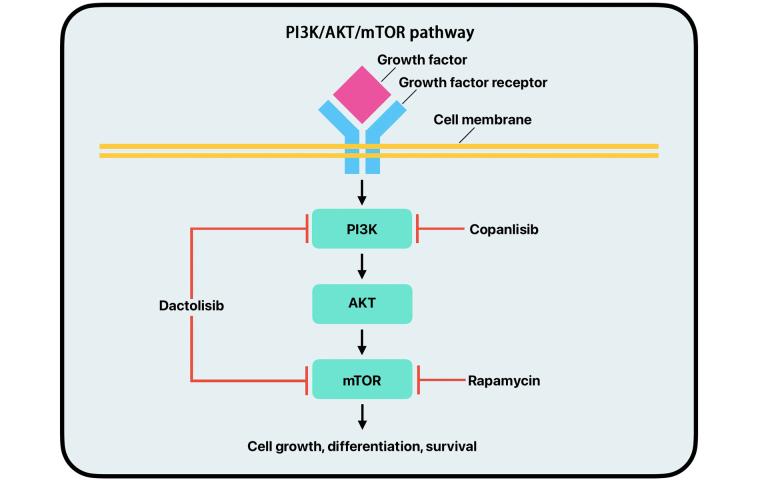
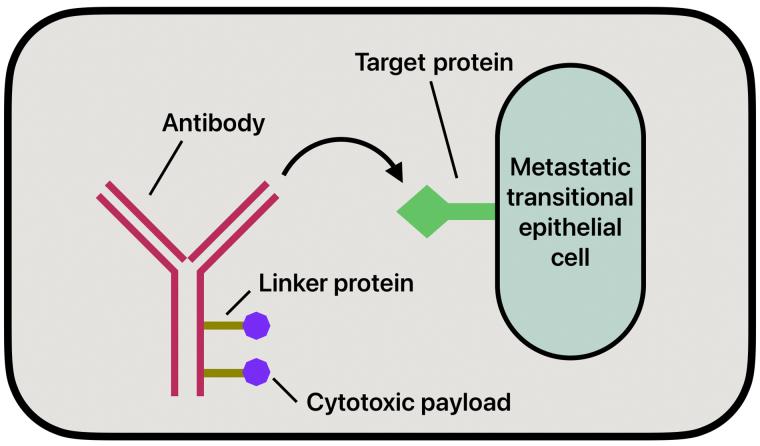
Bladder cancer is a leading cancer type in men. The complexity of treatment in late-stage bladder cancer after systemic spread through the lymphatic system highlights the importance of modulating disease-free progression as early as possible in cancer staging. With current therapies relying on previous standards, such as platinum-based chemotherapeutics and immunomodulation with Bacillus Calmette-Guerin, researchers, and clinicians are looking for targeted therapies to stop bladder cancer at its source early in progression. A new era of molecular therapies that target specific features upregulated in bladder cancer cell lines is surfacing, which may be able to provide clinicians and patients with better control of disease progression. Here, we discuss multiple emerging therapies including immune checkpoint inhibitors of the programmed cell death protein 1 (PD-1)/programmed death ligand 1 (PD-L1) pathway, antibody-drug conjugates, modulation of the phosphoinositide 3-kinase (PI3K)/protein kinase B (AKT)/mammalian target of rapamycin (mTOR) cell proliferation pathway, chimeric antigen receptor T-cell therapy, and fibroblast growth factor receptor targeting. Together, these modern treatments provide potentially promising results for bladder cancer patients with the possibility of increasing remission and survival rates.
膀胱癌是男性中主要的癌症类型。晚期膀胱癌经淋巴系统发生全身转移后治疗的复杂性凸显了在癌症分期中尽早调节无病进展的重要性。鉴于目前的治疗方法依赖于先前的标准,如铂类化疗药物以及卡介苗免疫调节,研究人员和临床医生正在寻找在疾病进展早期从根源上阻止膀胱癌的靶向治疗方法。一个针对膀胱癌细胞系中上调的特定特征的分子治疗新时代正在浮现,这或许能够为临床医生和患者更好地控制疾病进展提供帮助。在此,我们讨论多种新兴治疗方法,包括程序性细胞死亡蛋白1(PD-1)/程序性死亡配体1(PD-L1)通路的免疫检查点抑制剂、抗体药物偶联物、磷酸肌醇3-激酶(PI3K)/蛋白激酶B(AKT)/雷帕霉素哺乳动物靶点(mTOR)细胞增殖通路的调节、嵌合抗原受体T细胞疗法以及成纤维细胞生长因子受体靶向治疗。总之,这些现代治疗方法为膀胱癌患者提供了潜在的有前景的结果,有可能提高缓解率和生存率。


 Zotero 插件