
前瞻性队列研究用于早期肝癌检测(Pearl):研究方案。
Prospective cohort for early detection of liver cancer (Pearl): a study protocol.
机构信息
Great Western Hospital Foundation NHS Trust, Swindon, UK.
Peter Medawar Building for Pathogen Research, University of Oxford, Oxford, UK
出版信息
BMJ Open. 2024 Oct 1;14(10):e085541. doi: 10.1136/bmjopen-2024-085541.
INTRODUCTION
Hepatocellular carcinoma (HCC) is the fastest-rising and fourth most common cause of cancer death worldwide. Liver cirrhosis is the largest underlying risk factor for HCC. Therefore, patients with cirrhosis should have regular ultrasound and biochemical screening to pick up early HCC. Early HCC can be cured; more advanced HCCs have limited treatment options and poor prognosis. Current screening methods are suboptimal with poor sensitivity in picking up early disease. In this study, the investigators aim to recruit people with liver cirrhosis into a Prospective cohort for early detection of liver cancer-the Pearl cohort. The investigators believe that by using state-of-the-art tests we can improve the detection of early HCC.
METHODS AND ANALYSIS
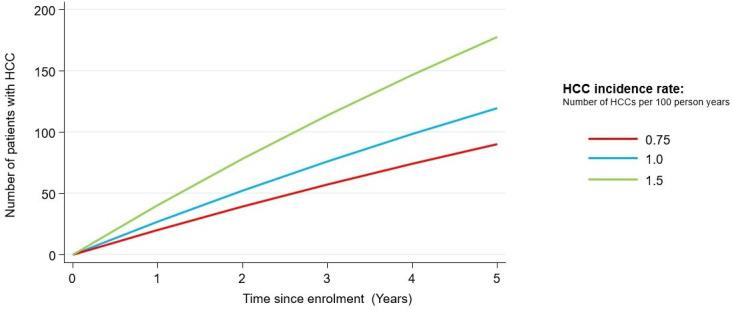
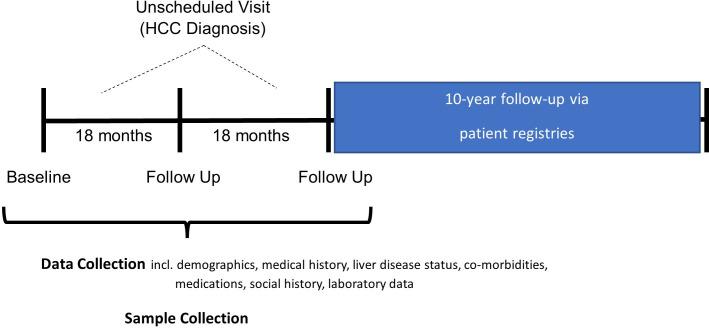
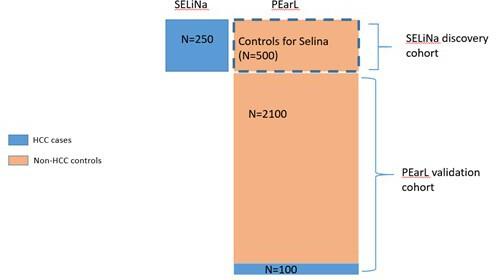
This is a UK-based prospective, longitudinal, diagnostic, prognostic, multicentre, non-CTIMP study. Aiming to recruit 3000 patients with liver cirrhosis without a HCC diagnosis, the Pearl cohort will be followed actively for 3 years from recruitment and then passively via registry data for ten years thereafter. Blood and urine samples will be taken and information from routine care will be gathered. These will be used to assess novel diagnostic approaches for the detection early HCC and to develop models to identify those most at risk for developing HCC.Participants will be linked to national UK health registries to ensure long-term capture of HCC incidence and other relevant endpoints. Approximately 75 patients are predicted to develop de novo HCC within the 3-year follow up period. After this period, the study teams will obtain data on participants for at least 10 years after the last contact. This cohort will help develop an understanding of the incidence of HCC in a UK population stratified by underlying cirrhosis aetiology.
ETHICS AND DISSEMINATION
Ethical approval has been granted by REC and the trial is registered on ClinicalTrials.gov. The results will be published in peer-reviewed journals and presented at relevant meetings.
TRIAL REGISTRATION NUMBER
NCT05541601.
简介
肝细胞癌(HCC)是全球发病率增长最快、第四常见的癌症死因。肝硬化是 HCC 的最大潜在风险因素。因此,肝硬化患者应定期进行超声和生化筛查,以早期发现 HCC。早期 HCC 可以治愈;更晚期的 HCC 治疗选择有限,预后较差。目前的筛查方法效果不佳,对早期疾病的检出率较低。在这项研究中,研究人员旨在招募肝硬化患者入组前瞻性队列,以早期发现肝癌——珍珠队列。研究人员认为,通过使用最先进的检测方法,我们可以提高早期 HCC 的检出率。
方法和分析
这是一项英国的前瞻性、纵向、诊断、预后、多中心、非 CTIMP 研究。该研究旨在招募 3000 名无 HCC 诊断的肝硬化患者,从招募开始将对珍珠队列进行为期 3 年的主动随访,然后通过登记数据在 10 年内进行被动随访。将采集血液和尿液样本,并收集常规护理信息。这些将用于评估早期 HCC 检测的新诊断方法,并建立识别发生 HCC 风险最高的模型。参与者将与英国国家卫生登记处联系,以确保长期捕获 HCC 发病率和其他相关终点。预计在 3 年的随访期间,约有 75 名患者会新发 HCC。在此期间之后,研究团队将在最后一次接触后至少 10 年内获取参与者的数据。该队列将有助于了解 UK 人群中基于潜在肝硬化病因的 HCC 发病率。
伦理和传播
REC 已批准伦理,并在 ClinicalTrials.gov 上注册了该试验。结果将发表在同行评议的期刊上,并在相关会议上展示。
试验注册号
NCT05541601。

 Zotero 插件