
肿瘤学中的治疗性抗体:免疫药理学概述。
Therapeutic antibodies in oncology: an immunopharmacological overview.
作者信息
Toledo-Stuardo Karen, Ribeiro Carolina H, González-Herrera Fabiola, Matthies Douglas J, Le Roy María Soledad, Dietz-Vargas Claudio, Latorre Yesenia, Campos Ivo, Guerra Yuneisy, Tello Samantha, Vásquez-Sáez Valeria, Novoa Pedro, Fehring Nicolás, González Mauricio, Rodríguez-Siza Jose, Vásquez Gonzalo, Méndez Pamela, Altamirano Claudia, Molina María Carmen
机构信息
Programa de Inmunología, Instituto de Ciencias Biomédicas (ICBM), Facultad de Medicina, Universidad de Chile, Avda. Independencia 1027, Block I, 3er piso, Santiago, Chile.
Escuela de Ingeniería Bioquímica, Pontificia Universidad Católica de Valparaíso, Valparaíso, Chile.
出版信息
Cancer Immunol Immunother. 2024 Oct 3;73(12):242. doi: 10.1007/s00262-024-03814-2.
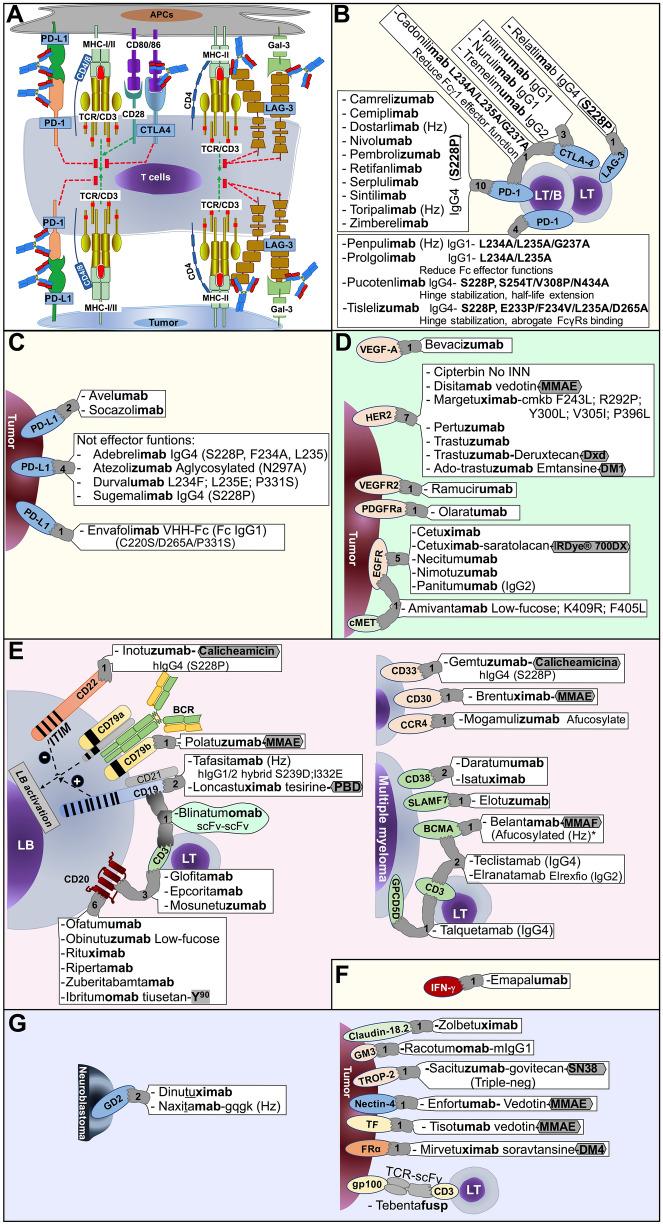
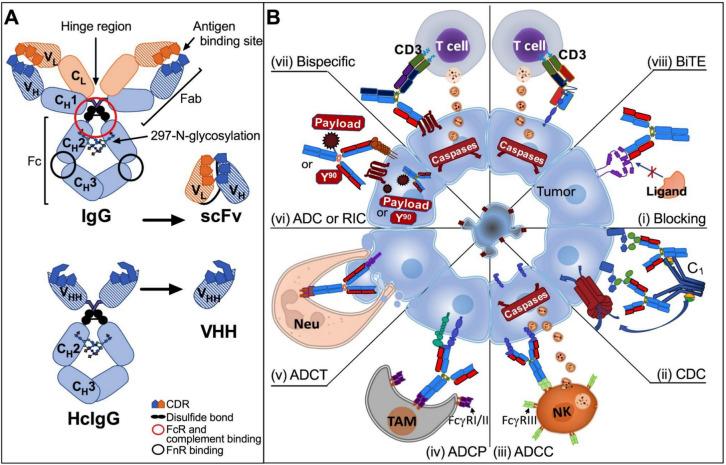
The biotechnological development of monoclonal antibodies and their immunotherapeutic use in oncology have grown exponentially in the last decade, becoming the first-line therapy for some types of cancer. Their mechanism of action is based on the ability to regulate the immune system or by interacting with targets that are either overexpressed in tumor cells, released into the extracellular milieu or involved in processes that favor tumor growth. In addition, the intrinsic characteristics of each subclass of antibodies provide specific effector functions against the tumor by activating antibody-dependent cellular cytotoxicity, complement-dependent cytotoxicity, and antibody-dependent cellular phagocytosis, among other mechanisms. The rational design and engineering of monoclonal antibodies have improved their pharmacokinetic and pharmacodynamic features, thus optimizing the therapeutic regimens administered to cancer patients and improving their clinical outcomes. The selection of the immunoglobulin G subclass, modifications to its crystallizable region (Fc), and conjugation of radioactive substances or antineoplastic drugs may all improve the antitumor effects of therapeutic antibodies. This review aims to provide insights into the immunological and pharmacological aspects of therapeutic antibodies used in oncology, with a rational approach at molecular modifications that can be introduced into these biological tools, improving their efficacy in the treatment of cancer.
在过去十年中,单克隆抗体的生物技术发展及其在肿瘤学中的免疫治疗应用呈指数级增长,成为某些类型癌症的一线治疗方法。它们的作用机制基于调节免疫系统的能力,或与在肿瘤细胞中过度表达、释放到细胞外环境中或参与促进肿瘤生长过程的靶点相互作用。此外,抗体每个亚类的内在特性通过激活抗体依赖性细胞毒性、补体依赖性细胞毒性和抗体依赖性细胞吞噬作用等机制,提供针对肿瘤的特定效应功能。单克隆抗体的合理设计和工程改造改善了它们的药代动力学和药效学特性,从而优化了给予癌症患者的治疗方案并改善了临床结果。免疫球蛋白G亚类的选择、对其可结晶片段(Fc)的修饰以及放射性物质或抗肿瘤药物的偶联,都可能提高治疗性抗体的抗肿瘤效果。本综述旨在深入探讨肿瘤学中使用的治疗性抗体的免疫学和药理学方面,以及对这些生物工具进行分子修饰的合理方法,以提高它们在癌症治疗中的疗效。
 Zotero 插件