
肠道微生物群和代谢物对慢性阻塞性肺疾病影响的因果关系:双向两样本 Mendelian Randomization 研究。
Causal Effects of Gut Microbiota and Metabolites on Chronic Obstructive Pulmonary Disease: A Bidirectional Two Sample Mendelian Randomization Study.
机构信息
Department of Critical Care Medicine, China-Japan Union Hospital of Jilin University, Changchun, Jilin Province, 130033, People's Republic of China.
出版信息
Int J Chron Obstruct Pulmon Dis. 2024 Sep 28;19:2153-2167. doi: 10.2147/COPD.S472218. eCollection 2024.
BACKGROUND
Recent evidence suggests that the gut microbiome and metabolites are intricately involved in Chronic Obstructive Pulmonary Disease (COPD) pathogenesis, yet the precise causal relationships remain unclear due to confounding factors and reverse causation. This study employs bidirectional two-sample Mendelian Randomization (MR) to clarify these connections.
METHODS
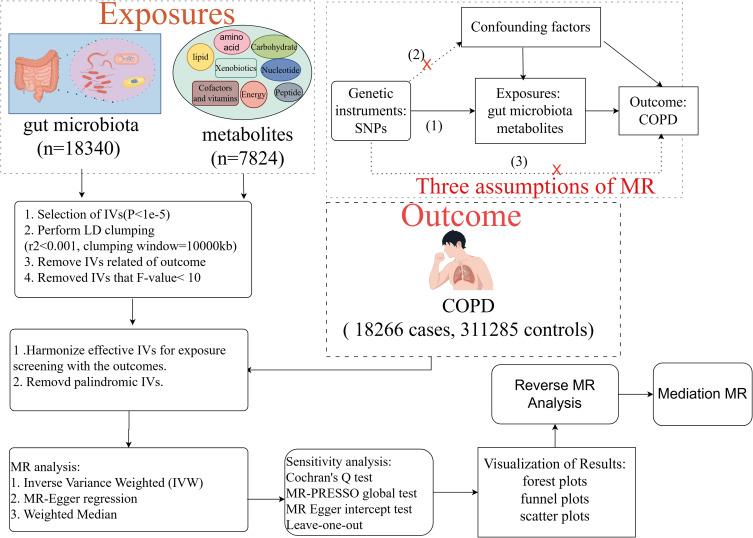
Summary data from publicly available Genome-Wide Association Studies (GWAS) concerning the gut microbiome, metabolites, and COPD were compiled. The selection of genetic instrumental variables (Single Nucleotide Polymorphisms, or SNPs) for MR analysis was conducted meticulously, primarily utilizing the Inverse Variance Weighting (IVW) method, supplemented by MR-Egger regression and the Weighted Median (WM) approach. The evaluation of heterogeneity and horizontal pleiotropy was performed using Cochran's Q test, the MR-Egger intercept test, and the MR-PRESSO global test. Sensitivity analyses, including leave-one-out tests, were conducted to verify the robustness of our results. And the mediation effect of gut microbiota-mediated changes in metabolites on the causal relationship with COPD was analyzed.
RESULTS
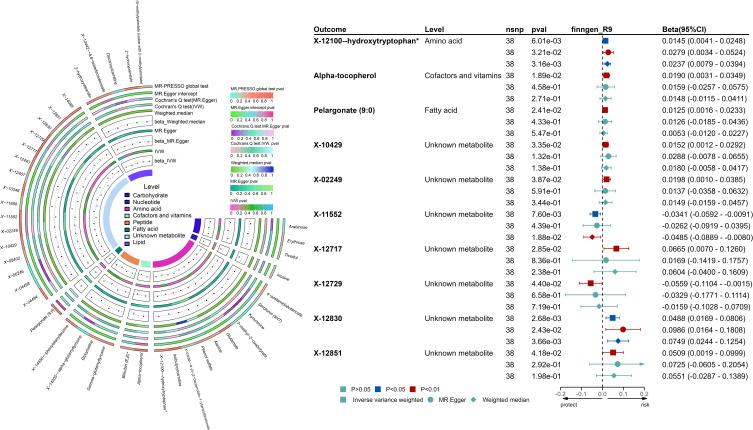
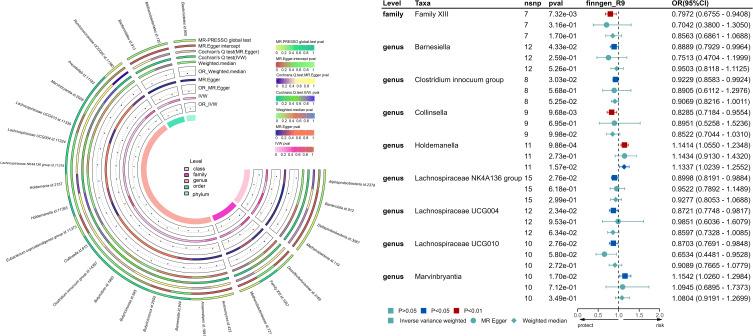
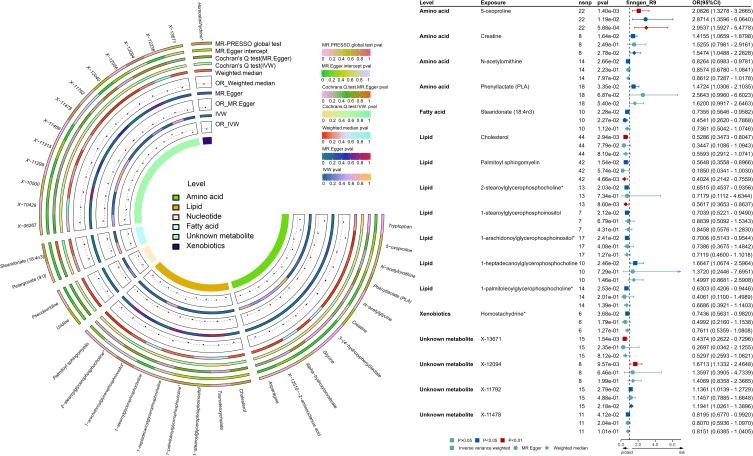
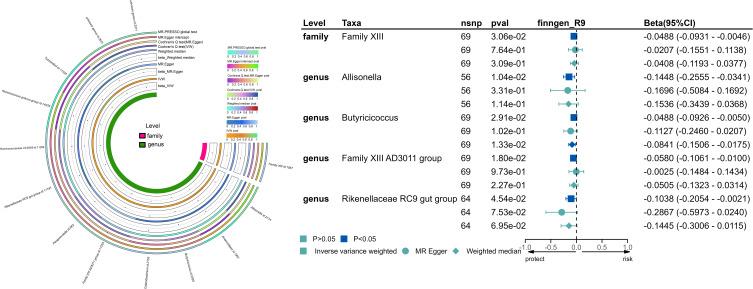
Our study identified nine significant gut microbiota taxa and thirteen known metabolites implicated in COPD pathogenesis. Moreover, associations between the onset of COPD and the abundance of five bacterial taxa, as well as the concentration of three known metabolites, were established. These findings consistently withstood sensitivity analyses, reinforcing their credibility. Additionally, our results revealed that gut microbiota contribute to the development of COPD by mediating changes in metabolites.
CONCLUSION
Our bidirectional Two-Sample Mendelian Randomization analysis has revealed reciprocal causal relationships between the abundance of gut microbiota and metabolite concentrations in the context of COPD. This research holds promise for identifying biomarkers for early COPD diagnosis and monitoring disease progression, thereby opening new pathways for prevention and treatment. Further investigation into the underlying mechanisms is essential to improve our understanding of COPD onset.
背景
最近的证据表明,肠道微生物组和代谢物与慢性阻塞性肺疾病(COPD)的发病机制密切相关,但由于混杂因素和反向因果关系,确切的因果关系仍不清楚。本研究采用双向两样本孟德尔随机化(MR)来阐明这些关联。
方法
我们整合了公开的全基因组关联研究(GWAS)中关于肠道微生物组、代谢物和 COPD 的汇总数据。我们仔细选择了用于 MR 分析的遗传工具变量(单核苷酸多态性,或 SNPs),主要使用逆方差加权(IVW)方法,并辅以 MR-Egger 回归和加权中位数(WM)方法。我们使用 Cochran's Q 检验、MR-Egger 截距检验和 MR-PRESSO 全局检验来评估异质性和水平多效性。我们进行了敏感性分析,包括逐一删除测试,以验证我们结果的稳健性。并且分析了肠道微生物群介导的代谢物变化对与 COPD 的因果关系的中介作用。
结果
我们的研究确定了与 COPD 发病机制相关的九个重要肠道微生物组分类群和十三个已知代谢物。此外,我们还发现了 COPD 发病与五种细菌分类群丰度以及三种已知代谢物浓度之间的关联。这些发现经过敏感性分析的验证,增强了其可信度。此外,我们的结果表明,肠道微生物群通过介导代谢物的变化来促进 COPD 的发展。
结论
我们的双向两样本孟德尔随机化分析揭示了 COPD 背景下肠道微生物组丰度和代谢物浓度之间的相互因果关系。这项研究为识别 COPD 早期诊断和监测疾病进展的生物标志物提供了可能,从而为预防和治疗开辟了新的途径。进一步研究潜在机制对于提高我们对 COPD 发病机制的理解至关重要。
 Zotero 插件