
亚皮层微管动力蛋白运输机制调节疟原虫子孢子形态发生,以利于疟原虫经蚊子传播。
A subpellicular microtubule dynein transport machinery regulates ookinete morphogenesis for mosquito transmission of Plasmodium yoelii.
机构信息
State Key Laboratory of Cellular Stress Biology, School of Life Sciences, Faculty of Medicine and Life Sciences, Xiamen University, Xiamen, China.
Department of Health Inspection and Quarantine, School of Public Health, Hengyang Medical School, University of South China, Hengyang, China.
出版信息
Nat Commun. 2024 Oct 4;15(1):8590. doi: 10.1038/s41467-024-52970-7.
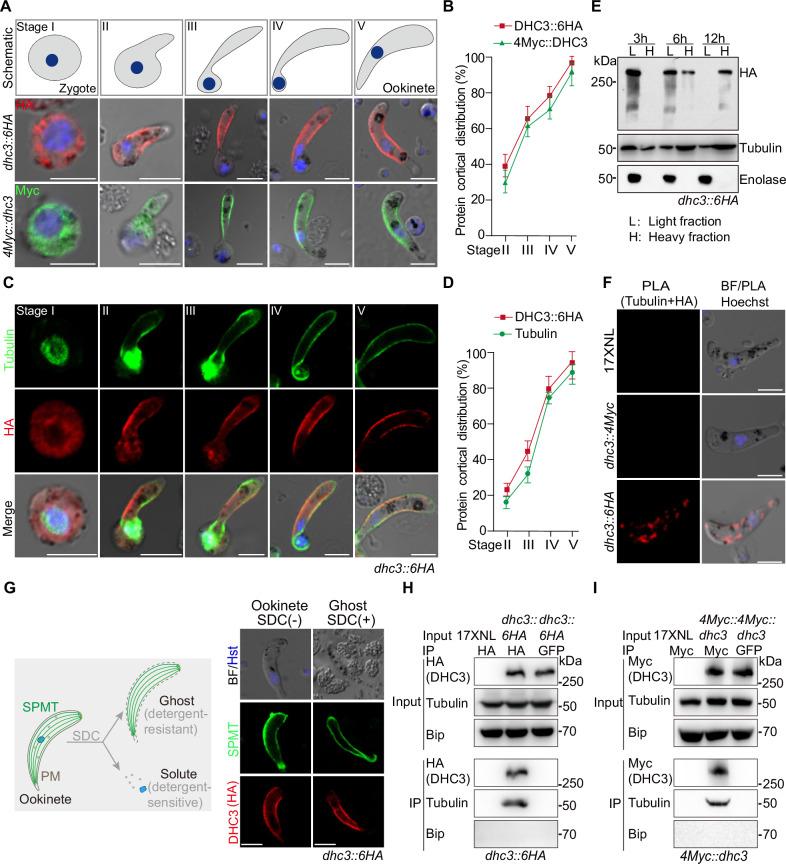
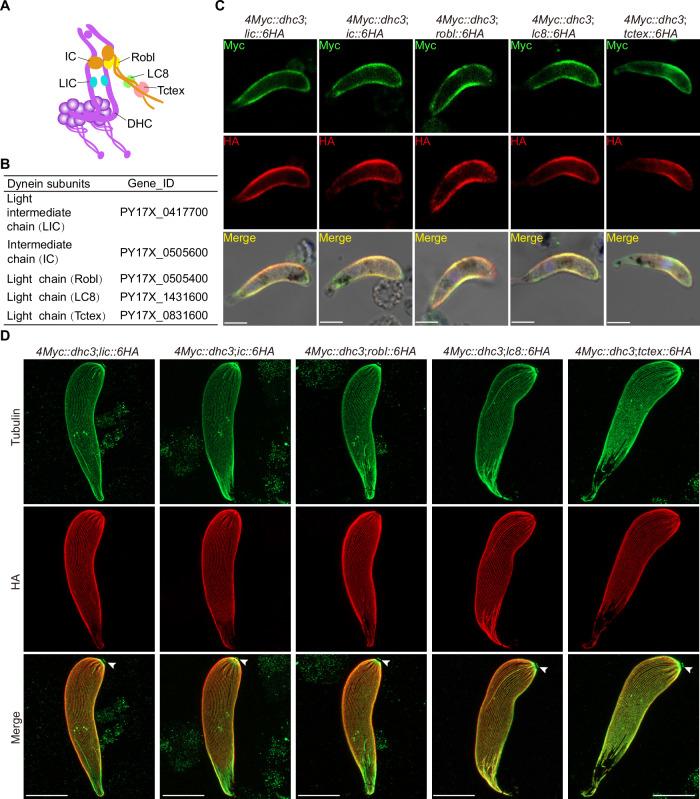
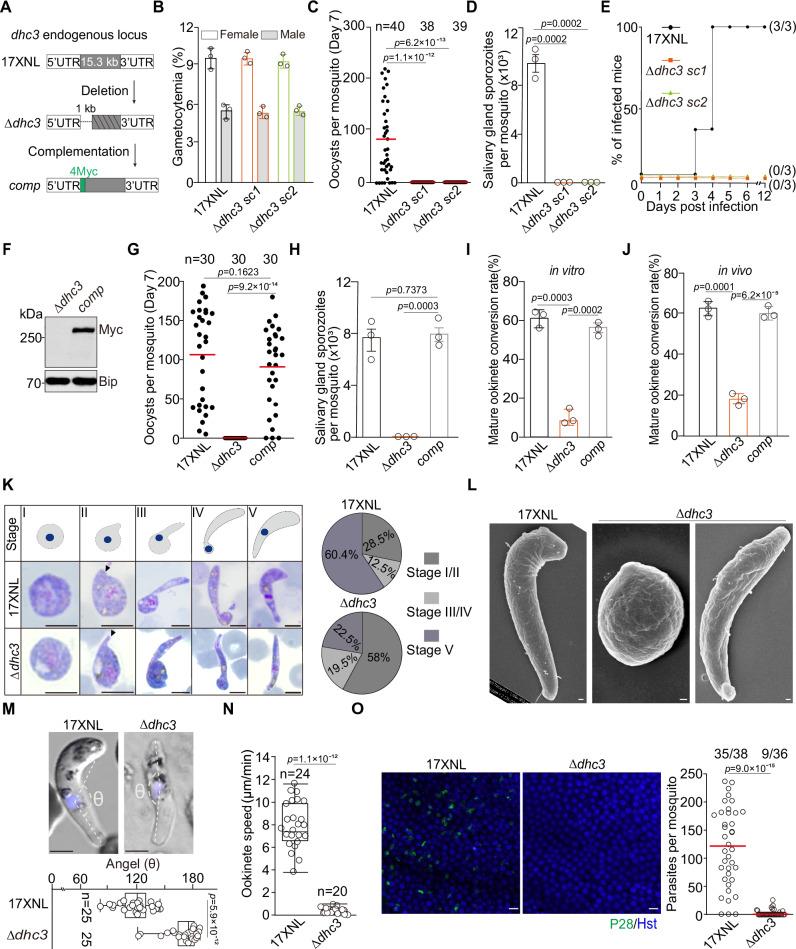
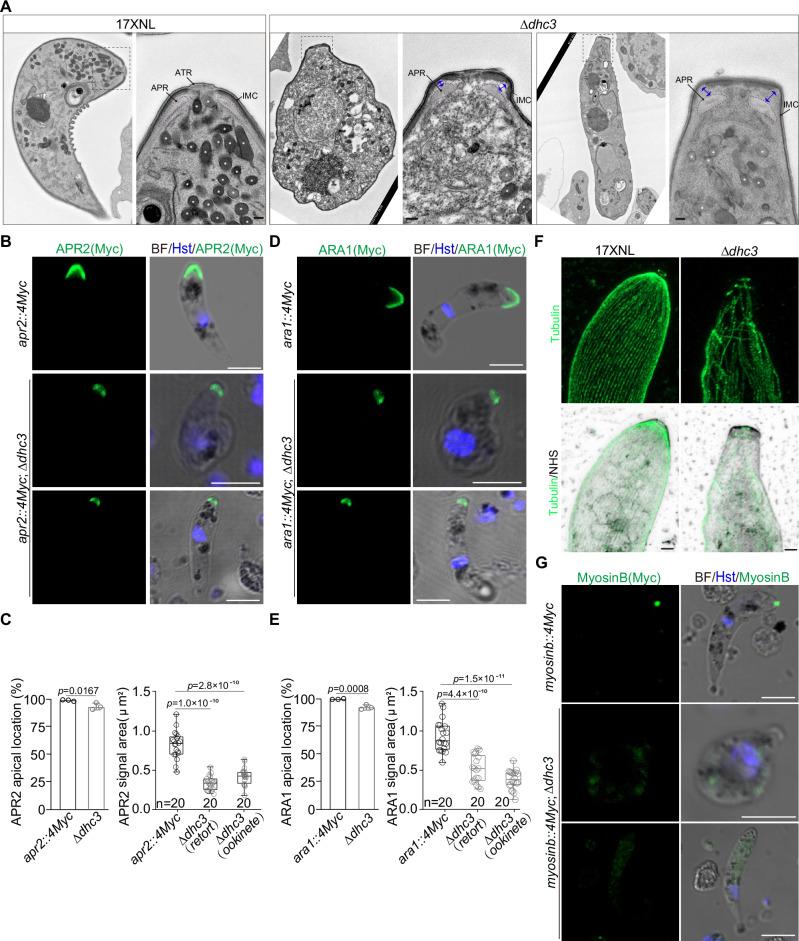
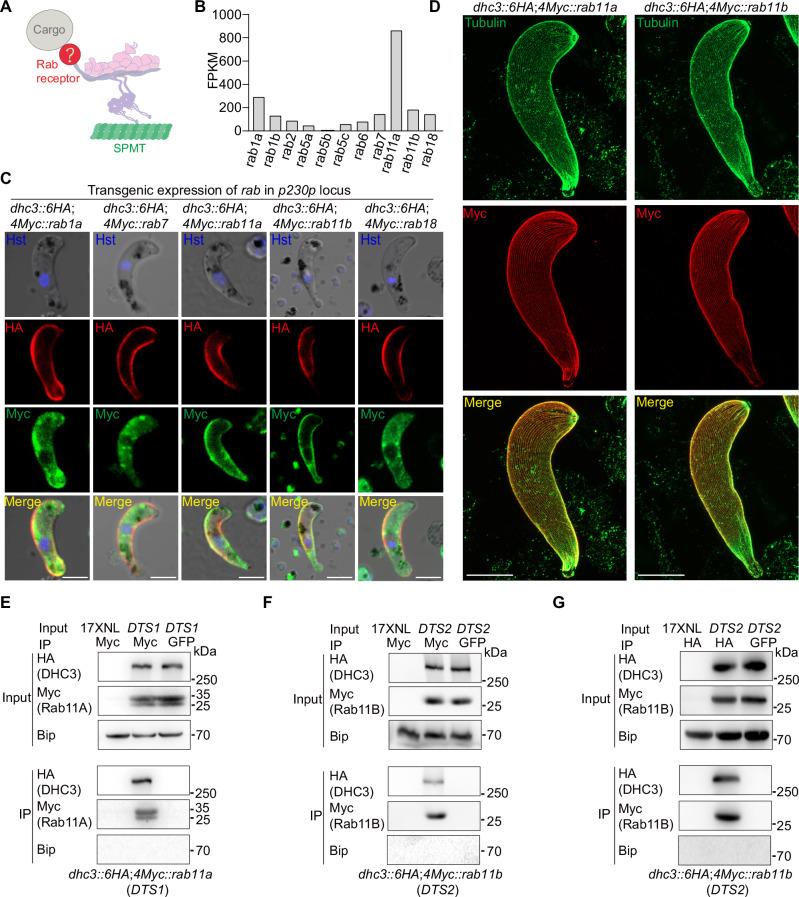
The cortical cytoskeleton of subpellicular microtubules (SPMTs) supports the Plasmodium ookinete morphogenesis during mosquito transmission of malaria. SPMTs are hypothesized to function as the cytoskeletal tracks in motor-driven cargo transport for apical organelle and structure assembly in ookinetes. However, the SPMT-based transport motor has not been identified in the Plasmodium. The cytoplasmic dynein is the motor moving towards the minus end of microtubules (MTs) and likely be responsible for cargo transport to the apical part in ookinetes. Here we screen 7 putative dynein heavy chain (DHC) proteins in the P. yoelii and identify DHC3 showing peripheral localization in ookinetes. DHC3 is localized at SPMTs throughout ookinete morphogenesis. We also identify five other dynein subunits localizing at SPMTs. DHC3 disruption impairs ookinete development, shape, and gliding, leading to failure in mosquito infection of Plasmodium. The DHC3-deficient ookinetes display defective formation or localization of apical organelles and structures. Rab11A and Rab11B interact with DHC3 at SPMTs in a DHC3-dependent manner, likely functioning as the receptors for the cargoes driven by SPMT-dynein. Disturbing Rab11A or Rab11B phenocopies DHC3 deficiency in ookinete morphogenesis. Our study reveals an SPMT-based dynein motor driving the transport of Rab11A- and Rab11B-labeled cargoes in the ookinete morphogenesis of Plasmodium.
皮层下微管(SPMTs)的细胞骨架支撑着疟原虫在蚊子传播过程中的动合子形态发生。SPMTs 被假设为在马达驱动的货物运输中作为细胞骨架轨道,用于顶细胞器和动合子结构的组装。然而,在疟原虫中尚未发现基于 SPMT 的运输马达。细胞质动力蛋白是向微管(MTs)的负端移动的马达,可能负责将货物运输到动合子的顶端部分。在这里,我们在 P. yoelii 中筛选了 7 种假定的动力蛋白重链(DHC)蛋白,并鉴定出 DHC3 在动合子中表现出周边定位。DHC3 在整个动合子形态发生过程中定位于 SPMTs。我们还鉴定了另外 5 种定位于 SPMTs 的动力蛋白亚基。DHC3 的缺失会影响动合子的发育、形状和滑行,导致疟原虫无法感染蚊子。DHC3 缺陷的动合子显示出顶端细胞器和结构的形成或定位缺陷。Rab11A 和 Rab11B 以 DHC3 依赖的方式与 SPMT 上的 DHC3 相互作用,可能作为 SPMT-动力蛋白驱动的货物的受体发挥作用。扰乱 Rab11A 或 Rab11B 表型类似于 DHC3 缺失在动合子形态发生中的作用。我们的研究揭示了一种基于 SPMT 的动力蛋白马达,它驱动 Rab11A 和 Rab11B 标记的货物在疟原虫动合子形态发生中的运输。





 Zotero 插件