
翻译起始因子-2S2(eIF2S2)通过抑制TGF-β/SMAD4信号通路促进宫颈癌发生。
Translation Initiation Factor-2S2 (eIF2S2) Contributes to Cervical Carcinogenesis by Inhibiting the TGF-β/SMAD4 Signaling Pathway.
作者信息
Kundu Juthika, Yang Hobin, Moon Saerom, Byun Mi Ran, Shin Young Kee, Song Kyoung, Choi Joon-Seok
机构信息
Lika shing applied virology institute, Department of Medical Microbiology and Immunology, University of Alberta, Edmonton, Alberta T6G 2E1, Canada.
College of Pharmacy, Kyungsung University, Busan 48434, Republic of Korea.
出版信息
Biomol Ther (Seoul). 2024 Nov 1;32(6):767-777. doi: 10.4062/biomolther.2024.024. Epub 2024 Oct 7.
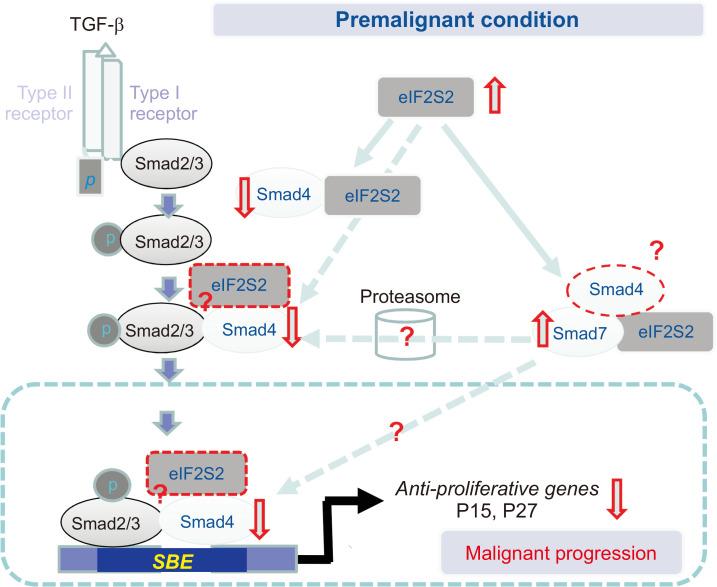
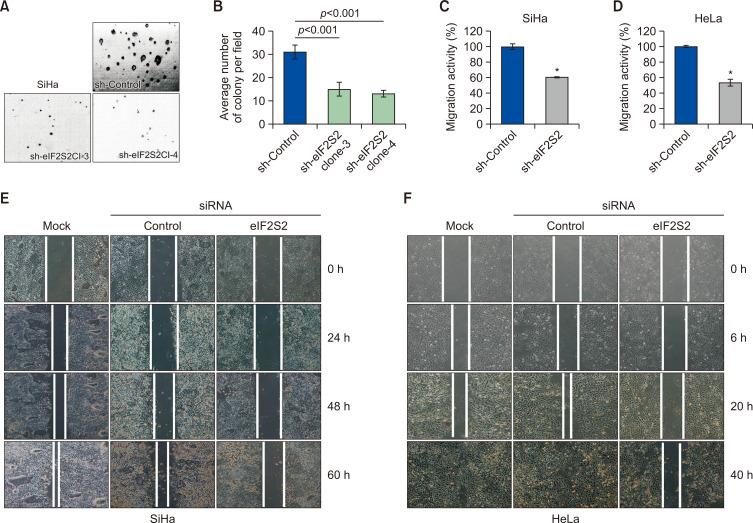
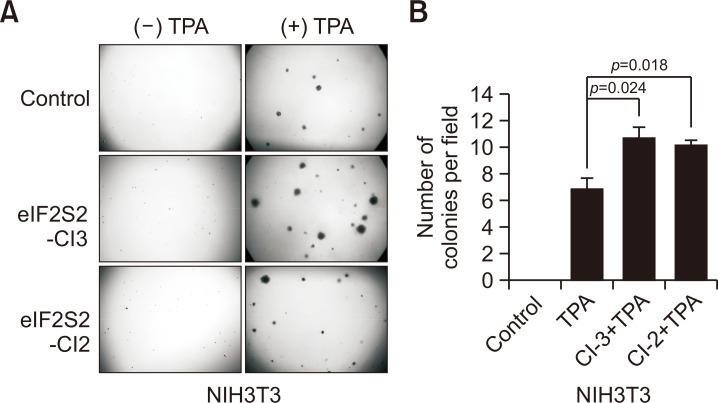
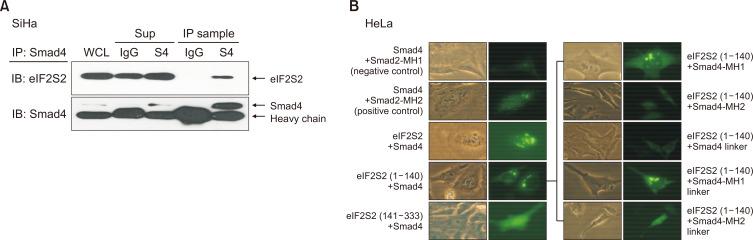
The deregulation of protein translational machinery and the oncogenic role of several translation initiation factors have been extensively investigated. This study aimed to investigate the role of eukaryotic translation initiation factor 2S2 (eIF2S2, also known as eIF2β) in cervical carcinogenesis. Immunohistochemical analysis of human cervical carcinoma tissues revealed a stage-specific increase in eIF2S2 expression. The knockdown of eIF2S2 in human cervical cancer (SiHa) cells significantly reduced growth and migration properties, whereas its overexpression demonstrated the opposite effect. Immunoprecipitation and Bimolecular fluorescence complementation (BiFC) assay confirmed the previous photo array finding of the interaction between eIF2S2 and SMAD4 to understand the tumorigenic mechanism of eIF2S2. The results indicated that the N-terminus of eIF2S2 interacts with the MH-1 domain of SMAD4. The interaction effect between eIF2S2 and SMAD4 was further evaluated. The knockdown of eIF2S2 increased SMAD4 expression in cervical cancer cells without changing SMAD4 mRNA expression, whereas transient eIF2S2 overexpression reduced SMAD4 expression. This indicates the possibility of post-translational regulation of SMAD4 expression by eIF2S2. Additionally, eIF2S2 overexpression was confirmed to weaken the expression and/or promoter activity of p15 and p27, which are SMAD4-regulated antiproliferative proteins, by reducing SMAD4 levels. Therefore, our study indicated the pro-tumorigenic role of eIF2S2, which diminishes both SMAD4 expression and function as a transcriptional factor in cervical carcinogenesis.
蛋白质翻译机制的失调以及几种翻译起始因子的致癌作用已得到广泛研究。本研究旨在探讨真核翻译起始因子2S2(eIF2S2,也称为eIF2β)在宫颈癌发生中的作用。对人宫颈癌组织的免疫组织化学分析显示,eIF2S2表达呈阶段特异性增加。在人宫颈癌(SiHa)细胞中敲低eIF2S2可显著降低其生长和迁移特性,而其过表达则表现出相反的效果。免疫沉淀和双分子荧光互补(BiFC)分析证实了先前光阵列实验中eIF2S2与SMAD4之间相互作用的发现,以了解eIF2S2的致瘤机制。结果表明,eIF2S2的N端与SMAD4的MH-1结构域相互作用。进一步评估了eIF2S2与SMAD4之间的相互作用效应。敲低eIF2S2可增加宫颈癌细胞中SMAD4的表达,而不改变SMAD4 mRNA的表达,而瞬时过表达eIF2S2则降低SMAD4的表达。这表明eIF2S2可能对SMAD4表达进行翻译后调控。此外,通过降低SMAD4水平,证实eIF2S2过表达会减弱p15和p27的表达和/或启动子活性,p15和p27是受SMAD4调控的抗增殖蛋白。因此,我们的研究表明eIF2S2在宫颈癌发生中具有促肿瘤作用,它会削弱SMAD4作为转录因子的表达和功能。




 Zotero 插件