
研究孕期和生命早期微塑料和纳米塑料的暴露和危害(AURORA 项目):一项跨学科研究的方案。
Investigating Exposure and Hazards of Micro- and Nanoplastics During Pregnancy and Early Life (AURORA Project): Protocol for an Interdisciplinary Study.
机构信息
Department of Global Public Health and Bioethics, Julius Center for Health Sciences and Primary Care, University Medical Center Utrecht, Utrecht, Netherlands.
Division of Environmental Epidemiology, Institute for Risk Assessment Sciences, Utrecht University, Utrecht, Netherlands.
出版信息
JMIR Res Protoc. 2024 Oct 8;13:e63176. doi: 10.2196/63176.
BACKGROUND
Micro- and nanoplastics (MNPs) are emerging pollutants of concern with ubiquitous presence in global ecosystems. MNPs pose potential implications for human health; however, the health impacts of MNP exposures are not yet understood. Recent evidence suggests that MNPs can cross the placental barrier, underlying the urgent need to understand their impact on reproductive health and development.
OBJECTIVE
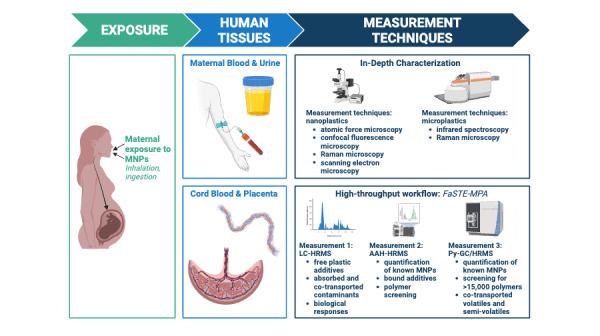
The Actionable eUropean ROadmap for early-life health Risk Assessment of micro- and nanoplastics (AURORA) project will investigate MNP exposures and their biological and health effects during pregnancy and early life, which are critical periods due to heightened vulnerability to environmental stressors. The AURORA project will enhance exposure assessment capabilities for measuring MNPs, MNP-associated chemicals, and plastic additives in human tissues, including placenta and blood.
METHODS
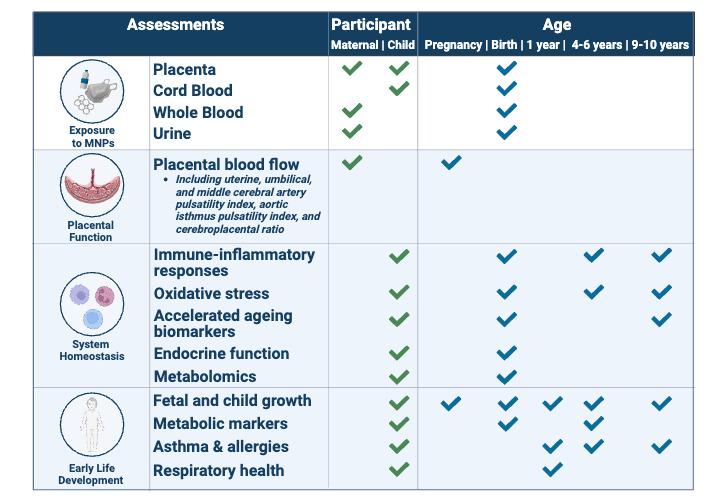
In this interdisciplinary project, we will advance methods for in-depth characterization and scalable chemical analytical strategies, enabling high-resolution and large-scale toxicological, exposure assessment, and epidemiological studies. The AURORA project performs observational studies to investigate determinants and health impacts of MNPs by including 800 mother-child pairs from 2 existing birth cohorts and 110 women of reproductive age from a newly established cohort. This will be complemented by toxicological studies using a tiered-testing approach and epidemiological investigations to evaluate associations between maternal and prenatal MNP exposures and health perturbations, such as placental function, immune-inflammatory responses, oxidative stress, accelerated aging, endocrine disruption, and child growth and development. The ultimate goal of the AURORA project is to create an MNP risk assessment framework and identify the remaining knowledge gaps and priorities needed to comprehensively assess the impact of MNPs on early-life health.
RESULTS
In the first 3 years of this 5-year project (2021-2026), progress was made toward all objectives. This includes completion of recruitment and data collection for new and existing cohorts, development of analytical methodological protocols, and initiation of the toxicological tiered assessments. As of September 2024, data analysis is ongoing and results are expected to be published starting in 2025.
CONCLUSIONS
As plastic pollution increases globally, it is imperative to understand the impact of MNPs on human health, particularly during vulnerable developmental stages such as early life. The contributions of the AURORA project will inform future risk assessment.
INTERNATIONAL REGISTERED REPORT IDENTIFIER (IRRID): DERR1-10.2196/63176.
背景
微塑料和纳米塑料(MNPs)是具有普遍存在性的新兴关注污染物。MNPs 可能对人类健康产生潜在影响,但 MNP 暴露的健康影响尚不清楚。最近的证据表明,MNPs 可以穿过胎盘屏障,这就迫切需要了解它们对生殖健康和发育的影响。
目的
早期生命健康风险评估的欧洲行动计划(AURORA)项目将研究怀孕期间和生命早期的 MNP 暴露及其生物学和健康影响,这是由于对环境应激物的敏感性增加而成为关键时期。AURORA 项目将增强 MNP 暴露评估能力,以测量人体组织中的 MNPs、MNP 相关化学物质和塑料添加剂,包括胎盘和血液。
方法
在这个跨学科项目中,我们将推进深入表征和可扩展的化学分析策略的方法,从而能够进行高分辨率和大规模的毒理学、暴露评估和流行病学研究。AURORA 项目通过包括来自 2 个现有出生队列的 800 对母婴和来自新建立队列的 110 名育龄妇女进行观察性研究,以调查 MNPs 的决定因素和健康影响。这将通过使用分层测试方法进行毒理学研究和流行病学调查来补充,以评估母体和产前 MNP 暴露与胎盘功能、免疫炎症反应、氧化应激、加速衰老、内分泌干扰和儿童生长发育等健康紊乱之间的关联。AURORA 项目的最终目标是创建一个 MNP 风险评估框架,并确定全面评估 MNPs 对早期生命健康影响所需的剩余知识差距和优先事项。
结果
在这个为期 5 年的项目(2021-2026 年)的前 3 年中,已经朝着所有目标取得了进展。这包括为新的和现有的队列完成招募和数据收集、开发分析方法学协议以及开始进行毒理学分层评估。截至 2024 年 9 月,数据分析正在进行中,预计从 2025 年开始发布结果。
结论
随着全球塑料污染的增加,了解 MNPs 对人类健康的影响,特别是在早期生命等脆弱的发育阶段,是至关重要的。AURORA 项目的贡献将为未来的风险评估提供信息。
国际注册报告标识符(IRRID):DERR1-10.2196/63176。


 Zotero 插件