
黑米生物活性成分对2型糖尿病抑制机制的计算洞察
Computational insights into the inhibitory mechanism of type 2 diabetes mellitus by bioactive components of (black rice).
作者信息
Rasool Kashaf, Bhatti Attya, Satti Abid Majeed, Paracha Rehan Zafar, John Peter
机构信息
Department of Atta-ur-Rahman School of Applied Biosciences (ASAB), National University of Science and Technology (NUST), Islamabad, Pakistan.
Crop Science Institute (CSI), PARC-National Agriculture Research Center (NARC) Islamabad, Islamabad, Pakistan.
出版信息
Front Pharmacol. 2024 Sep 23;15:1457383. doi: 10.3389/fphar.2024.1457383. eCollection 2024.
BACKGROUND
Type 2 diabetes mellitus is a metabolic disease categorized by hyperglycemia, resistance to insulin, and ß-cell dysfunction. Around the globe, approximately 422 million people have diabetes, out of which 1.5 million die annually. In spite of innovative advancements in the treatment of diabetes, no biological drug has been known to successfully cure and avert its progression. Thereupon, natural drugs derived from plants are emerging as a novel therapeutic strategy to combat diseases like diabetes.
OBJECTIVE
The current study aims to investigate the antidiabetic potential of natural compounds of (black rice) in disease treatment.
METHODS
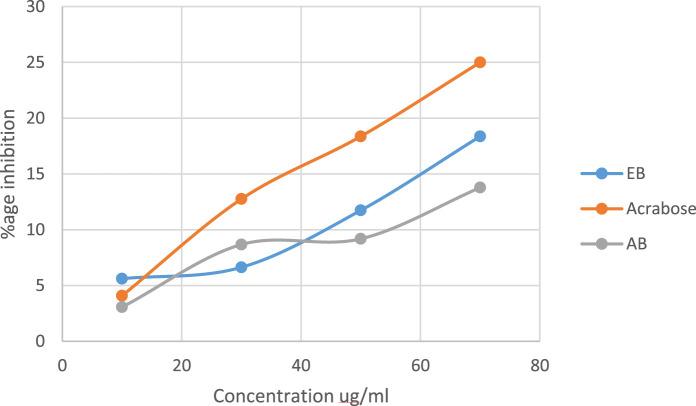
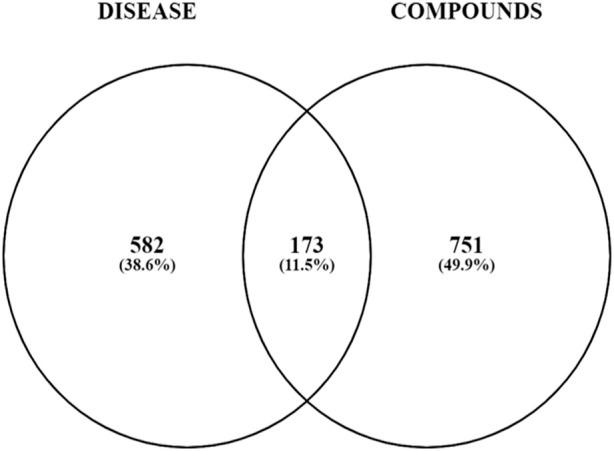
Antioxidant activity and alpha amylase assays were performed to evaluate the therapeutic potential of the extract of . Gas chromatography-mass spectrometry (GC-MS) was used for identification of constituents from the ethanol extract. ADMET profiling (absorption, distribution, metabolism, excretion, and toxicity), network pharmacology, and molecular dynamics simulation were employed in order to uncover the active ingredients and their therapeutic targets in against type 2 diabetes mellitus.
RESULTS
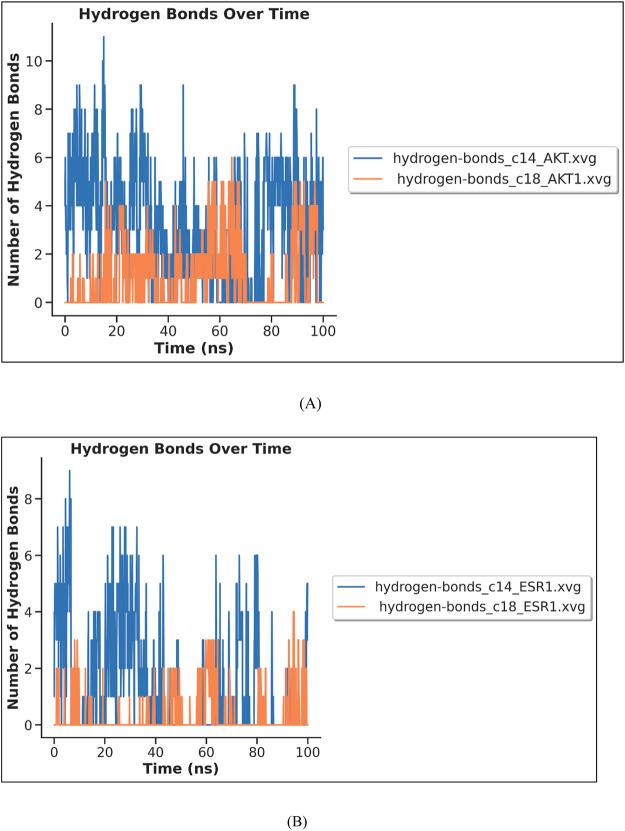
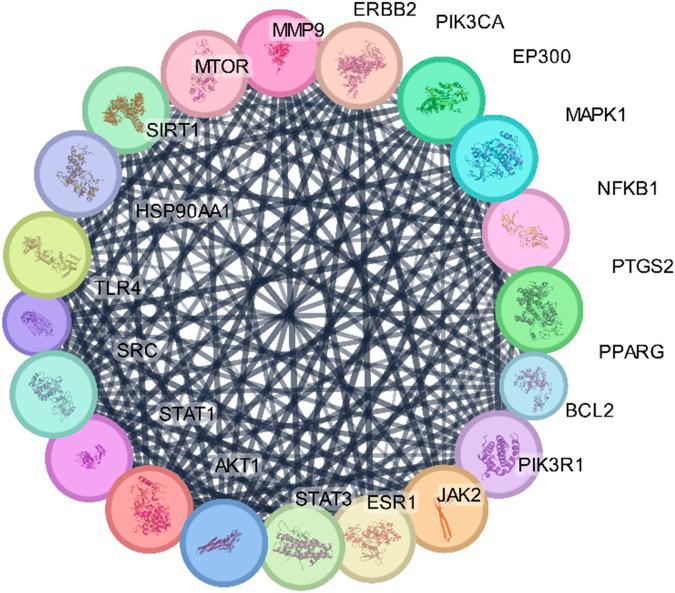
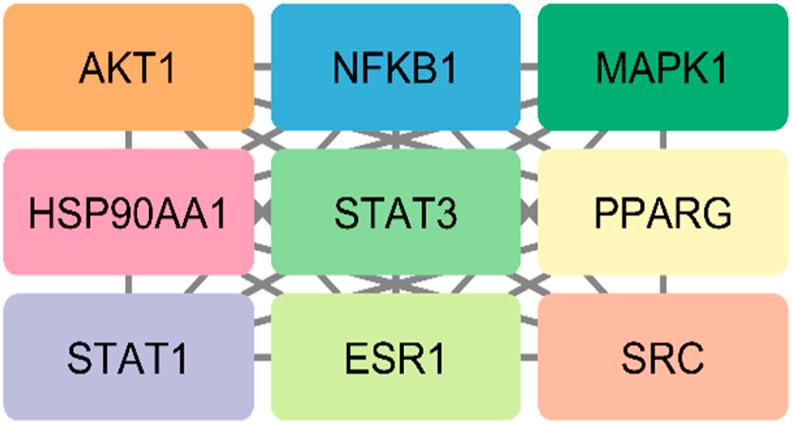
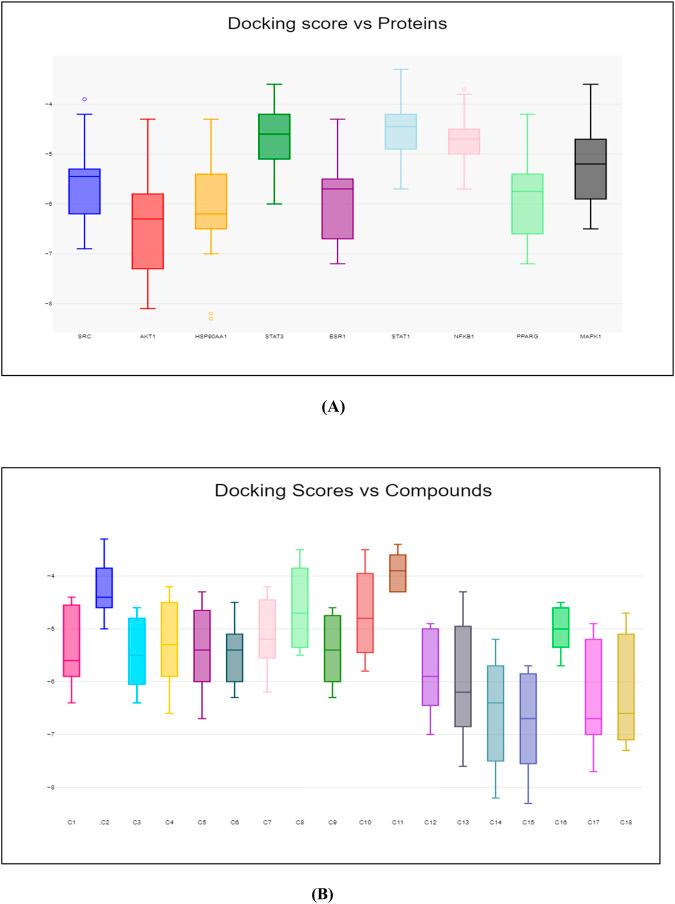
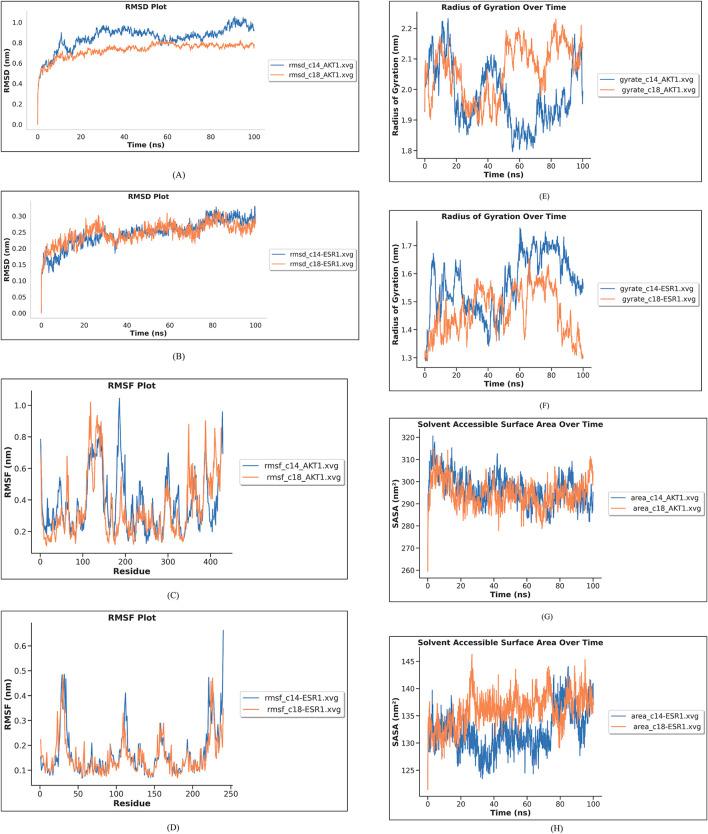
GC-MS of the plant extract provided a list of 184 compounds. Lipinski filter and toxicity parameters screened out 18 compounds. The topological parameters of the protein-protein interaction (PPI) were used to shortlist the nine key proteins (STAT3, HSP90AA1, AKT1, SRC, ESR1, MAPK1, NFKB1, EP300, and CREBBP) in the type 2 diabetes mellitus pathways. Later, molecular docking analysis and simulations showed that C14 (1H-purine-8-propanoic acid, .alpha.-amino-2, 3, 6, 7-tetrahydro-1,3,7-trimethyl-2,6-dioxo-) and C18 (cyclohexane-carboxamide, N-furfuryl) bind with AKT1 and ESR1 with a binding energy of 8.1, 6.9, 7.3, and 7.2 kcal/mol, respectively. RMSD (root-mean-square deviation) and RMSF (root-mean-square fluctuation) values for AKT1 and ESR1 have shown very little fluctuation, indicating that proteins were stabilized after ligand docking.
CONCLUSION
This study suggests therapeutic drug candidates against AKT1 and ESR1 to treat type 2 diabetes mellitus. However, further wet-lab analysis is required to discover the best remedy for type 2 diabetes mellitus.
背景
2型糖尿病是一种以高血糖、胰岛素抵抗和β细胞功能障碍为特征的代谢性疾病。全球约有4.22亿人患有糖尿病,其中每年有150万人死亡。尽管糖尿病治疗有了创新性进展,但尚无生物药物能成功治愈并阻止其进展。因此,源自植物的天然药物正成为对抗糖尿病等疾病的一种新型治疗策略。
目的
本研究旨在探究黑米天然化合物在疾病治疗中的抗糖尿病潜力。
方法
进行抗氧化活性和α淀粉酶测定,以评估黑米提取物的治疗潜力。采用气相色谱-质谱联用(GC-MS)鉴定乙醇提取物中的成分。运用ADMET分析(吸收、分布、代谢、排泄和毒性)、网络药理学和分子动力学模拟,以揭示黑米中对抗2型糖尿病的活性成分及其治疗靶点。
结果
植物提取物的GC-MS分析列出了184种化合物。通过Lipinski筛选标准和毒性参数筛选出18种化合物。利用蛋白质-蛋白质相互作用(PPI)的拓扑参数,在2型糖尿病通路中筛选出9种关键蛋白(STAT3、HSP90AA1、AKT1、SRC、ESR1、MAPK1、NFKB1、EP300和CREBBP)。随后,分子对接分析和模拟表明,C14(1H-嘌呤-8-丙酸,α-氨基-2,3,6,7-四氢-1,3,7-三甲基-2,6-二氧代-)和C18(环己烷-甲酰胺,N-糠基)分别与AKT1和ESR1结合,结合能分别为8.1、6.9、7.3和7.2千卡/摩尔。AKT1和ESR1的均方根偏差(RMSD)和均方根波动(RMSF)值显示波动很小,表明配体对接后蛋白质得到了稳定。
结论
本研究表明,针对AKT1和ESR1的治疗药物有望用于治疗2型糖尿病。然而,需要进一步的湿实验室分析来找到治疗2型糖尿病的最佳疗法。







 Zotero 插件