
与L型钙电流耦联的钙瞬变可减轻心脏交替变化。
The calcium transient coupled to the L-type calcium current attenuates cardiac alternans.
作者信息
Warren Mark, Poelzing Steven
机构信息
Fralin Biomedical Research Institute at Virginia Tech Carilion, Roanoke, VA, United States.
Nora Eccles Harrison Cardiovascular Research and Training Institute, University of Utah, Salt Lake City, UT, United States.
出版信息
Front Physiol. 2024 Sep 27;15:1404886. doi: 10.3389/fphys.2024.1404886. eCollection 2024.
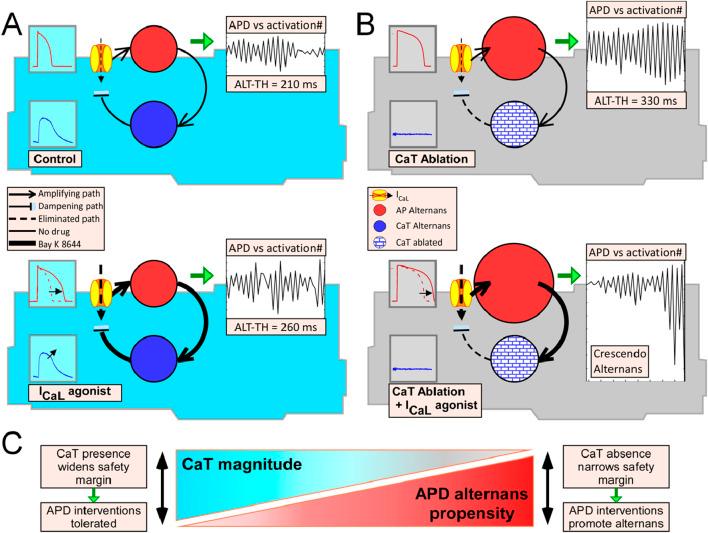
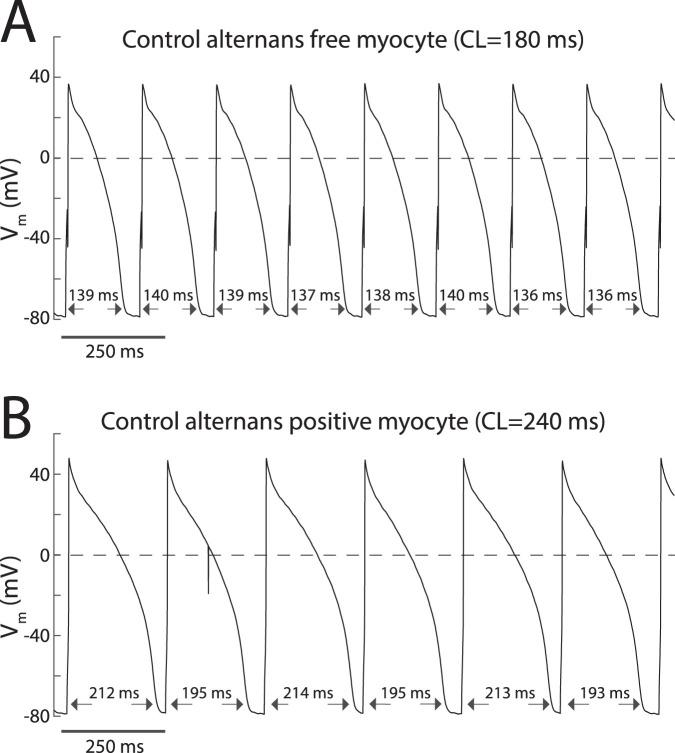
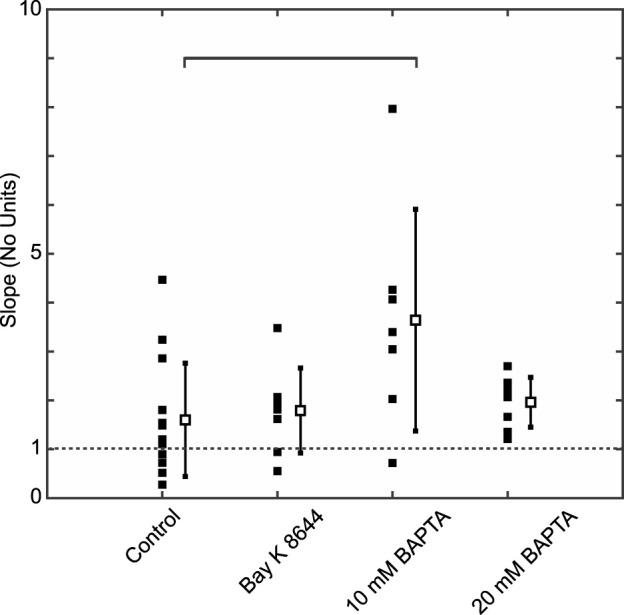
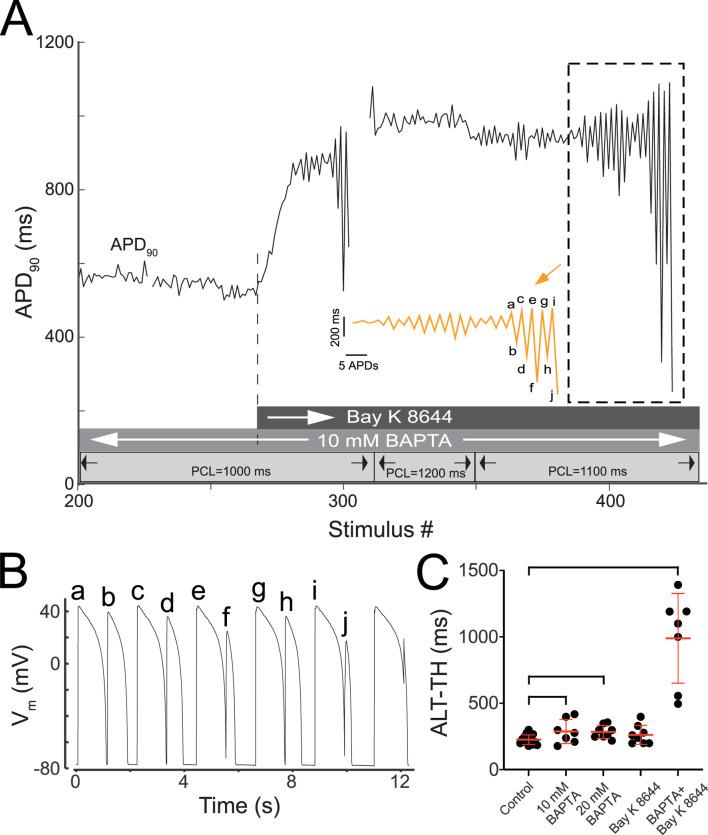
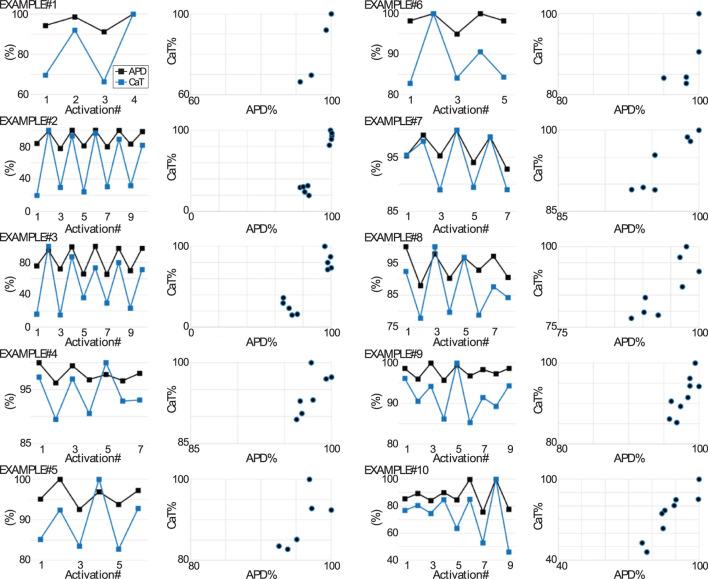
Cardiac action potential (AP) alternans have been linked to the development of arrhythmia. AP alternans may be driven by AP instabilities, Ca transient (CaT) instabilities, or both. The mechanisms underlying CaT driven AP alternans is well-supported experimentally, but the ionic mechanism underlying alternans driven by AP instabilities remain incompletely understood. Here we used the Ca buffer BAPTA to remove the CaT and generate a model of AP alternans driven primarily by AP instabilities. In isolated rabbit ventricle myocytes, AP alternans induced by rapid pacing were either critically damped and persisted over time, overdamped and ceased over seconds, or underdamped progressing to 2:1 capture. Control cells predominantly exhibited critically damped alternans. In contrast, removing CaT with BAPTA destabilized alternans formation in a concentration dependent manner. Importantly, alternans were easier to induce in CaT free cells as evidenced by a higher alternans threshold relative to control cells. While the L-type Ca channel agonist Bay K 8644 had a minor effect on alternans formation in myocytes with conserved CaT, combining the agonist with BAPTA markedly promoted the formation of underdamped alternans and increased the alternans threshold more than four-fold as compared to controls. Our data support a mechanistic model in which AP alternans are a primary self-sustained event in which the CaT serves as a dampening cue that curbs alternans development, likely via a canonical negative feedback process involving Ca induced inhibition of L-type Ca current.
心脏动作电位(AP)交替与心律失常的发生有关。AP交替可能由AP不稳定、钙瞬变(CaT)不稳定或两者共同驱动。CaT驱动的AP交替的潜在机制在实验上得到了充分支持,但由AP不稳定驱动的交替的离子机制仍未完全理解。在这里,我们使用钙缓冲剂BAPTA去除CaT,并建立了一个主要由AP不稳定驱动的AP交替模型。在离体兔心室肌细胞中,快速起搏诱导的AP交替要么是临界阻尼并随时间持续存在,要么是过阻尼并在数秒内停止,要么是欠阻尼并发展为2:1捕获。对照细胞主要表现为临界阻尼交替。相比之下,用BAPTA去除CaT以浓度依赖的方式破坏了交替的形成。重要的是,无CaT细胞更容易诱导交替,这表现为相对于对照细胞具有更高的交替阈值。虽然L型钙通道激动剂Bay K 8644对具有保守CaT的心肌细胞中的交替形成影响较小,但将该激动剂与BAPTA联合使用可显著促进欠阻尼交替的形成,并使交替阈值比对照增加四倍以上。我们的数据支持一种机制模型,其中AP交替是一个主要的自我维持事件,其中CaT作为一种抑制信号,可能通过涉及钙诱导的L型钙电流抑制的典型负反馈过程来抑制交替的发展。



 Zotero 插件