
缺失的临床指南:对自闭症跨性别者和性别多样化者护理的范围界定综述
The missing clinical guidance: a scoping review of care for autistic transgender and gender-diverse people.
作者信息
Bo Lorna, van der Miesen Anna I R, Klomp Sascha E, Williams Zachary J, Szatmari Peter, Lai Meng-Chuan
机构信息
Campbell Family Mental Health Research Institute, Centre for Addiction and Mental Health, Toronto, Ontario, Canada.
School of Clinical Medicine, University of Cambridge, Cambridge, United Kingdom.
出版信息
EClinicalMedicine. 2024 Sep 27;76:102849. doi: 10.1016/j.eclinm.2024.102849. eCollection 2024 Oct.
UNLABELLED
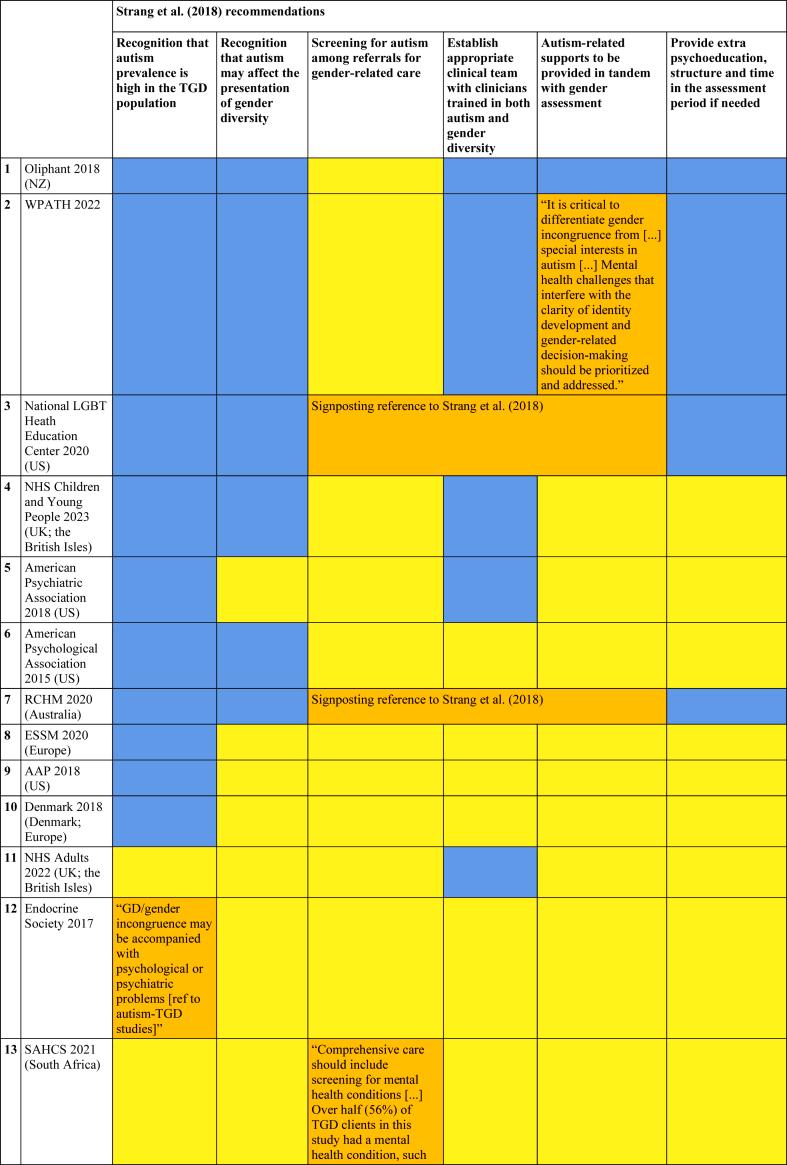
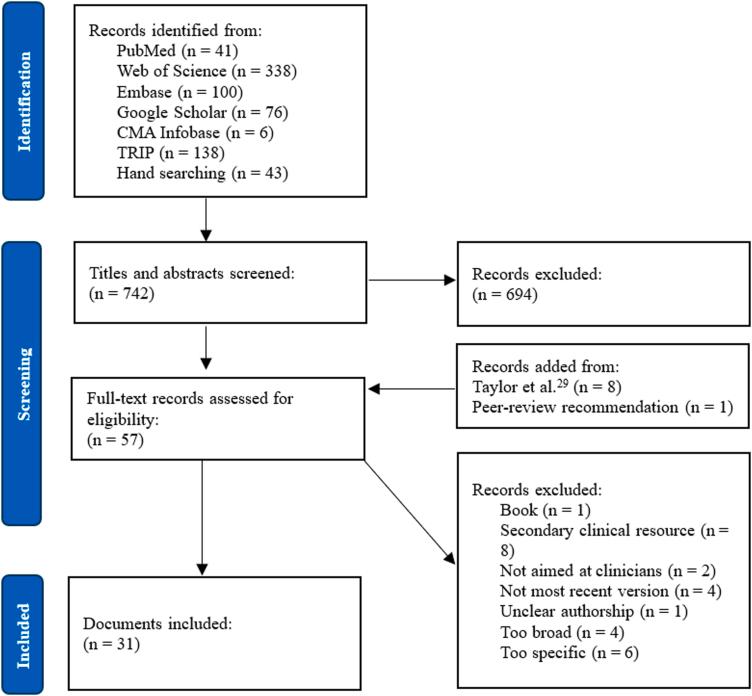
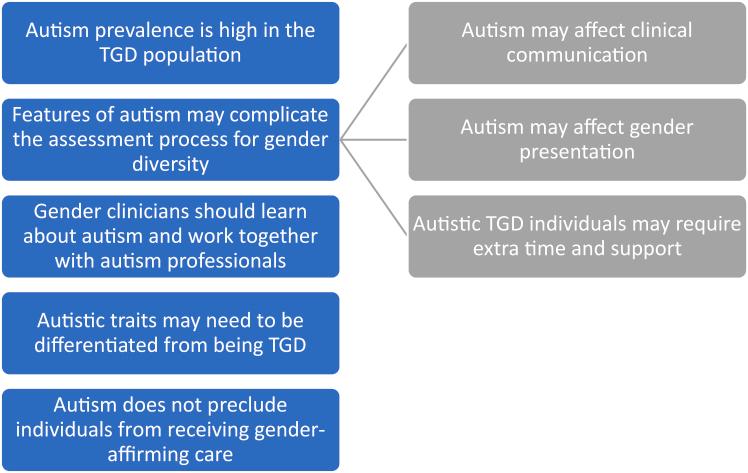
The co-occurrence of autism and gender diversity has been increasingly studied in the past decade. It is estimated that ∼11% of transgender and gender-diverse (TGD) individuals are diagnosed with autism. However, there is insufficient knowledge about appropriate gender-related clinical care for autistic TGD individuals. We performed a scoping review of current clinical guidance for the care of TGD individuals to identify what was said about autism. Clinical guidance documents were searched in PubMed, Web of Science, Google Scholar, Embase, Guidelines International Network, and TRIP medical database, as well as reference mining and expert recommendation. Evidence was synthesised by narrative synthesis, recommendation mapping, and reference frequency analysis. Out of the identified 31 clinical guidance documents, only eleven specifically mentioned the intersection between autism and TGD. Key concepts among the available recommendations included advocating for a multidisciplinary approach; emphasising the intersectionality of autism and gender-diverse experiences during assessments; and-importantly-recognising that autism, in itself, does not serve as an exclusion criterion for receiving gender-related care. However, detailed and practical clinical guidance is lacking due to a gap in evidence. Empirical research into the care experiences and outcomes of autistic TGD individuals using a developmental, lifespan, and strengths-based approach is needed to generate evidence-informed and tailored guidance.
FUNDING
This study was funded through a Canadian Institutes of Health Research Sex and Gender Science Chair program (GSB 171373) awarded to M-CL.
未标注
在过去十年中,自闭症与性别多样性的共存现象得到了越来越多的研究。据估计,约11%的跨性别和性别多样化(TGD)个体被诊断患有自闭症。然而,对于自闭症TGD个体适当的性别相关临床护理,我们了解不足。我们对当前针对TGD个体护理的临床指南进行了范围综述,以确定其中关于自闭症的内容。在PubMed、科学网、谷歌学术、Embase、国际指南网络和TRIP医学数据库中搜索临床指南文件,以及进行参考文献挖掘和专家推荐。通过叙述性综合、推荐映射和参考文献频率分析对证据进行综合。在确定的31份临床指南文件中,只有11份特别提到了自闭症与TGD的交叉点。现有建议中的关键概念包括提倡采用多学科方法;在评估过程中强调自闭症与性别多样化经历的交叉性;以及重要的是认识到自闭症本身并不作为接受性别相关护理的排除标准。然而,由于证据空白,缺乏详细且实用的临床指南。需要采用发展性、全生命周期和基于优势的方法对自闭症TGD个体的护理经历和结果进行实证研究,以生成基于证据且量身定制的指南。
资金
本研究由加拿大卫生研究院性与性别科学主席项目(GSB 171373)资助,授予M-CL。
 Zotero 插件